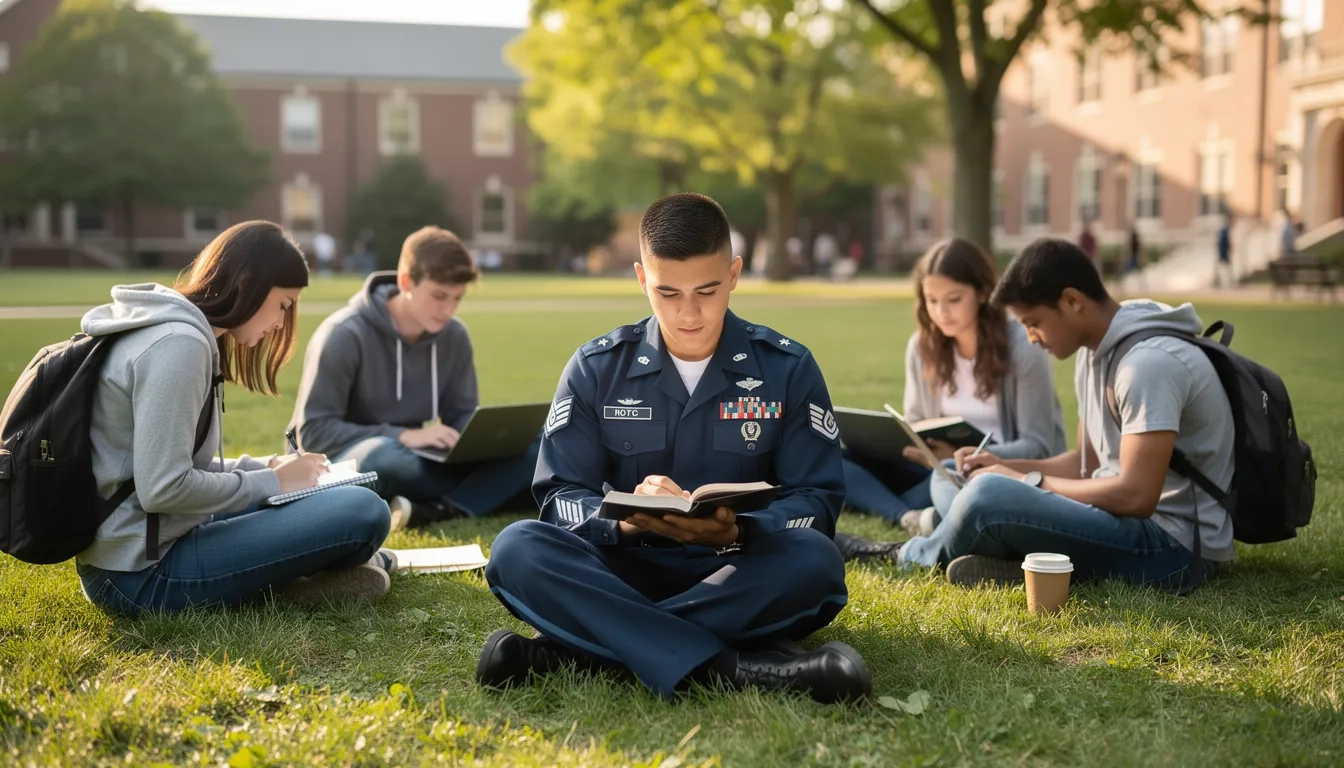
How to Choose the Right College Location and Setting
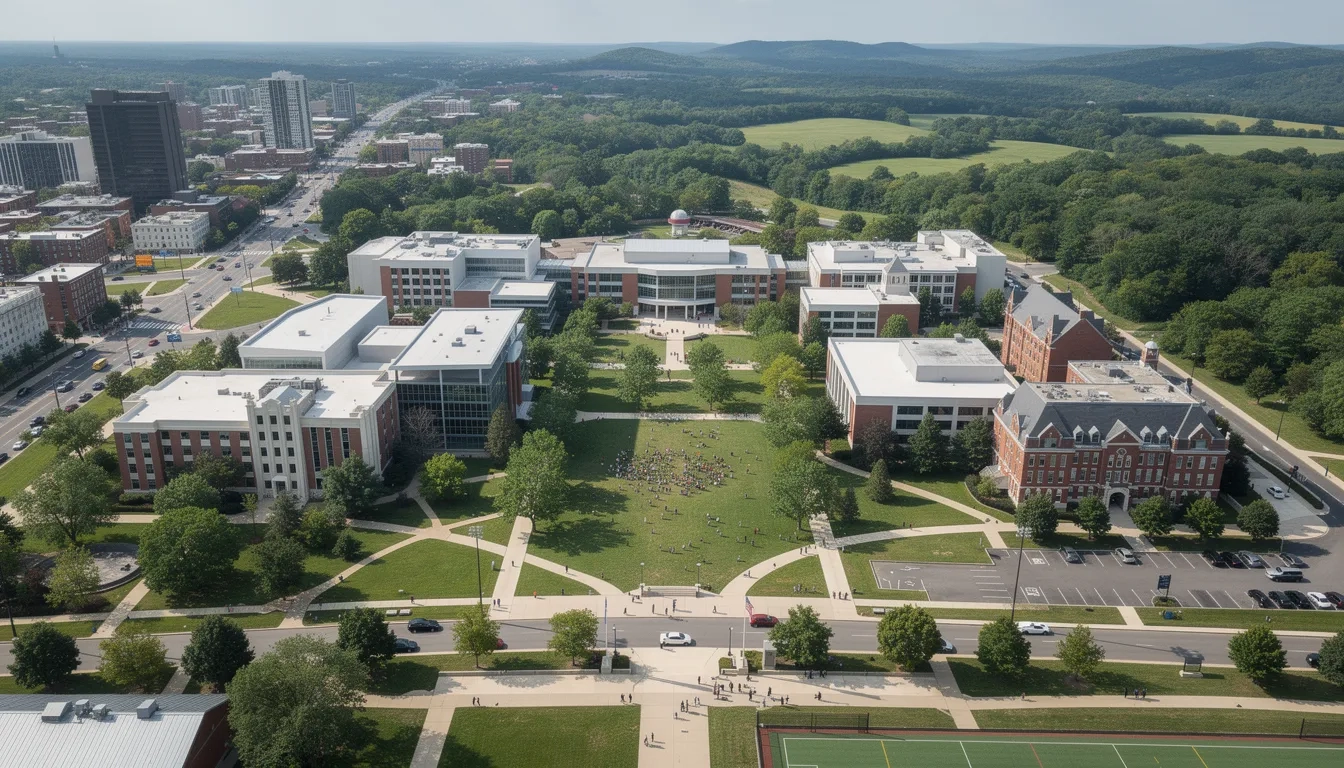
Most families spend months dissecting rankings, major programs, and financial aid packages. Location gets maybe an afternoon of thought. That's backwards.
A 2025 scoping review published in Higher Education Policy and Management (Brownie et al.) examined 11 studies across 9 countries and found that geographic proximity to an institution shapes whether students enroll, whether they persist, and whether they finish. Students living 180 kilometers from a university were 17% less likely to choose that school compared to students living just 20 kilometers away. Location isn't a soft preference. It's a structural force on your entire academic trajectory.
And that's before factoring in what happens after you enroll. Setting shapes your daily routine, your social options, your internship pipeline, and quietly, the regional job market you'll graduate into.
Why Location Is the Most Underrated College Decision
According to Research.com's 2024 analysis, 47% of students cite location as a crucial factor in their college decision — but relatively few think through why it matters beyond "I want to be in a city" or "I want to be near home."
The setting you choose becomes your operating environment for four years. That means the commute to class, the neighborhood you walk through at 10 PM, the ease of finding an internship, and whether you can afford rent if you move off campus. None of that shows up in a US News ranking.
The even bigger blind spot: most students end up working close to where they went to college, at least for their first job. Regional employers hire from regional schools, alumni networks cluster geographically, and recruiters physically show up where the graduates are. Choosing a location is also, quietly, choosing a regional economy to graduate into.
Urban Campuses: Opportunity With a Real Price Tag
Cities give you access that no campus can replicate on its own. Internships at established firms, cultural institutions within walking distance, industry events that spill onto campus because the school sits inside a working economy — urban placement plugs you directly into a professional pipeline that's already running.
North Carolina State University sits inside Raleigh's Research Triangle, where a tech and life sciences hiring market has expanded faster than most regions outside the Bay Area. Boston University places students a subway ride from hundreds of biotech companies, hospitals, and consulting firms. These aren't accidents of geography. They're structural career advantages, especially in competitive fields like finance, media, technology, and healthcare.
But cities extract a real cost. Urban cost of living runs significantly higher than suburban or rural alternatives — often 40 to 60 percent more depending on the metro area. Students living off-campus in city apartments burn through financial aid faster than anyone told them at orientation. And because students scatter across neighborhoods rather than clustering on campus, the spontaneous social bonds that form in a dorm hallway become harder to build. Some students at large urban universities report feeling oddly anonymous by spring of their first year.
Cities also don't pause for finals week. That matters more than it sounds.
Rural Campuses: Community, Nature, and the Isolation Math
Rural schools build a particular kind of community — and for the right student, it's the best environment available anywhere. When Middlebury College sits in a Vermont valley surrounded by ski mountains, or Penn State sprawls across 17,000 acres of central Pennsylvania farmland, the campus becomes its own small city. Students live together, eat together, and generate their own social world from scratch. Faculty are accessible. Class sizes stay small. Relationships form faster and tend to hold.
For students who felt anonymous in a large high school, a rural campus can feel like finally landing somewhere that actually fits.
The tradeoff is real, though. Geographic isolation limits the professional pipeline in ways that ambition alone cannot fix. Clemson University sits about 45 minutes from its nearest city. For students who want to intern at a specific company in an urban hub, that means a 90-minute daily commute or a strategic relocation for a single semester. In fields where networking is everything — investment banking, journalism, entertainment, fashion — rural placement creates friction.
The commute data is sobering. The Brownie et al. review found that commuting more than 30 minutes to campus increased course failure risk with a hazard ratio of 1.898. Long commutes drain exactly the cognitive and emotional reserves students need for studying.
"Locally based education resources are a key requirement for student success — geographic location should be treated as central to educational equity, not peripheral to it." — Brownie et al., Higher Education Policy and Management, 2025
Suburban Campuses: Not a Compromise
Suburban schools get typecast as the "safe" pick for students who couldn't make up their mind. That's selling them short.
The best suburban placements genuinely thread the needle. Emory University sits in Atlanta's leafy Druid Hills neighborhood, with shuttle access into one of the South's largest economic hubs and a nature preserve ten minutes away on foot. Claremont McKenna College, about 30 miles east of Los Angeles, gives students the intimacy of a small campus plus six-consortium course-sharing and periodic access to the full LA job market. University of Miami sits 20 minutes from downtown but feels like its own self-contained world.
Suburban schools typically retain the cohesive campus feel that builds community while still keeping students within reach of a real economy. Students are more likely to live on or near campus, which means the friend-group formation that quietly shapes your entire college experience happens more naturally than it does in an urban setting.
The main limitation is transportation dependency. Many suburban schools require a car or expensive rideshare habits to access nearby cities consistently. Ask admissions not just whether a shuttle exists, but how often it runs and where it actually goes. Students who lack vehicles often feel the walls close in by November of freshman year.
Comparing Your Options
| Factor | Urban | Suburban | Rural |
|---|---|---|---|
| Internship access | Strong | Moderate | Limited |
| Cost of living | High | Moderate | Lower |
| Campus community | Dispersed | Cohesive | Very tight |
| Transportation | Public transit | Car helpful | Car often required |
| Cultural activity | Abundant | Accessible | On-campus focused |
| Student-faculty access | Variable | Good | Strongest |
The Career Geography Nobody Mentions Out Loud
Here's something few college counselors say directly: where you attend college shapes where you end up working, not just through your degree program, but through geographic gravity.
A student graduating from the University of Washington in Seattle has a structurally different tech job pipeline than the same student graduating from a comparably ranked school in the Midwest. This isn't about prestige — it's about where recruiters physically travel, where alumni live, and which regional employers consider your school part of their natural hiring pool.
The practical implication: treat your college location as a bet on a regional economy. If you want to work in entertainment, a school near LA or New York is a rational choice. If you want to work in insurance and financial services, Hartford or Des Moines have infrastructure that coastal cities sometimes don't. Matching location to intended industry is at least as important as matching major to intended career.
First-generation students face a specific version of this calculation. The Brownie et al. review found that greater distance from home actually increased bachelor's degree completion odds by 52% for first-generation students in some studies — possibly because relocating forces a fuller commitment to the college experience. But that same distance cuts off the informal family support networks that help students navigate real crises. Both effects are real. Neither cancels the other.
How to Actually Evaluate a Campus Setting
College brochures claim every school has a "vibrant community." Ignore that framing entirely. Here's what to actually investigate:
During a campus visit:
- Walk the area within half a mile of campus at 9 PM on a Thursday. That's your real social environment.
- Ride the campus shuttle or check bus route timing to the nearest grocery store.
- Ask students — not tour guides — where they go when they need to decompress.
- Notice whether the surrounding neighborhood is walkable or whether every errand requires a car.
Before you visit:
- Search "[College Name] internship Reddit" and read what current students say about finding work off-campus.
- Look up the monthly rent for a one-bedroom apartment within two miles of campus. That's your floor for off-campus living costs.
- Check whether major employers in your intended field have offices or operations near the school.
A simple decision filter:
- If you thrive on constant external stimulation and dislike downtime, urban schools suit you.
- If you recharge through quiet and prefer a contained social world you can know deeply, rural settings will feel like home faster than you expect.
- If you're genuinely unsure (most 17-year-olds are, and that's fine), suburban schools give you room to discover your preference without locking you into either extreme.
You can switch majors. You can change friend groups. Changing your campus setting means transferring. Getting this one closer to right matters.
Bottom Line
- Location is a four-year bet on a lifestyle and a regional economy, not just scenery. The surrounding region shapes your internship options, your peer network, and often your first job offer.
- Rural schools offer the strongest campus community but require honest self-assessment about whether geographic isolation will feel peaceful or suffocating for you specifically — and for your intended career field.
- Urban schools unlock career access but inflate living costs and tend to fragment the social cohesion that carries students through hard semesters.
- Suburban schools aren't default compromises — the best ones, like Emory and Claremont McKenna, genuinely balance access and community in ways worth seeking out.
- Visit campus, then walk the surrounding neighborhood. The tour shows you the controlled version. The zip code is where you'll actually live.
Frequently Asked Questions
Does college location actually affect job prospects after graduation?
Yes, and the effect is stronger than most students anticipate. Regional employers recruit heavily from nearby schools, and alumni networks cluster geographically. A graduate from a Pacific Northwest school will find more natural pathways into Seattle-area tech companies than a graduate from an equivalent school in another region, simply because of recruiter presence and alumni density. This isn't about prestige — it's about proximity.
Is it better to attend college close to home or far away?
There's no universal answer. Some research suggests physically relocating increases completion odds by forcing fuller commitment to the college experience. But distance also removes informal family support systems that help students navigate difficult moments. The honest answer is that your own support needs matter more than any geographic rule of thumb — and those are worth examining honestly before you commit.
Myth vs. Reality: Does an urban campus automatically mean a more diverse, connected experience?
Partly true, but overstated. Urban campuses expose students to more diverse populations through the surrounding city, but the campus community itself can feel fragmented and anonymous compared to rural alternatives. Some students at large urban universities report feeling lonely in ways that genuinely surprise them, because the city adds variety without automatically creating belonging. Setting type shapes the kind of connection available, not the amount.
How much does the cost of living near a college affect my total education cost?
Significantly. Urban schools in cities like New York, Boston, or Washington D.C. carry off-campus living costs that can add $12,000 to $18,000 per year beyond tuition compared to rural or suburban alternatives. When evaluating financial aid packages, always model the full cost of attendance including regional housing, food, and transportation — not just what the school charges directly. Two schools with identical sticker prices can differ by $40,000 over four years in total real cost.
What should I actually look for when visiting a campus to evaluate its setting?
Walk the surrounding area after dark, not just during the guided tour. Check real transportation options — not whether a shuttle exists, but how often it runs and where it goes. Talk to students who have no affiliation with the admissions office. And search Reddit for current-student perspectives on off-campus life and internship access. The tour is marketing. Everything outside the tour is data.
How do I evaluate a rural campus if I'm worried about internship access?
Ask the career services office for the percentage of students who complete internships during the academic year (not just over summer), and where those internships are located. Ask current students in your intended major what their internship search looked like. Schools like Middlebury and Williams have built strong alumni networks and virtual internship programs specifically to compensate for their geographic isolation — but those programs vary widely in quality, so verify rather than assume.
Sources
- Urban, Suburban, or Rural: How to Choose the Best College Campus Setting — Premium Prep
- Geographic location of students and course choice, completion, and achievement in higher education: A scoping review — Brownie et al., SAGE Journals
- Rural, Suburban, Urban Campus Settings — BigFuture, College Board
- Does it Matter Where You Go to College? — Research.com
- Should I Go to a Rural, Urban, or Suburban College? — PrepScholar