Campus Safety Tips for Students: What Actually Works in 2026
Most students arrive on campus thinking safety is largely someone else's job. Campus police handle it. RAs handle it. The administration handles it. That assumption is understandable — and it's exactly how students end up in situations that were entirely preventable.
Here's the actual picture: U.S. colleges reported over 22,000 on-campus crimes in a single year. Motor vehicle theft alone made up roughly 37% of those incidents. Forcible sex offenses more than tripled between 2011 and 2021. And freshmen face higher risk than any other group, largely because they don't yet know the terrain.
This guide is about what campus crime actually looks like, where the real risks concentrate, and what you can do starting today.
The Numbers Behind Campus Crime (and Why You Should Read Your Clery Report)
Most students' sense of campus danger comes from headlines rather than data. That distorts the picture.
The most common campus crime isn't violent — it's property theft. Motor vehicle theft accounts for about 37% of reported campus incidents. Laptop theft, bike theft, and dorm burglaries collectively dwarf violent crime on most campuses.
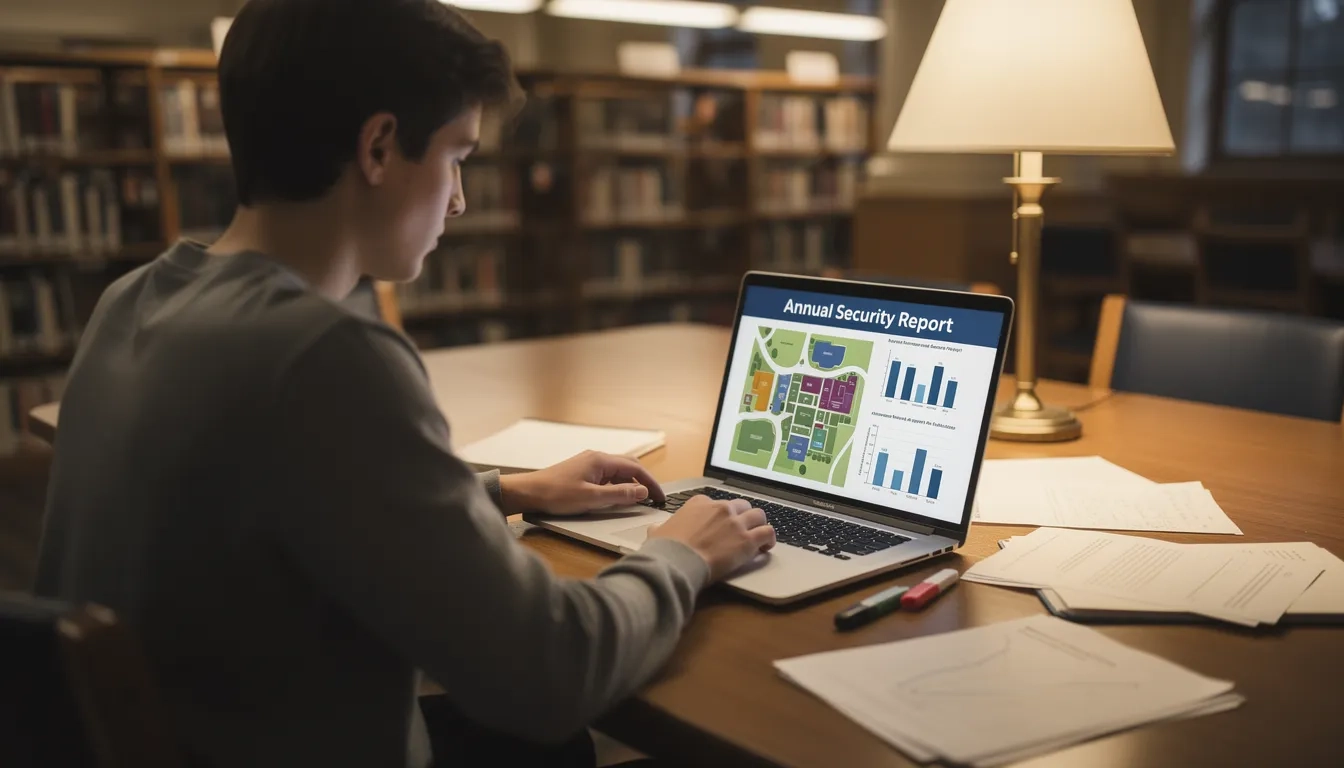
The Clery Act, in place since 1990, requires every college receiving federal financial aid to publish Annual Security Reports. These are public documents. Most students never read them. Before you decide how careful to be walking to the library at 11pm, spend 20 minutes with your school's report at the Department of Education's Campus Safety and Security Data Analysis tool at ope.ed.gov/campussafety.
Violent crime does exist and certain categories are climbing. Hate crimes at large institutions rose 26% between 2022 and 2023, reaching 456 reported incidents. Forcible sex offenses climbed from 2.2 per 10,000 students in 2011 to 7.5 per 10,000 in 2021. These are not problems that peaked and resolved.
The Red Zone: Why Your First Six Weeks Carry the Highest Risk
The "Red Zone" is real. Research consistently shows that roughly 50% of college sexual assaults occur between August and November of freshman year. That's not an arbitrary window — new students are navigating unfamiliar social dynamics, more likely to accept drinks from strangers, and often attending parties without a trusted friend nearby.
Being a freshman is the single biggest predictor of elevated assault risk. Sophomores, juniors, and seniors aren't immune, but the orientation period combines specific factors: new environments, social pressure to fit in, and alcohol present at most gatherings.
The practical implication is simple. Establish your buddy system before you need it. Decide with your roommate or a close friend how you'll check in at parties. Have a code word that means "I want to leave now." Know which campus number to call if you need a safe ride home. These conversations take five minutes to have when nothing is wrong and feel impossible to have when something is.
Physical Safety: Awareness, Not Anxiety
There's a real difference between being alert and being afraid. The goal is the first one.
Pete Canavan, a personal safety consultant, puts it plainly: "Paying attention to people, environment, and objects around you at all times is the first step toward staying safe." That's not abstract. It means headphones out when walking alone at night. It means glancing behind you when approaching your parked car. It means noticing the exits in a building you've never entered before.
Blue Light Emergency Phones are installed on most campuses and connect automatically to campus security. Surprisingly few students know where they are. When you first arrive, walk your most-used routes and find at least three of them. It takes about 12 minutes and you'll hopefully never need the information.
Most campuses also run safety escort services, usually called SafeRide or SafeWalk. These are free. They're massively underused. A student waiting alone at a 1am bus stop is a better target than a student walking with a campus escort to the same location.
Smart Route Habits
- Stick to lit paths after dark, even if a shortcut looks tempting. The extra three minutes are worth it.
- Vary your routine if you walk the same route every day at the same time. Predictability is a liability.
- Tell someone where you're going when you head somewhere alone, especially off-campus.
- Keep your phone charged. This sounds obvious. It's the most common failure point in actual emergencies.
Property Crime: The Threat Most Likely to Hit You
If violent crime is the thing students fear, property crime is what actually happens to most of them.
Laptop theft in libraries is rampant. The pattern is almost always identical: student leaves laptop on a table to grab coffee or use the bathroom, comes back three minutes later, laptop is gone. The fix is boring but effective — take it with you or lock it to the table with a cable lock (available for under $28 and worth every cent).
Dorm room burglaries spike when students prop doors open or leave them unlocked while visiting friends down the hall. Dr. Ben Stickle, a criminologist who studies campus crime, notes this is exactly when and how opportunistic theft happens. Lock your door. Every time. Even for two minutes.
For bikes and scooters: a U-lock alone isn't enough. Thieves carry bolt cutters. Stanford's 2024 crime report documented 77 electric bike thefts and 68 electric scooter thefts in a single year — that's not random, it's a pattern in what students consistently fail to secure properly. Use a U-lock through the frame and rear wheel, plus a secondary cable for the front.
| Item | Common Mistake | Better Approach |
|---|---|---|
| Laptop | Left on table unattended | Cable lock or carry with you |
| Bike | U-lock through front wheel only | U-lock through frame + rear wheel, cable for front |
| Car | Valuables left visible in seat | Empty visible areas, park in lit areas |
| Dorm room | Door unlocked when "nearby" | Lock every time, no exceptions |
Digital Safety Is Part of Campus Safety Now
This is the area most campus safety guides skip entirely. It shouldn't be.
Campus Wi-Fi networks are semi-public. Any network where you don't control the router is a potential exposure point. A basic VPN costs around $3–5 per month and encrypts your traffic on public networks. If you're logging into banking apps or your university portal from a campus café, a VPN is worth the cost.
Phishing emails targeting students have gotten convincing. Common vectors: fake financial aid refund notices, fake IT password reset requests, fake job offers that ask for your bank details upfront. The tell is almost always a mismatched sender domain. Your university's email ends in .edu — a scammer's version might end in .edu.co or .edu-support.com. Read the full sender address before clicking anything.
Social media oversharing is a genuine safety risk that rarely gets called out directly. Posting your class schedule publicly tells anyone interested exactly when your dorm room is empty. Posting real-time location tags tells anyone following you where you are. Lock your accounts so posts aren't visible to people outside your network.
Social Situations: The Buddy System Is Older Than You Think, and Still Works
The buddy system gets dismissed as something for field trips. It's actually one of the most research-supported risk-reduction strategies for parties and large social events.
Never leave a friend alone with someone they just met. This isn't about distrust of strangers — it's that groups of people are statistically safer than individuals, and bystander research consistently shows that even one alert, sober person in a group significantly reduces how often bad situations escalate.
Watch drinks at parties. Don't accept open containers from people you don't know. If your drink tastes different than expected, stop drinking it. If a friend seems suddenly and disproportionately intoxicated for what they've consumed (a genuine red flag), get them somewhere safe and stay with them.
The honest reality: most campus assaults are committed by someone the victim already knows, in social settings where alcohol is involved. Stranger-in-the-dark scenarios are real but comparatively rare. The buddy system addresses the actual threat pattern, not just the scary one.
Campus Resources Most Students Never Actually Use
Colleges invest real money in safety infrastructure that sits underused because students either don't know it exists or assume it's only for serious emergencies.
Safety apps are now standard at most universities. LiveSafe lets students report suspicious activity directly to campus police, anonymously if needed. Noonlight functions as a remote panic button — activate it, and if you don't enter your PIN within a set window, it automatically contacts emergency services with your GPS coordinates. At $2.99/month, it's been documented helping students in real emergencies, not just hypotheticals.
Counseling services are also part of this picture. Mental health crises and campus crime intersect more than the official categories suggest. Every campus receiving federal aid is required to have counseling resources available. Find out what your school's after-hours crisis protocol looks like before you need it.
Before Your First Week: A Setup Checklist
- Download your campus safety or emergency alert app and register your student ID
- Save campus police non-emergency number and the local crisis line to your contacts
- Locate the three nearest Blue Light phones to your dorm and your main library
- Review your school's Annual Security Report (public, free, searchable)
- Register your bike's serial number with campus police — most schools do this for free
- Set a check-in plan with at least one trusted friend for nights out
Bottom Line
Campus safety is not about fear. It's about closing the gap between the risks that are actually present and the habits that shift the odds in your favor.
- Property crime is your most likely threat. A $28 cable lock and the habit of locking your dorm door are more effective than elaborate precautions.
- The first six weeks of freshman year are your highest-risk window. Establish your buddy system and learn your resources before that period starts, not during it.
- Digital threats are real and growing. A VPN, careful email hygiene, and locked-down social media settings cost almost nothing and protect you in ways physical safety can't.
- Use what's already there. Your campus has escort services, emergency phones, safety apps, and counseling. Most students never touch any of them.
- The single habit I'd argue matters most: tell someone where you're going. It's the simplest safety practice and the one that most directly enables a fast response if something goes wrong.
Frequently Asked Questions
What is the "Red Zone" in college campus safety?
The Red Zone refers to the period from August through November of freshman year, when roughly half of all college sexual assaults occur. New students are adjusting to unfamiliar social environments with alcohol often present, creating elevated risk. Building a buddy system and establishing personal boundaries before this window starts is one of the most effective preventive steps a new student can take.
Is campus crime actually common, or does it just feel that way from news coverage?
It depends heavily on the type of crime. Property crime (laptop theft, bike theft, vehicle break-ins) is genuinely common and widely underreported. Violent crime is less frequent but real, and trends in categories like hate crimes have been increasing in recent years. The most accurate source is your specific school's Clery Act Annual Security Report, available through the Department of Education's public database.
Are Blue Light Emergency Phones still useful in 2026?
Yes, though they function best as a backup, not a primary tool. Blue Light phones connect automatically to campus security without any dialing — useful if your phone is dead or you can't safely use it. Locate three or four in your most-traveled areas when you first arrive. You'll likely never use them, but knowing where they are takes about 12 minutes and costs nothing.
What safety apps do most college students actually use?
LiveSafe (campus-specific incident reporting, often with anonymous submission), Noonlight (GPS-linked panic button), UrSafe (hands-free voice activation for emergencies), and Parachute are among the most commonly cited. Many schools have also integrated emergency alerts into a single campus app — check whether yours has one before downloading multiple third-party options.
Is it safe to walk alone at night on campus?
It depends on the specific route, lighting, time, and campus. A lit path through a staffed area at 11pm is meaningfully different from an isolated shortcut at 2am. Use your campus's SafeRide or SafeWalk escort service when you're uncertain — that service exists specifically for this situation and most students never call it. Trust your instincts about routes that feel wrong.
What's the most overlooked campus safety threat?
Digital threats, without question. Phishing scams targeting students for financial aid fraud, unsecured Wi-Fi networks in campus cafés and libraries, and public social media posts that inadvertently broadcast your location or schedule are all real and growing risks. Most campus safety conversations focus entirely on physical security. Your accounts, devices, and online habits deserve the same attention.