Tufts vs Boston College: What the Neighborhoods Actually Tell You
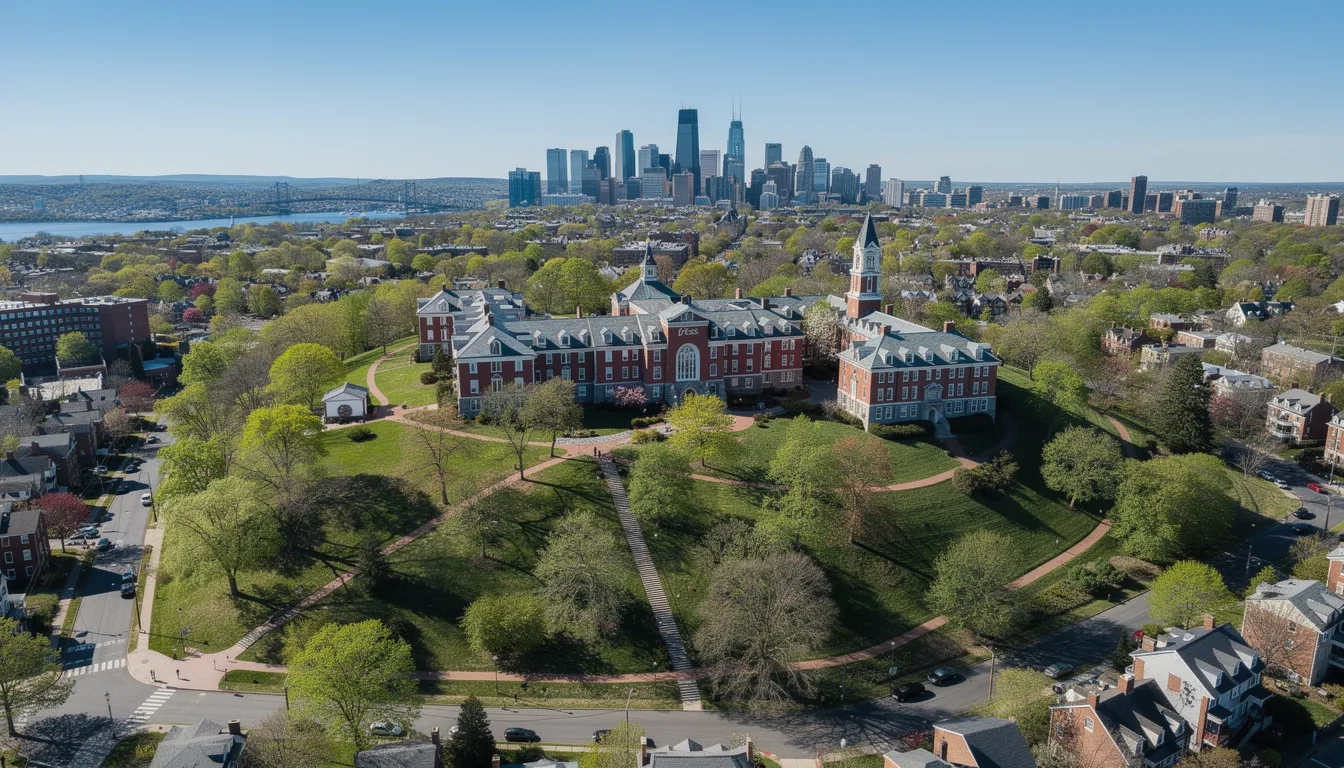
Tufts and Boston College sit 8.7 miles apart. They share a metro area, share a general price range, and both get lumped under "Boston-area schools" by anyone who doesn't live here. But the neighborhoods where these two campuses land are genuinely different — different transit lines, different energy, different answers to the question of how much city you actually get.
The academic comparisons between these schools get plenty of attention. Acceptance rates, GPA ranges, Jesuit core requirements versus liberal arts distribution requirements. Those matter. But four years of your life plays out in the streets around a campus, not just inside the classrooms. That part gets undercovered.
Where Each Campus Actually Sits
Tufts University occupies a hilltop straddling the Medford-Somerville line, roughly 4.5 miles northwest of downtown Boston. Students call it a "vertical campus" (the hills between residential quads and academic buildings are real), and Davis Square — one of Somerville's most energetic commercial strips — sits about a 15-minute walk from the main gate.
Boston College is in Chestnut Hill, a neighborhood split between Newton and Brookline, about 6 miles west of downtown. The campus is Georgian Gothic and almost entirely self-contained. Stone spires, brick quadrangles, a campus designed to feel like its own world.
These aren't subtle differences. Tufts is embedded in a dense, walkable urban neighborhood. BC is surrounded by some of the most expensive residential real estate in Massachusetts. Both have legitimate appeals, but they're pointing in opposite directions.
Getting Into Boston: The Commute Is Not Equal
Both schools advertise subway access to Boston. The lived experience diverges fast.
From Tufts, you walk or take the free shuttle to Davis Square, hop on the MBTA Red Line, and you're at Park Street Station in about 18 minutes. The Red Line is the system's fastest, most reliable subway. It also connects directly through Cambridge — Kendall Square (MIT, biotech, startups) and Harvard Square — before heading downtown.
From BC, the ride goes on the Green Line (B, C, or D branch depending on where you start). The Green Line is the MBTA's oldest subway, running at street level through parts of its route and sharing traffic signals with cars. Students consistently put the real-world door-to-door time at 35 to 45 minutes.
That 20-minute gap compounds. If you're interning at a Kendall Square biotech firm three days a week, or trying to make a dinner reservation downtown without leaving two hours early, the difference between 18 minutes and 40 minutes matters every single time you make the trip.
This is the most concrete practical difference between these two locations. It determines internship access, how often you actually explore the city, and whether "I'll just hop on the T" feels true or aspirational.
Davis Square vs. Chestnut Hill: Two Very Different Vibes
Walk out of Tufts' main gate, take the shuttle to Davis Square, and you're in a fully-formed neighborhood. Not a college town strip. Not a mall. Davis Square has its own identity: Diesel Café (a Somerville institution with famously good chai lattes), The Burren for Monday night trivia and pints, J.P. Licks ice cream, Daksen for Thai street noodles, Marta on Elm for Italian, and the Somerville Theatre showing both new releases and classic film screenings. A Wednesday farmers market runs seasonally. H-Mart opened recently and immediately became a student favorite.
The Tufts admissions blog calls Davis Square a "lively and vibrant community space." That's underselling it a little. Boston Magazine's restaurant team covers the neighborhood's dining scene the way they cover the South End — because the quality is genuinely there.
Chestnut Hill's commercial center is The Street at Chestnut Hill, an outdoor lifestyle complex anchored by Whole Foods, Pottery Barn, and a handful of chain restaurants. It handles groceries and mid-week dinners well. It is not buzzy. The surrounding streets are residential, quiet, and expensive in the way that $3-million homes make things quiet.
| Feature | Davis Square (Tufts) | The Street / Chestnut Hill (BC) |
|---|---|---|
| Walk Score | ~73 | ~55 |
| Transit to downtown | Red Line, 18 min | Green Line, 35–45 min |
| Nightlife | Bars, live music, late-night options | Very limited |
| Dining variety | High, independent-heavy | Moderate, chain-heavy |
| Neighborhood character | Eclectic, dense, artsy | Quiet, affluent, residential |
| Median home value nearby | ~$588,100 (Medford) | $1.9M–$3.6M (Chestnut Hill) |
Off-Campus Housing and What It Actually Costs
Boston is expensive. Neither area is cheap. But there's a real gap in supply.
Near Tufts, the housing stock is classic dense New England city fabric — triple-deckers, older apartment buildings, converted single-families. Average one-bedroom rents in Medford run about $2,993/month as of 2025. Split among three or four students in a house, the per-person cost becomes manageable by Boston standards. Options exist at different price points.
Near BC, Chestnut Hill is predominantly owner-occupied single-family homes. Salary.com's 2026 data puts cost of living in Chestnut Hill at 53% above the national average, with median rent around $2,829/month — but the actual rental supply is thin. There simply aren't many apartments.
Most BC students who leave campus housing end up in Brighton or Cleveland Circle, a few stops east on the Green Line. Those neighborhoods are more student-dense and more affordable. But "more affordable" comes with a daily commute back to campus by shuttle or train, which adds friction that Medford students don't have.
The Campus Bubble, and Whether You Want It
Boston College is designed, at some level, to keep you on campus. That's not a criticism — it's a deliberate institutional choice, and many students love it.
BC guarantees housing for three years. The residential dining system is strong. Athletic culture is genuinely central: BC competes in ACC football and basketball, with games that draw real crowds and create their own social calendar. Students can spend entire weekends inside the Chestnut Hill gates without running out of things to do.
Tufts makes no such promise. The campus is fine, the dining is adequate, but the whole setup implies you'll go find the city yourself. Davis Square, Cambridge, and downtown Boston are the social infrastructure. The school doesn't compete with what's already nearby.
Some students find BC's insular warmth exactly what they wanted. Others, by junior year, feel like they've hit its limits. The honest question to ask yourself: do you want a school that wraps around you, or one that points you outward?
My read: if you're choosing Boston because you want to actually live in a city, Tufts' location serves that goal. If you want the campus to be the whole experience — and there's nothing wrong with that — BC's Chestnut Hill setup delivers it well.
Safety, Character, and Day-to-Day Life
Both neighborhoods are safe. Worth stating plainly.
Medford and Somerville have gentrified sharply over the past fifteen years as Cambridge's costs pushed grad students and young professionals northward. The areas around Tufts and along Davis Square are low-crime by any measure. The population skews younger, more diverse, and more renter-heavy — a mix of long-time working-class families and newer arrivals priced out of Cambridge.
Chestnut Hill's demographics are striking in a different direction. NeighborhoodScout data shows 59.5% of residents hold advanced degrees, compared to 13.7% nationally. The area is wealthier than 99.4% of American neighborhoods. It is safe, beautiful, and extremely uniform. The kind of neighborhood where the biggest friction in daily life is a neighbor's loose Labrador Retriever.
For students from smaller towns or more suburban backgrounds, both neighborhoods feel safe and navigable. But the day-to-day texture is different. Medford and Somerville feel lived-in and mixed. Chestnut Hill feels pristine and insulated. Neither is objectively better — they produce genuinely different versions of what "off-campus life" means.
Which Location Actually Fits You
This isn't a one-size decision. A quick filter:
Choose Tufts' Medford location if you:
- Plan to intern in Kendall Square, the Seaport, or anywhere along the Red Line corridor
- Want a walkable neighborhood with restaurants, bars, and independent shops within ten minutes of your dorm
- Prefer urban density and diverse surrounding communities over residential quiet
- Care about fast, reliable subway access to explore the metro area throughout undergrad
Choose BC's Chestnut Hill location if you:
- Want a tight, self-contained residential campus where the school is your world
- Value a quiet, safe, affluent surrounding neighborhood
- Plan to lean heavily into campus athletics and the on-campus social calendar
- Aren't primarily motivated by off-campus urban access
One final number worth knowing: the sticker price gap between the schools is smaller than most people expect. Tufts runs about $93,182 per year, BC between $93,514 and $96,764. The real financial variable is often housing — Medford's more plentiful rental stock typically gives off-campus Tufts students more per-person affordability than Chestnut Hill's constrained market.
Bottom Line
- Transit is the decisive factor for city access. The Red Line from Davis Square reaches downtown Boston in 18 minutes. The Green Line from Chestnut Hill takes 35–45 minutes. If getting into the city regularly matters to you — for internships, culture, food, anything — Tufts wins this comparison clearly.
- Davis Square is a genuine neighborhood asset. It's not a college-town strip; it's a real neighborhood with good food, music, and walkability that enriches daily life beyond the campus gates.
- BC's bubble is a feature, not a flaw, for the right student. The three-year housing guarantee, strong athletic culture, and self-contained Chestnut Hill campus are things many undergraduates actively want — and BC delivers them well.
- Choose based on how you actually want to spend four years. If the city is the draw, pick the location that puts you closer to it.
Frequently Asked Questions
Is Tufts or Boston College better located for internships?
Tufts has a clear advantage. The Red Line from Davis Square reaches Kendall Square — MIT's neighborhood, home to dozens of biotech firms and tech startups — in about 12 minutes. Downtown Boston is another 6 minutes south. BC students face a 35–45 minute Green Line commute, which becomes a real weekly burden when you're making that trip multiple days in a row during a semester-long internship.
Can BC students realistically get into Boston for the weekend?
Yes, though it takes longer than most expect before enrolling. The Green Line D branch runs from the BC campus through Chestnut Hill and into Kenmore Square and downtown, usually 35–45 minutes door-to-door. For occasional weekend trips it's perfectly usable. For regular city access, the slower pace of the Green Line is a genuine constraint compared to Tufts' Red Line option.
Is Chestnut Hill a good neighborhood for college students?
It's safe and comfortable, with The Street at Chestnut Hill handling everyday errands well. But Chestnut Hill isn't a college neighborhood in any meaningful sense beyond the BC campus. The surrounding streets are quiet residential blocks with multimillion-dollar homes. Students who want nightlife, diverse dining, or walkable urban energy typically need to take the Green Line to find it.
Myth vs. Reality: Aren't both schools basically "in Boston"?
Neither campus sits inside Boston city limits. But "Boston access" means very different things here. Tufts is 18 minutes by Red Line from downtown, with Davis Square functioning as an urban neighborhood at its doorstep. BC is 35–45 minutes by Green Line, surrounded by residential Chestnut Hill. Both schools market their Boston proximity — but the practical experience of that proximity is not equivalent.
How does off-campus housing compare near each school?
Medford near Tufts has more rental supply and more student-oriented housing stock (triple-deckers, apartment buildings). One-bedrooms average around $2,993/month, and shared houses bring per-person costs down significantly. Near BC, Chestnut Hill is predominantly owner-occupied and short on rental supply. Most BC students who live off-campus end up in Brighton or Cleveland Circle, adding a commute back to campus.
What's the day-to-day neighborhood like for students who aren't into nightlife?
Both neighborhoods work. Davis Square has Diesel Café, the Somerville Flea, H-Mart, the Somerville Community Path for outdoor runs, and a farmers market — plenty of low-key options that have nothing to do with bars. Chestnut Hill's quieter, residential character suits students who prefer staying close to campus. The real question is whether you want walkable variety or residential calm.
Sources
- BC vs. Tufts University 2026 – CampusReel
- Tufts and Boston College – College Bound Mentor
- Chestnut Hill / Boston College Neighborhood Profile – NeighborhoodScout
- Average Rent in Medford, MA – Apartments.com
- Your Guide to Davis Square – Tufts Admissions
- Cost of Living in Chestnut Hill, MA 2026 – Salary.com
- Medford, MA Cost of Living – BestPlaces
- Tufts vs. Northeastern vs. Boston College – Oriel Admissions