Stanford vs MIT: Which School Actually Wins for STEM?
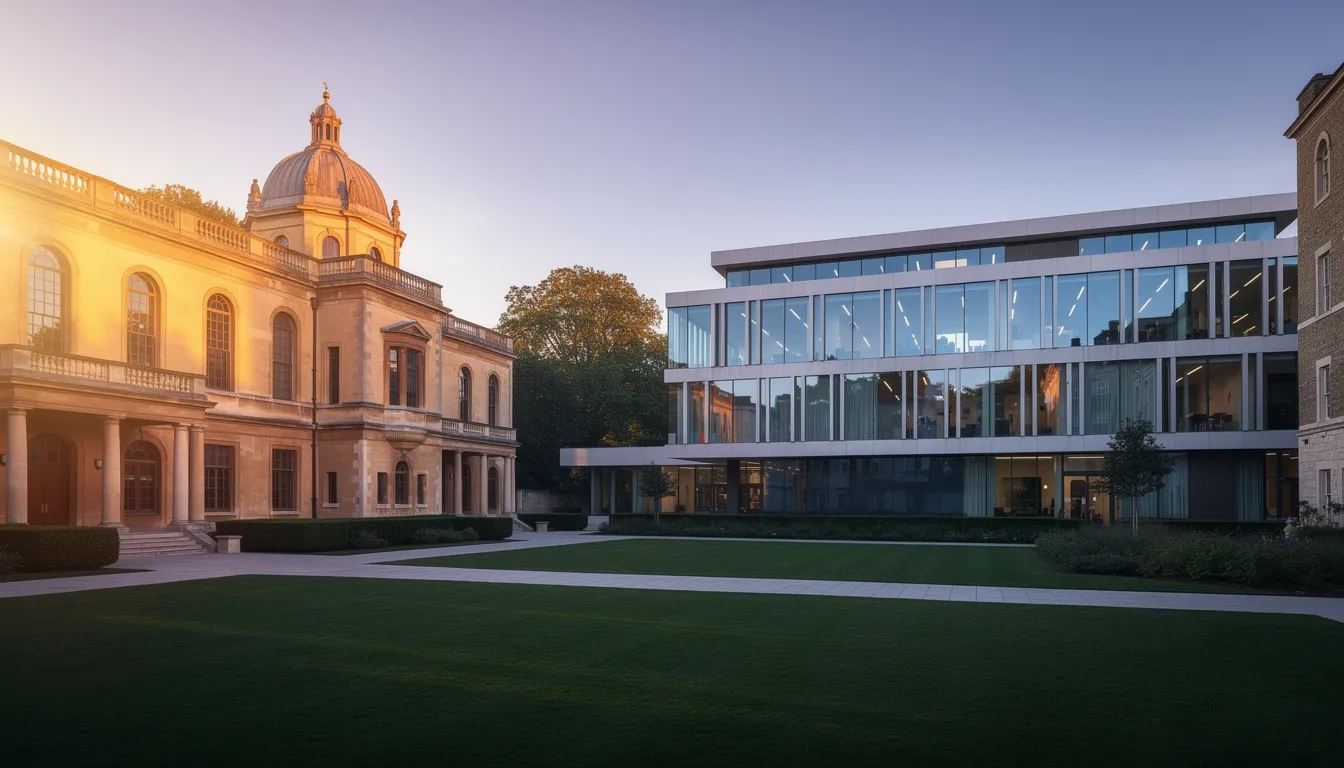
MIT has held the #1 spot in U.S. News's graduate engineering rankings for 36 straight years. Stanford has never beaten it there. But walk onto Stanford's campus and ask a computer science junior where they're headed after graduation, and you'll hear a different kind of confidence — one built on Sand Hill Road, not just the periodic table. That tension is the whole ballgame.
Both schools admit around 4% of applicants and both sit at the very top of every STEM ranking that matters. So the real question isn't "which is more prestigious." It's which environment actually produces the outcome you want.
The Numbers: Rankings and Admissions Reality
Let's get the scoreboard out of the way first, because it's genuinely close.
For the Class of 2029, Stanford admitted roughly 3.68% of applicants, while MIT came in at 4.5% — 1,324 students out of 29,282 applications. That gap looks small, but it hides something important: MIT's applicant pool is self-selecting for STEM in a way Stanford's isn't.
"MIT attracts a self-selected applicant pool that skews heavily toward students with demonstrated strength in STEM disciplines" — which means the competition inside that narrower pool is arguably fiercer than the headline acceptance rate suggests.
On rankings specifically:
- US News ranks MIT #1 for undergraduate engineering and computer science; Stanford sits at #2 (tied) for CS.
- At the graduate level, MIT topped engineering for 2026-27, with Stanford and UC Berkeley rounding out the top three.
- MIT leads outright in aerospace, chemical, materials, and mechanical engineering; the two schools tie in electrical engineering alongside Berkeley.
If you're optimizing for pure ranking prestige in engineering specifically, MIT wins more categories. Not by a landslide — but it wins.
Curriculum: Course 6 vs. Nine Flexible Tracks
This is where the schools genuinely diverge, and it matters more than any ranking number.
MIT's Course 6 (its famous internal code for electrical engineering and computer science) treats CS as an engineering and applied-math discipline first. Every student works through differential equations, linear algebra, and theory-heavy courses like algorithms and discrete math before they get much choice in the matter. There's no soft landing.
Stanford's CS program runs nine specialized tracks — AI, biocomputation, graphics, human-computer interaction, systems, theory, and more — built to let a student combine computer science with economics, biology, or design. It's a looser structure, and that's deliberate.
| Dimension | MIT | Stanford |
|---|---|---|
| Core philosophy | CS as engineering + applied math | CS as flexible, interdisciplinary tool |
| Flagship track | Course 6 (EECS) | 9 specialized CS tracks |
| Workload style | Problem-set-driven, famously intense | Project- and team-based |
| Best fit | Students who want theory depth first | Students who want to pair CS with another field |
Here's the trade-off nobody puts on the admissions brochure: MIT's rigidity produces uniformly strong theoretical foundations, but a mechanical engineering student there has a much heavier lift if they suddenly want to pivot into, say, product design. Stanford's flexibility means two CS graduates can leave with almost no overlapping coursework — which is either a feature or a bug depending on how much structure you want someone else to impose on you.
A common misconception is that MIT is "just for geniuses who love math" and Stanford is "for people who want to start companies." That's a caricature. Plenty of MIT students build startups (more on that below), and Stanford's theory group is genuinely elite. The difference is emphasis, not exclusivity.
Research Powerhouses: CSAIL vs. SAIL
Both schools run world-class AI labs, and both are magnets for federal and corporate research dollars. The flavor differs.
MIT's CSAIL (Computer Science and Artificial Intelligence Laboratory) leans into robotics, theoretical machine learning, and computational neuroscience, with faculty like Regina Barzilay and Tommi Jaakkola pushing hard on the math underneath the models. It's the lab that treats AI as a science problem.
Stanford's SAIL (Stanford AI Lab) counts Fei-Fei Li and Andrew Ng among its faculty, and sits twenty minutes from OpenAI, Anthropic, and Google DeepMind offices. Students there are as likely to intern at a frontier lab as they are to publish a paper with their advisor.
This geographic accident matters more than most applicants realize. A Stanford PhD student can sit in a seminar in the morning and be in a DeepMind office by lunch. MIT students do plenty of industry collaboration too, but they're doing it across a country, not across a highway.
Deep tech is where MIT pulls ahead. iRobot, the Roomba company, was founded by MIT alumni Colin Angle, Helen Greiner, and Rodney Brooks straight out of the Media Lab's robotics work — a good example of MIT's research-to-hardware pipeline in action. Stanford's research strengths trend toward software and bio.
Money Matters: Cost and Aid Aren't What You Assume
Sticker price rarely reflects what families actually pay, but the gap between "list price" and "real price" is enormous at both schools.
For 2025-26, Stanford's tuition runs $67,731 with total cost of attendance near $96,513. MIT's tuition is $61,990, with total cost around $85,710. MIT is meaningfully cheaper on paper, and it stays that way once aid enters the picture.
MIT's aid policy is aggressive:
- Families earning under $100,000 pay nothing — no tuition, room, or board.
- Families earning under $200,000 pay no tuition at all.
- MIT is fully need-blind and meets 100% of demonstrated need, with over 58% of students receiving aid averaging more than $60,000 a year.
Stanford's policy is similarly generous for lower-income families — free tuition, room, and board for incomes under $100,000, and free tuition alone under $150,000 — but it hasn't matched MIT's $200,000 tuition-free threshold. If your family income sits between $150,000 and $200,000, MIT is very likely the cheaper option, full stop.
Career Outcomes and the Startup Question
This is where the "best for STEM" question gets murky, because career outcomes split by what kind of STEM you mean.
Median first-year compensation for CS grads from either school lands between $150,000 and $200,000 in base salary plus equity — there's no real gap there. The divergence shows up in what kind of company hires them.
| Career path | Stronger at | Why |
|---|---|---|
| Quant finance & deep tech/hardware | MIT | Theory depth, engineering rigor |
| PhD placement | MIT | Strongest research pipeline nationally |
| Consumer startups | Stanford | Silicon Valley proximity, d.school culture |
| FAANG/general tech | Roughly even | Both equally recruited |
On the startup front, the gap is real and well-documented. Looking at companies founded since June 2020, Stanford alumni founded 941 venture-backed companies compared to MIT's 637 — Stanford isn't just ahead, it's the clear national leader. Larry Page and Sergey Brin famously built Google's original search ranking algorithm in a Stanford dorm room; more recently, MIT dropouts built Cursor's parent company Anysphere into one of the fastest-growing dev tools in Silicon Valley, proof that MIT's deep-tech DNA travels well too.
So here's the honest read: if "STEM" means research rigor, theoretical depth, and hardware-adjacent innovation, MIT has the edge. If it means STEM as a launchpad into building and funding your own company, Stanford is hard to beat — the data isn't close.
Which One Fits You? A Decision Framework
Forget "which is better" for a second. Ask these questions instead.
- Do you want structure or freedom? MIT's Course 6 gives you less choice but a deeper floor. Stanford's nine tracks give you more room to wander.
- Do you want to publish papers or ship products? CSAIL leans academic-theoretical; SAIL sits closer to industry's front door.
- Is your family income between $150K and $200K? MIT's aid formula likely saves you real money.
- Do you already know you want to found a company? Stanford's startup density (941 vs. 637 funded founders) is a genuine structural advantage, not just vibes.
- Do you want hardware, robotics, or deep tech? MIT's pipeline — iRobot being the classic example — is stronger here.
Neither school is a wrong answer. That's the elephant in the room nobody wants to say plainly: you're choosing between two versions of "excellent," not between excellent and mediocre.
Bottom Line
- Pick MIT if you want maximum theoretical rigor, a research-first culture, and the strongest deep-tech and hardware pipeline in the country — and especially if your family income falls between $150,000 and $200,000.
- Pick Stanford if you want STEM training fused with entrepreneurship, faster access to frontier AI labs, and the nation's leading startup-founder track record.
- Don't decide on rankings alone. A one-slot difference in a US News table (MIT #1, Stanford #2 in CS) tells you almost nothing about which curriculum, culture, or career outcome fits you specifically.
- Run the actual net-price calculators for both schools before assuming either is unaffordable — MIT's aid cliff at $200,000 household income catches a lot of upper-middle-class families by surprise.
Frequently Asked Questions
Is MIT harder to get into than Stanford?
No — MIT's overall acceptance rate (4.5% for the Class of 2029) is actually slightly higher than Stanford's (about 3.68%). But MIT's applicant pool skews so heavily toward STEM-strong students that the effective competition inside that pool can feel tougher than the raw number suggests.
Does Stanford or MIT have better computer science?
US News ranks MIT #1 for undergraduate CS with Stanford tied for #2, but the gap is more about emphasis than quality. MIT's Course 6 is deeper in theory and applied math; Stanford's nine-track system is more flexible and interdisciplinary.
Is it true that MIT is only for STEM and Stanford is only for business?
That's a myth. MIT has strong humanities and management programs (Sloan is a top-tier business school), and Stanford's theoretical CS and physics departments are elite. The real difference is cultural emphasis, not exclusivity — MIT leans research-first, Stanford leans interdisciplinary-and-applied.
Which school gives better financial aid?
MIT's aid formula is more generous at higher income bands — tuition-free for families earning under $200,000, versus Stanford's free-tuition cutoff around $150,000. Below $100,000 in family income, both schools cover tuition, room, and board in full.
Should I choose Stanford if I want to start a company someday?
The data favors Stanford here: alumni founded 941 venture-backed companies since mid-2020 versus MIT's 637, and Stanford sits inside the Silicon Valley investor network. That said, MIT's deep-tech and hardware founder pipeline (iRobot being one example) is genuinely strong if your startup idea is closer to engineering than software.
Can I get a great STEM education at either school if I'm not sure yet what I want to specialize in?
Yes, and this is actually where the schools' philosophies matter most. Stanford's flexible track system suits someone who wants to explore before committing; MIT's more structured core curriculum suits someone who wants a rigorous foundation applied broadly later.
Sources
- Stanford vs MIT Computer Science: Which CS Program Wins?
- Engineering at MIT vs Stanford vs Georgia Tech: Three Takes on Building the Future
- Where Funded Founders Went To School: 2026 Edition
- Making MIT affordable | MIT Student Financial Services
- Stanford sets 2025-26 tuition rates | Stanford Report
- MIT graduate engineering and business programs ranked highly by U.S. News for 2026-27