America's Most Beautiful College Campuses in 2026
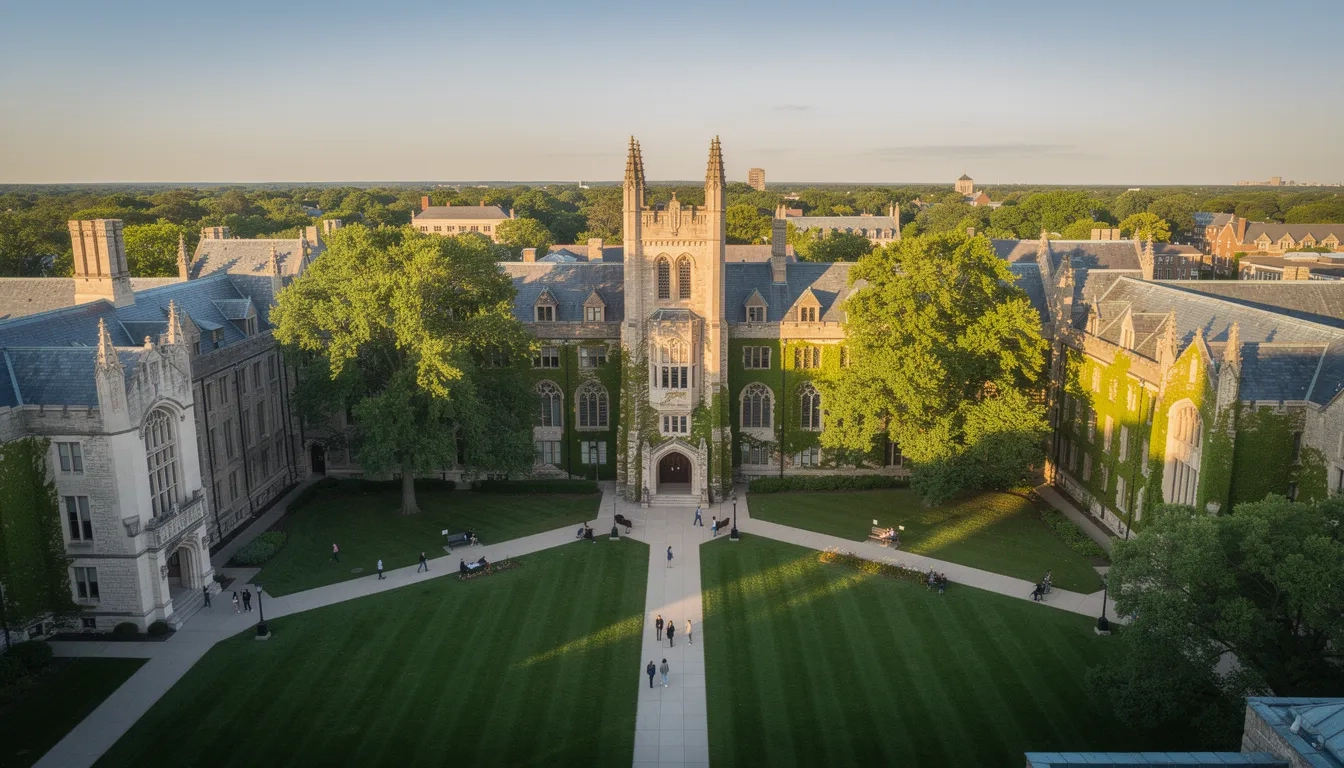
The first time I walked through Princeton's FitzRandolph Gate, I stood there for a solid three minutes — which is embarrassing, but also very human. Gothic spires, ivy-covered stone, century-old elms filtering October light. It felt less like a college campus and more like someone had transplanted a medieval city to central New Jersey. That feeling, the one that makes your stomach drop a little, is what separates the campuses on this list from the thousands of others.
What "Beautiful" Actually Means on a Campus
Not just architectural style. The campuses that earn the top spots year after year combine at least two of three things: coherent architectural vision, a compelling natural setting, and the sense that every quad and pathway was deliberately arranged to work together.
US News & World Report's 2026 list — based on "stunning architecture, picturesque settings, and spectacular landscaping" — reinforces something landscape architects have known for decades: the designed environment shapes how students learn, rest, and connect.
Coherence matters more than any single building. Duke's Gothic West Campus works because the entire side of campus follows one visual language — stone, spire, and shadow — not because Duke Chapel alone is impressive. (It is, though. The 210-foot tower reads from a mile away.)
The Gothic Heavyweights: Princeton, Yale, Duke, Notre Dame, and Chicago
These five appear at the top of nearly every serious ranking. There's a reason. Each built around a unifying architectural language and then held to it for over a century.
Princeton's 600-acre campus is the gold standard. Nassau Hall, completed in 1756, is a National Historic Landmark that anchors the whole composition. Walk from there through Blair Arch and you're moving through a sequence of outdoor rooms — courtyard to courtyard — that feels almost theatrical. It has the density of a medieval city and the upkeep of a botanical garden.
Yale operates at a different scale, 315 acres in the middle of New Haven, but Harkness Tower's 216-foot spire and the vaulted reading room inside Sterling Memorial Library create an intensity Princeton doesn't quite match. Sterling was built to look more like a Gothic cathedral than a library. That was entirely intentional. The University of Chicago's Rockefeller Chapel, at 207 feet, tells a similar story on its quadrangles.
Notre Dame splits the difference between Gothic and Romanesque. The Golden Dome reads across the Indiana flatlands for miles. But the Basilica of the Sacred Heart, with its detailed stonework and painted interior, is the more affecting building up close.
The campuses that age the best are the ones built with conviction. Commit to one style, obsessively, for a hundred years, and time does the rest.
Duke's West Campus arrived last to this group, designed in the 1920s, but may be the most photogenic: stone arches, gargoyles, flying buttresses, and that chapel spire set against a Piedmont forest. On a foggy November morning, it looks fictional.
West Coast Beauties: Stanford, Pepperdine, UCLA, and the University of Washington
California gives us two very different arguments for campus beauty.
Stanford's Main Quad is Spanish Colonial Revival done right: red-tiled roofs, sandstone walls, arcaded walkways, and Stanford Memorial Church with its intricate mosaic facade at the east end. Hoover Tower adds a vertical accent. The full campus covers 8,180 acres — roughly the size of San Francisco — so most visitors only see a fraction of it. What they see is enough.
Pepperdine might be the most dramatically sited campus in America. The university perches on a bluff above Malibu, with Mediterranean-style buildings looking straight over the Pacific. On a clear day, you can see Catalina Island from the upper campus. That's not architecture doing the work. That's geography.
UCLA offers the classic Southern California experience. Royce Hall and Powell Library — both Romanesque Revival, both from 1929 — flank a central quad in a way that feels balanced without being static. The campus has appeared as a film location in over 200 productions, which means parts of it feel strangely familiar on a first visit.
The University of Washington in Seattle earns its spot with two things: the Suzzallo Library's vaulted 65-foot reading room (modeled after King's College Chapel at Cambridge) and a row of roughly 30 Yoshino cherry trees along Rainier Vista. The bloom lasts about 11 days each spring. Students plan around it.
The Olmsted Campuses and the Art of Landscape Design
Here's what most campus rankings underplay: architecture gets the attention, but landscape design is what determines how a campus actually feels to move through.
Frederick Law Olmsted Sr. — the firm's founder and the designer of New York City's Central Park — shaped the grounds at Stanford and Wellesley. His firm later worked at Denison University in Granville, Ohio, and that work has compounded beautifully over nearly two centuries of institutional stewardship.
Denison's campus sits atop a hill overlooking central Ohio farmland. US News & World Report placed it in the top 5 most beautiful campuses in its 2026 rankings. The grounds have earned multiple national awards for beauty and sustainable maintenance, including the Olmsted Property Honor Award in 2024. Swasey Observatory, built in 1909 from white Vermont marble and funded by telescope designer Ambrose Swasey, is the kind of building you stumble across here: completely unmarked, completely extraordinary.
The University of Virginia deserves special mention. Thomas Jefferson designed the Academical Village himself, modeled the Rotunda on the Roman Pantheon, and positioned the pavilions to frame views of the Blue Ridge Mountains. It is a UNESCO World Heritage Site. New buildings on the periphery are still required to echo the original vocabulary — which either sounds controlling or visionary, depending on your perspective.
Indiana University Bloomington follows a different logic: every major building on campus is built from local Indiana limestone, giving the whole campus a warm, unified amber tone that reads completely differently from the gray stone of the Gothic colleges. The Jordan River, actually a modest stream (the name is aspirational), winds through the core and creates a natural greenway that no architect designed.
Underrated Picks: The Campuses That Deserve More Credit
Here's my honest take: the most beautiful campuses in America are not necessarily the most famous ones.
Colgate University in Hamilton, New York sits on a hilltop with views of Chenango Valley that rival anything in New England. The campus has a concentrated beauty — historic buildings, mature hardwoods, and a small reservoir — that doesn't require enormous scale to work. Most people couldn't place Hamilton on a map, which is exactly why Colgate flies under the radar on most national lists.
Lewis & Clark College in Portland looks like someone converted a private estate into a university. That's literally what happened. The main campus sits on 137 acres of a former private estate with formal gardens, brick manor buildings, and hiking trails connecting to Forest Park. Views of Mount Hood appear through the tree line on clear days.
UNC Chapel Hill's Old Well — a domed neoclassical temple structure from 1897 — exists purely as an ornamental water source and campus focal point. McCorkle Place, a large historic lawn flanked by 19th-century structures, gives the old campus the feel of a civic commons. The dogwoods bloom in early April.
Dartmouth in Hanover, New Hampshire closes this section. Georgian architecture, the Connecticut River two blocks from the college green, Baker-Berry Library's clock tower reading like a church steeple from the village. Fall foliage in October makes photographers drive four hours from Boston.
What's Being Built Now
The 2026 picture isn't only about preservation. Some campuses are adding buildings that will anchor rankings lists 30 years from now.
Spelman College opened the Center for Innovation and the Arts in January 2025 — an $86 million, 84,000-square-foot building that connects maker spaces, galleries, and performance venues in a linked network of rooms. For a historically significant campus that already had strong architectural bones, the new building adds a contemporary counterpoint without overwhelming the historic core.
Washington University in St. Louis makes a strong case for the modern Gothic revival campus. Brookings Hall's castle-like towers anchor the core; newer additions on the north end bring glass-and-steel work into a real conversation with the older stone buildings. That tension, when it works, is more interesting than pure uniformity.
Bard College's 1,100-acre Hudson Valley campus is the only place in American higher education where you might turn a corner and find a Frank Gehry titanium building (the Richard B. Fisher Center for the Performing Arts) emerging from an apple orchard. The grounds include streams, ravines, ponds, meadows, woodlands, and one of the nation's oldest working orchards. Whether that combination is beautiful or disorienting probably says something about you.
How to Actually Evaluate a Campus Beauty
Most prospective students tour on the official route, which is designed to show the best angles in the best sequence. That's marketing, not information.
When you visit, check for:
- The in-between spaces — the paths, benches, and informal gathering spots, not just the landmark buildings
- Architectural coherence — does the campus feel like a designed whole, or like 40 buildings that happened to end up near each other?
- The campus at actual operating hours — a busy Tuesday afternoon is more revealing than a Saturday morning when buildings are locked
Walk alone, unguided, for 45 minutes. You're not looking for the highlights. You're looking at the connective tissue.
| Campus | Architectural Style | Setting | Signature Feature |
|---|---|---|---|
| Princeton | Collegiate Gothic | Suburban NJ | Nassau Hall (1756), quad sequence |
| Stanford | Spanish Colonial Revival | Bay Area foothills | Main Quad, Memorial Church mosaics |
| University of Virginia | Neoclassical | Blue Ridge Mountains | Rotunda, UNESCO-designated Lawn |
| Denison | Olmsted landscape design | Central Ohio hills | Swasey Observatory, 550-acre biological reserve |
| Pepperdine | Mediterranean | Malibu bluffs | Pacific Ocean views from campus |
| Duke | Collegiate Gothic | Piedmont forest | Duke Chapel, unified West Campus |
| UW Seattle | Collegiate Gothic / Modern | Pacific Northwest | Suzzallo Library reading room, cherry blossom mall |
| Bard | Mixed contemporary | Hudson Valley | Gehry performing arts center, 1,100-acre grounds |
One practical note worth stating plainly: campus beauty correlates weakly with overall student satisfaction. Niche's data, which weights campus quality alongside safety, food, social life, and academics, bears this out consistently. A gorgeous campus at a poor social or academic fit is still a poor fit. The view from your dorm window matters less than you'll think it does on move-in day.
Bottom Line
- For Gothic architecture: Princeton, Yale, Duke, and Notre Dame are the undisputed top tier — worth visiting even if you're not applying.
- For landscape design: Denison and UVA are the most sophisticated examples of purposeful campus landscape in the country. Neither gets enough credit for it.
- For dramatic natural setting: Pepperdine and the University of Washington have geography that no architect could replicate with buildings alone.
- For contemporary architectural investment: Spelman's $86 million arts center and Bard's ongoing relationship with major architects represent the strongest current cases.
- The overlooked reality: Colgate, Lewis & Clark, and Dartmouth consistently outperform their name recognition. Put at least one on your visit list.
Frequently Asked Questions
Which campus ranks #1 most beautiful in 2026?
Princeton and Stanford appear at or near the top of every major 2026 ranking — Niche, US News, and Research.com all place them in the top five. Princeton's Gothic architecture and Stanford's Spanish Colonial Revival represent two very different aesthetic traditions, both executed at an extremely high level over more than a century of continuous investment.
Is it a myth that Ivy League campuses are automatically the most beautiful?
Yes, largely. Yale and Princeton are genuinely among the best-designed campuses anywhere, but not all Ivies are equal on this front. Cornell's Ithaca campus can feel severe in winter, Harvard's campus is fragmented across city blocks rather than organized as a unified space, and Brown's College Hill setting is charming but modest. The Ivy League brand and campus beauty are different things that sometimes overlap.
What makes Denison University's campus stand out specifically?
Denison's grounds were designed by the Olmsted Sons firm — the same lineage responsible for New York's Central Park and Stanford's landscape. The campus sits atop a central Ohio hill and includes a 550-acre biological reserve. It won the Olmsted Property Honor Award in 2024 and landed in US News's top 5 for most beautiful campuses in 2026 — an unusual achievement for a small liberal arts college in the Midwest.
What should I actually look for when visiting a campus?
Look beyond the landmark buildings. The in-between spaces — how paths connect buildings, where students naturally gather, how sunlight falls in the late afternoon — tell you more about daily campus life than any single impressive structure. Also visit during the academic year on a weekday, not a Saturday in April when everything is staged for visitors.
Are campuses with newer buildings less beautiful?
Not necessarily. Spelman College's $86 million Center for Innovation and the Arts opened in January 2025 and has been widely praised as a strong addition to a historically significant campus. Bard College's Frank Gehry building is a genuine architectural landmark. New construction becomes a problem when it's cheap, incoherent, or indifferent to the existing campus vocabulary — not because it's new.
Do beautiful campuses influence where students choose to enroll?
Substantially. Campus aesthetics are a documented factor in enrollment decisions — first impressions during campus visits frequently influence where prospective students ultimately apply and commit. But the effect is strongest during the search phase. Once students are enrolled and comparing the actual experience against their expectations, factors like academic quality, social fit, and career outcomes tend to dominate.
Sources
- 2026 Niche's Best College Campuses in America
- Top 50 Most Beautiful College Campuses in America - Research.com
- 30 Most Beautiful College Campuses - US News & World Report
- The 10 Most Beautiful College Campuses with Classical Architecture
- The 10 Most Beautiful College Campuses in the USA
- The 7 Most Beautiful College Campuses in the United States
- U.S. News Places Denison Among America's Most Beautiful Campuses
- U.S. News Ranks TCU in Top 30 Beautiful College Campuses