Michigan vs Ohio State: Inside College Football's Greatest Rivalry
November 29, 2025. Michigan Stadium. 111,373 people in the stands, all of them watching Bryce Underwood complete 8 passes for 63 yards — a season-low by a wide margin — while Ohio State dismantled the Wolverines 27-9. First time Michigan hadn't scored a touchdown in The Game since 2007. Four consecutive Michigan wins in the rivalry, gone in one afternoon.
That's the cruelest trick this rivalry plays. Nothing stays settled. Ever.
The Origins of a Blood Feud
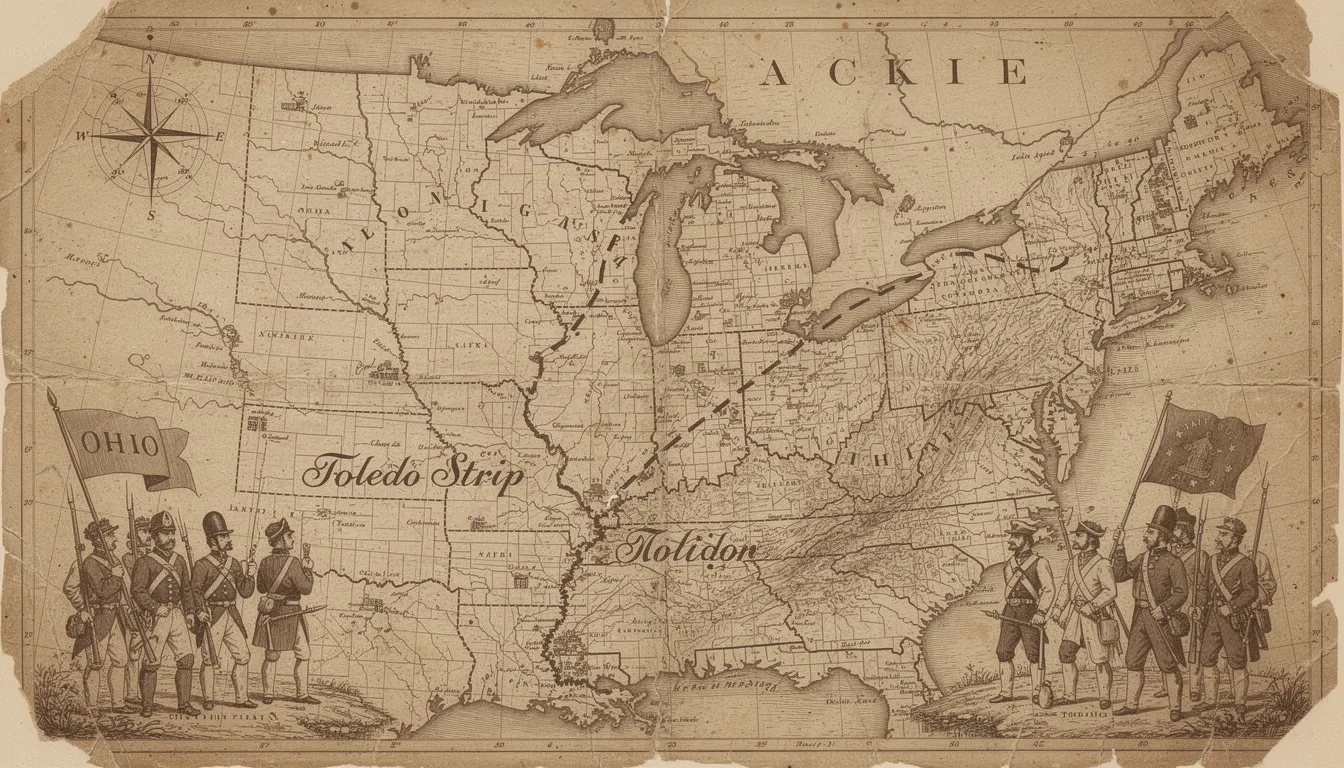
The Michigan–Ohio State rivalry didn't begin on a football field. It began with a border war. In 1835–36, both states sent actual militias toward a disputed strip of land that included Toledo. Ohio kept Toledo; Michigan received the Upper Peninsula as a political consolation. Both sides claimed victory. Both sides still argue about who got the better deal.
The first football game came on October 16, 1897 — Michigan won 36-0 and barely slowed down. Michigan won 12 of the first 14 meetings, including an 86-0 demolition in 1902 so lopsided it reportedly inspired Ohio State students to write their beloved alma mater, "Carmen Ohio," as a rallying cry for better days. Ohio State didn't win until their 16th attempt, a 13-3 decision in 1919.
By the mid-20th century, the game had earned a title: "The Game." Not a rivalry game. Not one of the big ones. The Game, with a definitive article that requires no further explanation anywhere within 500 miles of the Ohio-Michigan border.
The 1950 Snow Bowl locked in its mythological status. Michigan and Ohio State combined for 45 punts in blizzard conditions. Ohio State's Vic Janowicz alone punted 21 times for 685 yards. Three combined first downs for the entire game. Michigan won 9-3, with both scores coming from blocked punts, and headed to the Rose Bowl. Ohio State went home. Strange doesn't begin to describe it.
The Ten-Year War: Hayes vs. Schembechler
To understand the rivalry's emotional core, you need to sit with Woody Hayes and Bo Schembechler for a while. Not just their records — their pathologies.
Hayes famously refused to say the word "Michigan." He called it "that state up north" and reportedly refused to buy gasoline while driving through the state, declaring he wouldn't spend a single dollar there. His players were banned from even pronouncing the word in film sessions.
Schembechler had been Hayes' own assistant at Ohio State. When Schembechler arrived in Ann Arbor in 1969 and promptly upset Hayes' top-ranked, heavily favored Buckeyes 24-12 in his very first game, the insult had a personal dimension that pure competition can't manufacture. Michigan's defense intercepted Ohio State six times that afternoon. The Ten-Year War was on.
From 1969 to 1978, Hayes and Schembechler combined for 13 Big Ten titles and 11 Rose Bowl appearances between them. The rest of the conference was competing for third place — and they knew it.
Schembechler finished 5-4-1 against his former mentor. Hayes was fired after the 1978 Gator Bowl, when he punched a Clemson linebacker who had intercepted a pass in the closing minutes. The War ended. The rivalry's intensity didn't.
How Ohio State Seized Control in the 21st Century
After the Hayes–Schembechler era, coaching became the defining variable. Ohio State hired Jim Tressel in January 2001. At his introductory press conference, Tressel stood in front of a crowd of Ohio State fans and told them he'd beat Michigan. He delivered — going 9-1 in the series and engineering an 8-game winning stretch that quietly buried Michigan's program confidence.
Before Tressel, there was John Cooper's legendary futility. Cooper went 2-10-1 against Michigan over 13 seasons. Michigan students reportedly celebrated "John Cooper Day" on February 10 — written as 2/10/1, matching his record exactly. The writing was on the wall for years before Ohio State finally let him go.
Urban Meyer then went 7-0 against Michigan from 2012 to 2018, making it clear the gap had become structural, not cyclical. Jim Harbaugh arrived in Ann Arbor in 2015 promising to fix things and went 0-5 against Ohio State in his first five seasons. Ryan Day took over the Buckeyes in 2019 and won his first game against Michigan that year.
Ohio State's 21st-century record against Michigan by coaching era:
| Era | Ohio State Coach | Record vs Michigan |
|---|---|---|
| 2001–2010 | Jim Tressel | 9-1 |
| 2012–2018 | Urban Meyer | 7-0 |
| 2019–2025 | Ryan Day | 2-4 |
| 2000–2025 total | Multiple | 17-5 |
That 17-5 modern record is the number Ohio State fans reach for when the all-time series ledger comes up. And it's a fair point.
Michigan's Four-Year Revenge Tour (2021–2024)
Something shifted in Ann Arbor in 2021. Michigan beat #2 Ohio State 42-27. Hassan Haskins scored five touchdowns — the most by a running back in a single game in series history. It ended an eight-game Ohio State winning streak in the rivalry. Harbaugh finally had his first win against his nemesis.
Then it happened again. In 2022, Michigan went to Columbus and won 45-23 in Ohio State's building for the first time since 2000. That game drew 19.6 million television viewers, making it the most-watched regular-season college football game since 2011.
The 2023 game attracted even more eyeballs — peaking at 22.9 million viewers as Michigan won 30-24 — and what followed in 2024 was genuinely shocking. Michigan entered unranked, 6-5, as 20.5-point underdogs against #2 Ohio State. Final score: 13-10 Michigan. ESPN confirmed it as the largest upset in the 127-year history of the series. Both programs were fined $100,000 each after Michigan players planted their flag at Ohio State's midfield logo postgame.
Four straight losses for Ryan Day. His job security in Columbus had quietly become a genuine conversation topic.
Ohio State Strikes Back: The 2025 Reckoning
Ohio State arrived at Ann Arbor at 11-0, ranked #1 in the country, with something to prove beyond a conference title. They proved it efficiently.
Quarterback Julian Sayin went 19-of-26 for 233 yards and three touchdowns. Running back Bo Jackson ran for 117 yards — a season-high — and the Buckeye defense held Michigan scoreless after halftime. The third-down numbers told the whole story: Ohio State converted 10-of-17; Michigan converted 1-of-9. Final total yardage: 419 for Ohio State, 163 for Michigan.
Bryce Underwood — the five-star freshman who had been one of the most recruited quarterbacks in recent memory — managed just 63 yards on 8 completions. The Wolverines' three scores were all first-half field goals from Dominic Zvada (45, 25, and 49 yards). Nothing after that.
For Day, the 27-9 win closed a personal chapter that had grown heavier each season. Ohio State earned a first-round bye in the College Football Playoff and headed to the Big Ten Championship.
What the Record Books Actually Say
Michigan leads the all-time series 62-53-6 across 121 games since 1897. But quoting that number without context is a selective reading of history. Michigan's overall lead was built largely in the early decades of the rivalry, when Ohio State was still developing its program. Since 2000, the advantage has flipped hard.
Both programs are among the most decorated in college football history:
| Metric | Michigan | Ohio State |
|---|---|---|
| All-time wins | 1,012 | 978 |
| National championships | 12 | 9 |
| Heisman Trophy winners | 3 | 7 |
| NFL draft picks (all-time) | 438 | 512 |
| Consensus All-Americans | 88 | 93 |
Ohio State's 7-to-3 Heisman advantage is the number that gets underplayed in these comparisons. Seven Heisman winners is not a minor gap — it reflects sustained production of individually elite players across generations. Michigan's win total leads, but Ohio State's trophy case for individual excellence is not close.
The combined 945 NFL draft picks between the two programs explains why NFL scouts treat late November like a second job.
Why This Rivalry Still Matters More Than Most
ESPN ranked Michigan–Ohio State as the greatest North American sports rivalry of any kind in 2000. That was before YouTube, before the 12-team playoff, before NIL changed college football's economics entirely. The question isn't whether the ranking was fair then. It's whether it still holds now.
The argument for yes: no other college football rivalry consistently places two top-10 programs against each other in late November with playoff seeding directly on the line. The SEC has tremendous rivalries, but the conference often sends three or four teams to the playoff — one loss in a rivalry doesn't usually end anyone's season. In Columbus and Ann Arbor, November 29 can end everything.
The 2022 and 2023 games each crossed 19 million viewers. The 2024 upset drew more attention than almost any regular-season game in recent memory. The 2025 matchup settled a #1 seed and a playoff bye. That's not atmosphere — those are real stakes with real consequences.
And there's a cultural weight you can't manufacture. Kids who grow up near the Ohio-Michigan border absorb this rivalry as part of their identity, not a sports preference. The November score gets relitigated at Thanksgiving dinners for the full following year. Woody Hayes refused to buy gas in Michigan. Bo Schembechler won his first game against his own mentor. That kind of personal texture accumulates over 128 years.
Both programs are operating at an elite level heading into 2026. The swings of power will continue. They always have.
Bottom Line
- Ohio State holds the modern edge (17-5 since 2000), even though Michigan leads the all-time series 62-53-6. The historical advantage is real but largely built on early-decade dominance.
- Michigan's four-year run (2021–2024) was genuine, not lucky — it included wins in Columbus, a record-setting upset as 20.5-point underdogs, and multiple top-10 wins.
- Ohio State's 2025 response was dominant in every statistical category. Julian Sayin's 3-TD performance and a 27-9 final score closed Michigan's winning chapter cleanly.
- The 2026 matchup is already scheduled at noon on FOX, and with Bryce Underwood developing at Michigan and Ohio State returning core offensive weapons, the next edition will again carry playoff weight.
- If you watch one college football rivalry annually, this is the one. The stakes are legitimate, the history is 128 years deep, and neither program stays down long enough for the story to get boring.
Frequently Asked Questions
Who leads the all-time series between Michigan and Ohio State?
Michigan leads 62-53-6 across 121 games through the 2025 season. But that overall record is heavily influenced by Michigan's dominance in the early 1900s, including a 9-game winning streak from 1901-1909. Since 2000, Ohio State leads 17-5.
What is "The Game" and why does it have that name?
"The Game" is the annual Michigan-Ohio State football matchup, played in late November. The name reflects its historic weight: for most of the 20th century it functioned as a de facto Big Ten championship game, and even today it regularly determines playoff seeding. No other college football rivalry uses a definitive article that casually.
Was Michigan's 2024 win over Ohio State really the biggest upset in series history?
Yes. Michigan entered that game unranked with a 6-5 record as 20.5-point underdogs against #2 Ohio State. The 13-10 final was confirmed by ESPN as the largest upset in the series' 127-year history. The postgame scene escalated when Michigan players planted their flag at midfield, resulting in $100,000 fines to both programs.
What was the Ten-Year War between Hayes and Schembechler?
The Ten-Year War (1969–1978) refers to the stretch of Michigan-Ohio State games matching coaches Woody Hayes and Bo Schembechler. Both coaches built top-five programs annually, splitting 13 Big Ten titles between them in that decade. Schembechler had been Hayes' assistant, which gave their competition a personal dimension that pure recruiting rivalry can't replicate. Schembechler finished 5-4-1 against his mentor.
Is Ohio State or Michigan better at producing NFL talent?
Ohio State has a clear edge: 512 all-time NFL draft picks to Michigan's 438, for a combined 945 total. Ohio State also leads in Heisman Trophy winners 7-3. In recent draft classes, both programs have placed players in the first round consistently, but Ohio State has produced more overall volume and more top-10 picks in the modern era.
How many people watch The Game each year?
Viewership has grown substantially in the 2020s. The 2022 Michigan-Ohio State game drew 19.6 million viewers, the most-watched regular-season college football game since 2011. The 2023 edition peaked at 22.9 million. Both games aired on FOX, and the rivalry consistently ranks among the highest-rated regular-season sports broadcasts of any year.
Sources
- Michigan–Ohio State football rivalry - Wikipedia
- Postgame Notes: Ohio State 27, Michigan 9 - University of Michigan Athletics
- Ohio State 27-9 Michigan (Nov 29, 2025) Game Recap - ESPN
- Michigan vs. Ohio State: Historic Big Ten matchup by the numbers - FOX Sports
- A storied rivalry: What makes Ohio State and Michigan embattled enemies? - Spectrum News