The Essential Dorm Room Items Checklist Nobody Actually Gives You
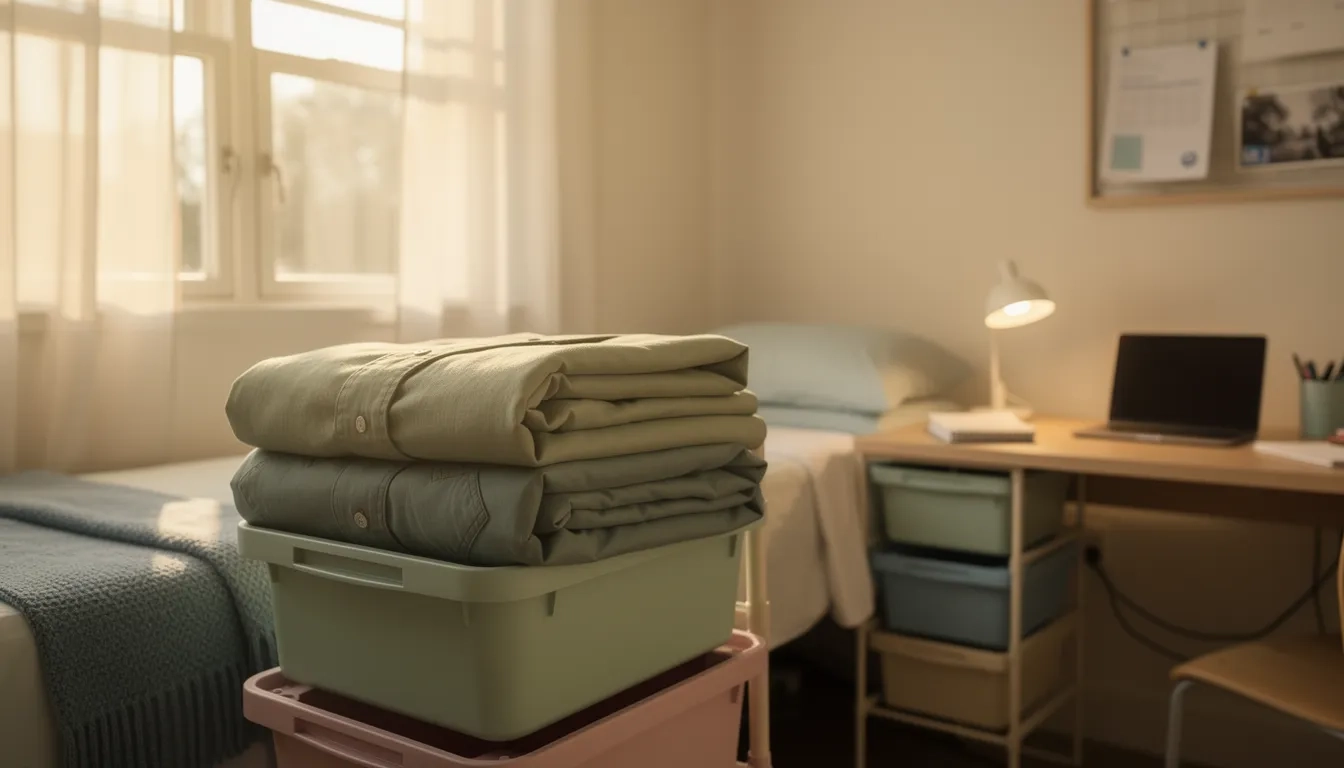
Here's the thing nobody tells you until move-in day: your dorm room is roughly 100 to 150 square feet, which is about the size of a small walk-in closet, and you're splitting it with a stranger. Most packing lists ignore that math entirely and hand you 80 items like you're furnishing a studio apartment. You're not. You're solving a space puzzle, and the wrong first move — six storage bins, a giant fan, a spare set of furniture — turns week two into a mess you're tripping over every morning.
This checklist skips the filler. It's built around what colleges actually restrict, what students actually forget, and what genuinely earns its square inch of your dorm.
Check Your Housing Portal Before You Buy Anything
This sounds obvious. It isn't followed nearly enough, and it's the single step that determines whether the rest of this list even applies to you.
Every school furnishes dorms differently, and the gaps between them are bigger than people expect. The University of Cincinnati, for instance, supplies a bed, desk, chair, wardrobe or dresser, and in many residence halls, a microwave-fridge combo already built in. Bring your own on top of that and you've just donated half your floor space to a redundant appliance sitting next to the one the school already gave you.
Harvard goes further in the other direction: first-years get beds, dressers, wardrobes, desks, and chairs, but decorations are limited to putty only — no nails, no Command strips that might damage walls, no exceptions mentioned in their own student guide. A school two states over might allow removable adhesive hooks rated for 5 pounds and ban putty entirely because of staining concerns on painted cinderblock. Neither policy is more "standard" than the other; they're both just what that specific housing office decided, which is exactly why guessing from a generic list is a losing strategy.
If you are on the fence about bringing something, it's better not to bring it. Most things you'd need are available near campus anyway.
That's a Harvard senior's actual advice to incoming freshmen, and it's the single best filter for this whole list. Before you order anything, pull up your specific housing community's page and check three things:
- What furniture and appliances are already in the room
- What's explicitly banned (this varies more than you'd think)
- Size caps on fridges and microwaves, since "mini fridge" means different things at different schools — some cap wattage, others cap cubic feet, and a handful require combo units purchased through an approved vendor
If the portal doesn't answer a question, email your Residence Life office directly rather than assuming. A five-minute email in July beats a $150 appliance getting confiscated during a room inspection in September.
The Roommate Text You Should Send in July
One message prevents the most common dorm-room mistake: two microwaves, two fridges, two TVs, all fighting for two outlets. Ask your roommate who's bringing the shared appliances before either of you clicks "buy." It's a five-minute conversation that saves 20 square feet, and it also surfaces the smaller conflicts early — who's bringing the vacuum, whether either of you has a fan, whether one of you already owns a decent set of shower shoes in the other's size. The goal isn't just avoiding duplicates; it's splitting the shared-item list so the financial burden isn't lopsided either.
Bedding: The One Category Where "Close Enough" Fails
Dorm beds run Twin XL, five inches longer than the standard twin mattress sitting in your childhood bedroom. Regular twin sheets will not stretch to fit, and finding this out at 11 p.m. on move-in night — after the campus bookstore has closed and the nearest Target requires a car you don't have yet — is a bad way to start the semester.
| Item | Why it matters | Skip if... |
|---|---|---|
| 2 sets Twin XL sheets | One's always in the wash | Never — always bring both |
| Mattress topper | Dorm mattresses are notoriously thin and firm | You're bringing your own mattress (rare) |
| 2 pillows | Cheap dorm pillows flatten fast | You have a strong preference already |
| Comforter + mattress pad | Dorm HVAC swings wildly by building | — |
A mattress topper shows up on nearly every credible dorm list for a reason: it's one of the few $70-ish purchases that measurably changes how you sleep for nine months. ViscoSoft and similar memory-foam toppers run around $73, and students who skip this category consistently rank it as their biggest regret by October, usually right around midterms when sleep quality starts actually mattering.
The tradeoff worth knowing: memory foam toppers run warmer than gel-infused or down-alternative options, which matters more in buildings without central air. If your building is one of the older ones without AC — common at schools with historic residence halls — a gel-infused topper or a breathable down-alternative pad is worth the few extra dollars over standard memory foam. Check with current residents or your housing portal's building notes before assuming central air is standard; plenty of flagship dorms still run window units only.
The Fire Code Items That Actually Get You Fined
This is where generic packing lists get lazy, and it's exactly where you shouldn't be. Residence life offices treat electrical safety as non-negotiable, not a suggestion, and violations show up during routine health-and-safety inspections that most halls run at least once a semester — often unannounced.
The University of Rochester's fire safety policy spells out what most schools enforce in some form: multi-plug adapters, power taps, and extension cords do not count as surge protectors, and surge protectors cannot be plugged into each other — a practice called daisy chaining that shows up in nearly every campus fire inspection violation report. The distinction matters because a plain extension cord has no circuit breaker; if it overloads, nothing shuts it off before it overheats. A surge protector with a genuine over-current protector does.
Look for the UL Mark specifically, not "UL compliant" language, which isn't the same certification and doesn't meet the same testing standard. Plenty of budget power strips print "UL compliant" or "meets UL standards" on the packaging without ever being submitted for the actual UL testing process — it's a marketing phrase, not a certification. According to SafeElectricity.org, a legitimate dorm-safe power strip needs an over-current protector built in, so it cuts power automatically before a surge starts a fire.
Commonly banned across residence halls:
- Candles or anything with an open flame, decorative or not — this includes wax warmers in a lot of buildings, which surprises people since there's no visible flame
- Space heaters, even small ceramic ones
- Hot plates and toaster ovens, since anything with an exposed heating element usually violates fire code
- Halogen lamps in many buildings, because the bulbs run hot enough to ignite nearby fabric
Anker's dorm-marketed surge protectors run about $20 and are UL-listed, which is the detail that matters more than the brand name. If your room has only two wall outlets — common in older buildings — one good six-to-eight-outlet surge protector with USB ports built in solves the outlet shortage without needing a second strip, which sidesteps the daisy-chaining problem entirely.
Bathroom and Shower Setup for Shared Facilities
If you're in a hall with communal bathrooms, this category isn't optional decoration — it's daily infrastructure. A shower caddy (the mesh kind drains faster than solid plastic, worth the extra $2) carries everything down the hall and back without you making three trips before your first class.
Shower shoes matter more than people admit. Communal shower floors host exactly the kind of fungal environment you'd expect from dozens of people cycling through daily, and going barefoot is how athlete's foot and plantar warts spread through a hall by October. Buy a pair specifically for the shower and don't wear them anywhere else — cross-contaminating them with regular outdoor use defeats the purpose.
Core bathroom kit:
- Shower caddy (mesh, quick-drain)
- Shower shoes or slides
- Towel set — at least one bath towel plus a smaller one for the gym
- Toothbrush, toothpaste, floss
- Shampoo, conditioner, body wash in travel-lockable containers
- Robe or long towel wrap for the walk back to your room
If you're in a suite-style room with a private or semi-private bathroom instead, most of this list still applies, but you can skip the caddy in favor of a small shelf organizer, since you're not transporting items down a public hallway. Check your specific bathroom configuration before assuming — "suite" means different things across schools, and some "suites" still share a bathroom between two full rooms rather than one.
Study and Tech Setup You'll Actually Use
Desk setups get less attention on most packing lists than bedding does, but they matter just as much once classes start. Dorm outlets rarely sit where you'd want them relative to the desk, so a 10-foot charging cable solves a problem a 3-foot one creates daily — you shouldn't have to choose between charging your laptop and sitting at your desk to use it.
A desk lamp does more than add ambiance. Dorm overhead lighting is almost universally harsh fluorescent, and studying under it for hours produces the kind of eye strain that makes a $15 desk lamp one of the better value purchases on this list. Pair it with a warm-white bulb rather than daylight-white if you're using the desk at night; the color temperature difference affects how easy it is to wind down afterward.
Before buying school supplies in bulk, check whether your program leans digital. Some majors still run almost entirely on printed readings and physical notebooks; others expect laptop note-taking and PDF annotation from day one. A folder for syllabi and loose paperwork is worth keeping regardless, since even digital-first programs generate physical forms during the first few weeks — parking permits, meal plan paperwork, club sign-up sheets. Most campuses also have computer labs with printers available to students, so a personal printer is rarely worth the desk space it costs; check your library's printing allowance before assuming you need your own.
The First Aid Kit Everyone Forgets Until They Need It
Ask any RA what students text home for at 2 a.m. and "do you have Advil" ranks near the top. A basic first aid kit costs under $20 and covers the gap between minor illness and a trip to student health services, which usually isn't open at midnight and often runs an appointment-only model even during the day.
Build it yourself rather than buying a pre-made kit, because pre-made kits skip the medicine you actually reach for. Include the cold remedy you already know works for you, not a generic substitute — brand loyalty during a fever is real and 3 a.m. is the wrong time to experiment with a medication you've never taken before.
What to actually pack:
- Pain relievers (ibuprofen and acetaminophen — different active ingredients cover different situations, and having both means you're not stuck if one doesn't touch a specific kind of pain)
- Antacids and anti-diarrheal medication
- Bandages, gauze, medical tape
- Digital thermometer
- Cold and allergy medicine you already trust
- A copy of your insurance card and prescription list
If you take a prescription medication regularly, confirm early whether your student health center can handle refills locally or whether you'll need mail-order continuity from a pharmacy back home — this is a logistics question worth solving before the semester starts, not after you run out.
Documents Folder: The Ten-Minute Task With a Big Payoff
This is the category that never makes it into "essentials" photos on social media but causes the most stress when it's missing. Keep one folder — physical or a labeled folder on your phone — with your student ID confirmation, housing assignment, immunization records, insurance card, prescription information, and financial aid paperwork. Residence life offices, health centers, and financial aid windows will all ask for some subset of this during the first two weeks, usually at the exact moment you don't have it on hand.
Storage, Laundry, and the Vertical Space Trick
Floor space in a shared dorm disappears fast, but ceilings are usually taller than the room feels, which means vertical storage does more work per dollar than anything horizontal. Under-bed bins (clear plastic, not cardboard — you need to see what's inside without unstacking three boxes) reclaim space most students never think to use, and a set of stackable bins that fit your bed's specific lift height is worth measuring for before buying, since risers vary by a few inches between schools.
A backpack-style laundry bag beats a basket for one practical reason: laundry rooms are rarely on your floor, and carrying a full basket down two flights of stairs while balancing detergent is a skill nobody wants to learn the hard way. The backpack style also frees both hands, which matters more than it sounds like it should when you're also carrying a phone, a key, and a mesh bag of quarters or a laundry card.
Skip these unless your school explicitly allows them:
- Large furniture (floor plans aren't released until move-in for most first-year assignments, so you're guessing at fit, and a couch that doesn't clear the doorway becomes someone else's problem to move back out)
- More than one extra pair of shoes beyond weather needs
- A second desk lamp — one good one beats the harsh overhead fluorescent fine
Bottom Line
- Check your specific housing portal first. UC and Harvard furnish rooms completely differently, and "what to bring" changes based on what your building already has.
- Buy two sets of Twin XL sheets, not one. Regular twin sheets are five inches short and won't work.
- Verify UL certification on every power strip, not "UL compliant" language, and never daisy-chain extension cords — this is the fastest way to get written up by residence life.
- Text your roommate before buying appliances. One fridge, one microwave, one TV per room is the realistic ceiling in most spaces.
- Build your own first aid kit with the specific cold medicine and pain reliever you already trust, rather than grabbing a generic pre-made box.
- Keep a documents folder ready before you arrive — housing, health, and financial aid offices will all ask for something from it in the first two weeks.
The single biggest mistake isn't forgetting an item. It's over-packing into a room that can't absorb it, then spending the first two weeks of the semester rearranging bins instead of meeting people down the hall.
Frequently Asked Questions
Do I really need to buy Twin XL sheets, or will regular twin sheets work?
You need Twin XL specifically. Dorm mattresses run five inches longer than a standard twin, and regular sheets will pull off the corners within days. Buy at least two sets so you always have a backup while one's in the wash.
Can I bring a mini fridge and microwave, or does my school provide one?
It depends entirely on your school and even your specific residence hall. Some schools, like the University of Cincinnati, build a microwave-fridge combo into many rooms already. Check your housing portal's appliance policy before buying, and coordinate with your roommate either way — sizing caps also vary, so confirm wattage or cubic-foot limits before ordering.
What's the most commonly forgotten dorm item?
A real first aid kit and a UL-certified surge protector top most residence life offices' lists of things students wish they'd packed. Both are cheap, unglamorous, and exactly the kind of thing you don't think about until you need one at midnight.
Are power strips actually banned in dorms, or just certain kinds?
Basic power strips aren't usually banned outright, but non-surge-protected extension cords and "daisy chained" strips (plugging one surge protector into another) commonly are, per fire codes like the one the University of Rochester enforces. Look for a strip with a genuine UL Mark and built-in over-current protection.
How much stuff should I actually bring for a 100-150 square foot room?
Less than most packing lists suggest. Pack for function first: bedding, a first aid kit, bathroom caddy, laundry bag, and a compact study setup. Skip furniture, duplicate appliances, and anything you're on the fence about — Cambridge and Boston-style college towns almost always have what you'd need within walking distance.
Is a mattress topper worth the money for one school year?
Most students who buy one call it their best purchase by October. Dorm mattresses are consistently described as thin and firm, and a $70-ish memory foam topper is a small cost against nine months of sleep quality. If your building lacks central air, consider a gel-infused or down-alternative topper instead of standard memory foam, which tends to sleep warmer.
Sources
- The College Packing List That Actually Makes Sense | Storage Scholars
- Top 12 Dorm Room Essentials for Freshmen (2026)
- What to bring to college: The ultimate packing list | University of Cincinnati
- Packing Tips for College | Harvard College
- Dorm Safety - Safe Electricity
- Fire Safety and Prohibited Items | University of Rochester