How to Deal With a Difficult Roommate (Without Losing Your Mind)
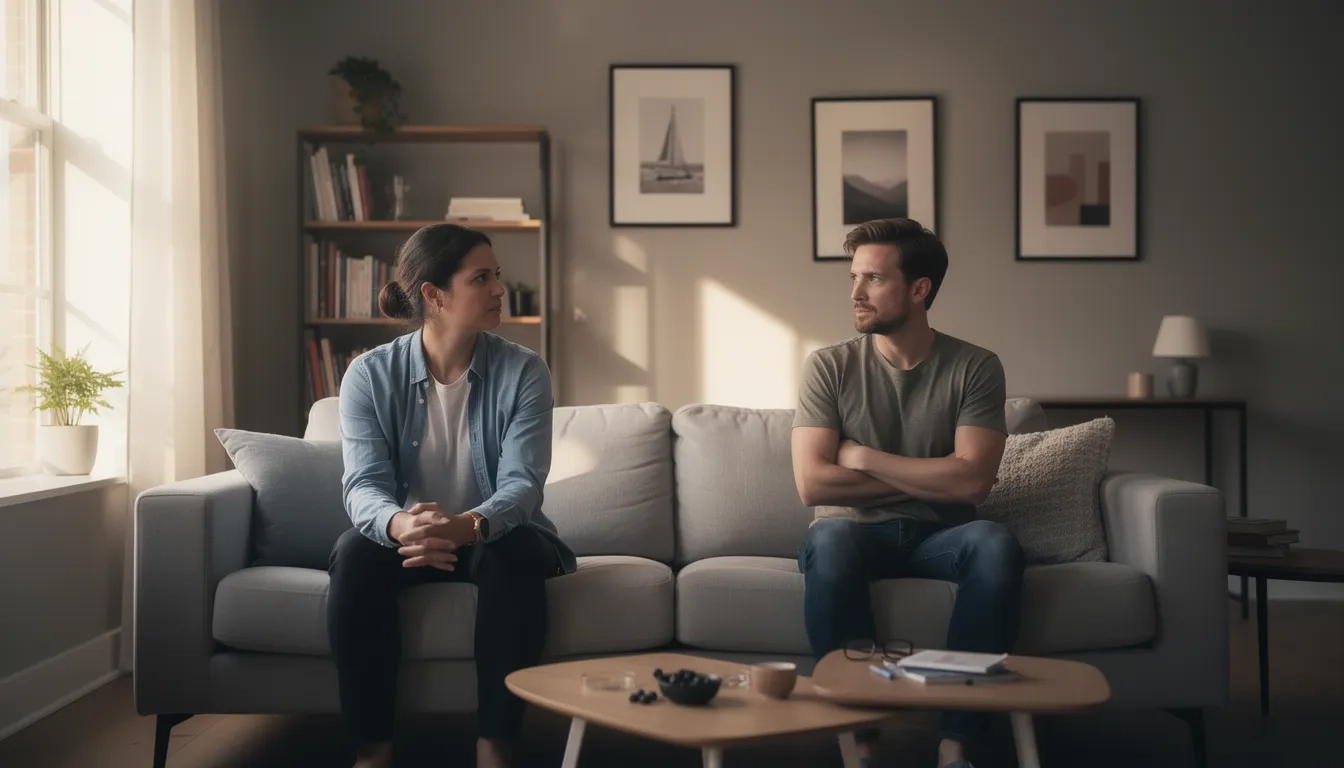
You didn't expect to spend this much mental energy thinking about someone you technically chose to live with. But here you are, rehearsing conversations in the shower, seething over a sink full of dishes, or tiptoeing around the apartment to avoid another awkward silence. Roommate conflict is genuinely exhausting. And most advice online is too polite to be useful.
Why Roommate Conflict Feels So Stuck
Sharing space with another person is a high-stakes social experiment that almost nobody prepares for. You're not quite friends, not family, not coworkers. You're something in between — with financial entanglement and limited escape routes. That combination makes friction stickier than it would be with almost anyone else in your life.
A Boise State University study found that 25% of students reported active roommate problems in the preceding month. One in four people sharing housing, simmering over something at any given time. And those are just the ones who admitted it.
The deeper issue: most conflicts aren't actually about the thing they appear to be about. Dirty dishes are a symptom. The real problem is usually unspoken expectations, a mismatch in how two people think adults are supposed to behave, or a slow erosion of basic respect. You can ask someone to clean the sink 12 times. Until you address the underlying expectation gap, the dishes come back.
One non-obvious truth that most people miss: cleanliness issues and communication issues almost always travel together. A messy roommate who communicates openly is entirely manageable. A tidy roommate who seethes silently for months and then explodes is significantly harder to live with.
The Most Common Flashpoints (And What's Really Behind Them)
Research consistently points to the same conflict categories. According to the Boise State data, here's how common each one is:
- Cleanliness — 47% of roommates cite this as a problem
- Communication breakdowns — 41% trace their conflicts here
- Guest policies — 35% report friction over visitors and overnight stays
- Noise and sleep schedules — mismatched routines create friction on a daily basis
- Bills and shared expenses — money disagreements that tend to get personal fast
- Privacy and personal property — borrowing without asking, entering rooms uninvited
The underlying driver in almost all of these is violated expectations. You assumed your roommate would know not to eat your labeled leftovers. They assumed you'd say something if a behavior bothered you. Nobody lied. Nobody was malicious. They just never had the conversation.
This is why retroactive conflict — fighting about something that's been happening for weeks — feels so loaded. By the time it surfaces, there's a whole emotional history attached to a single behavior. The person who said nothing is angrier than the situation technically warrants. The person who didn't know anything was wrong feels blindsided and defensive.
Address things early, while they're still small. The elephant in the room here is conflict avoidance — it's the reason most roommate problems grow from manageable to miserable.
Preparing for the Conversation
The single biggest mistake people make is having the conversation at the worst possible moment. You're furious, it's 11pm, your roommate just had people over for the third night in a row — and you decide tonight is the night. Don't.
Your physiological state during a conflict largely determines how it ends. Clenching jaw? Tight chest? Shallow breathing? Those are signals to wait, not charge forward. The University of Colorado Boulder's conflict guidance specifically names this the "Conflict Pause Strategy": recognize your physical stress signals and give yourself a buffer before engaging.
Pick a neutral time. Saturday morning, right after a shared meal, or any relaxed weeknight window tends to work. Suggest it low-key: "Hey, can we talk about some house stuff when you have a few minutes this weekend?" That framing makes it feel like maintenance, not an ambush.
Before you say a word, decide what outcome you actually want. Do you want the behavior to change? To feel heard? An apology? A new plan going forward? These require different conversations. Going in without a clear goal tends to produce a venting session that leaves both people feeling worse than before.
Also worth doing before you approach: think honestly about your own role. Maybe you never said anything the first few times and let resentment build. Maybe you sent a passive-aggressive sticky note instead of talking directly. Most roommate conflicts have more than one author.
Having the Conversation Without Blowing It Up
There's a non-violent communication framework called the LARA Method that works well here:
- Listen — Actually hear what your roommate says before forming your response
- Affirm — Find something real to acknowledge in their perspective
- Respond — Address the issue directly, without defensiveness
- Add — Contribute your own view and move toward a specific solution
The Affirm step is the one people skip. It feels like conceding ground. But saying "I hear that you've been stressed lately" doesn't mean you're wrong about the dishes. It means you're treating your roommate as a person rather than an obstacle. That shift alone changes the temperature of most conversations.
Language matters more than most people realize. The single most effective change you can make is switching from "you" statements to "I" statements:
| Approach | Example |
|---|---|
| You statement | "You always leave the kitchen trashed." |
| I statement | "I feel stressed when I come home to a full sink because I need to cook dinner." |
| You statement | "You're too loud at night." |
| I statement | "I can't sleep when there's noise after 11pm — it's affecting my work the next day." |
The "I" version isn't weaker. It's actually harder to argue against because you're reporting your own experience. Your roommate can dispute facts; they cannot dispute how you feel.
Keep the scope tight. Pick one issue and stay on it. Coming in with a list of accumulated grievances from the last six months turns a conversation into an indictment. One issue, one conversation. The others can follow if needed.
"Difficult conversations aren't failures — they're natural, survivable parts of sharing space with another human." The roommates who resolve conflict fastest are the ones who treat talking about problems as normal maintenance, not as a crisis.
One more practical tip: always follow up. If the conversation felt incomplete, or if a week passes without the agreed change, a brief check-in ("Hey, how are we doing on the kitchen thing?") demonstrates that you're committed to actually resolving it, not just venting.
The Roommate Agreement: Your Best Preventive Tool
If you're moving in with someone new, a written roommate agreement is worth an awkward 45-minute conversation before you need it. University of Alabama Housing, along with dozens of campus housing programs nationally, uses standardized versions of these for exactly this reason. They work.
A solid agreement covers:
- Cleaning responsibilities and how tasks rotate (who does dishes, who vacuums, on what schedule)
- Quiet hours (specific times, not vague "reasonable hours")
- Guest policies: overnight guests, how many nights per week, minimum notice required
- How utilities, groceries, and shared household supplies get split and paid
- Personal space rules: what's communal, what's off-limits
- What happens if one person wants to leave the lease early
If you're already in conflict, a retroactive agreement still works. Frame it as "let's get on the same page going forward" rather than "here are the consequences for your past behavior." You're building shared clarity where none existed before.
The written record also helps when someone later slips back into old habits. Instead of "you never clean up," you can reference specific terms you both agreed to. That shifts the conversation from personal judgment to a shared standard — a much easier place to work from.
When Talking Isn't Enough
You tried the conversation. You used I-statements. You picked a good time. Your roommate agreed, and then nothing changed for three weeks.
Formal mediation is dramatically more effective than most people know. Research by Robert Rodgers at Ohio State University found that 67% of roommate conflicts were resolved through formal mediation, compared to only 25% resolved through standard conversation alone. That's not a marginal edge — mediation nearly triples your resolution odds.
Most universities offer free conflict mediation through their student conduct offices. If you're not a student, many cities and counties run community mediation centers at low or no cost (search your city name plus "community mediation center"). It's not a courtroom. A mediator creates a neutral space where both parties can speak and actually be heard, without the conversation devolving into competing accusations.
If mediation isn't available or doesn't resolve things, a graduated escalation path makes sense:
- One more direct conversation with a specific, clear ask and a stated timeline
- Involve your landlord or property manager if lease terms are being violated
- Document every incident and agreement in writing from this point forward
- Consult a tenant rights organization if there are legal dimensions at stake
- Seriously evaluate whether moving or requesting the roommate leave is the right answer
A 2024 study published in the Journal of Public Health and Social Care documented that chronic negative roommate relationships predict elevated stress levels, reduced concentration, and disrupted sleep — outcomes that compound over time. Staying in a situation that's genuinely affecting your health because you don't want to seem dramatic is not the pragmatic choice it feels like.
Moving out is not failure. Sometimes it's simply the correct answer.
Bottom Line
Most roommate conflicts follow the same predictable patterns, and most are solvable — with the right approach, applied early enough.
- Address problems quickly, while they're still small. Silence lets resentment compound. The conversation you avoid at week two becomes the blowup at week eight.
- Use I-statements, focus on one issue, and talk in person when both of you are calm and not in a rush.
- Put agreements in writing. A roommate contract sounds overly formal, but it eliminates the "I thought you said" arguments that drive most ongoing conflict.
- Consider mediation before giving up. Robert Rodgers' Ohio State research shows it nearly triples resolution odds compared to direct conversation alone.
- Know your escalation path: direct talk → formal mediation → landlord or legal → change of living arrangement.
If the situation has crossed from frustrating into genuinely harmful — chronic sleep disruption, financial risk, anxiety that follows you out the door — treat it as a practical problem to solve, not a relationship to preserve at all costs.
Frequently Asked Questions
Is it normal to feel like I hate living with my roommate?
Occasional strong irritation is common — a quarter of people sharing housing deal with active friction at any given point, per the Boise State data. Mild friction is part of the territory. Persistent dread, anxiety, or disrupted sleep are different signals. Those point to a situation that needs direct action, not just patience.
What if my roommate shuts down or refuses to engage?
Some people avoid conflict entirely because of anxiety or past experience. If face-to-face conversation triggers a shutdown, try a brief, non-accusatory written message first — something that opens a door rather than demanding an immediate response. If they still won't engage, formal mediation often breaks through where direct conversation can't, because the neutral third party removes the pressure of a one-on-one confrontation.
Are roommate agreements legally enforceable?
Most aren't, not the way a lease is. Their value is practical: they create a shared reference point and remove the ambiguity that causes most conflicts. For protections that actually hold up legally — rent obligations, liability for damages — those need to be in the lease itself or a sublease reviewed by a tenant attorney.
Is it better to bring up problems right away or wait for the right moment?
Both extremes fail. Confronting immediately while still angry almost always makes things worse. Waiting indefinitely lets resentment build and grievances multiply. The practical window: wait until you're calm (generally within 24 hours of the incident), then initiate with something low-pressure. Most people err on the side of waiting far too long.
What's the single biggest mistake people make in roommate conflicts?
Saying nothing. People choose the short-term comfort of avoiding a hard conversation over actual resolution. Small issues compound over months, and by the time the conflict surfaces, there's weeks of accumulated frustration attached to what was originally a simple request. Address things early, specifically, and calmly — it genuinely is easier than the alternative, even if it doesn't feel that way in the moment.
Sources
- How to Deal With Roommate Problems — Mental Health America
- How to Have a Difficult Conversation With Your Roommate — Bungalow
- What to Do If You and Your Roommates Aren't Getting Along — University of Colorado Boulder
- Research Shows 25% of Students Experience College Roommate Problems — Steve Brown Apartments
- Effectively Navigating Roommate Conflict Resolution — ErezLife