Colleges Known for Generous Financial Aid in 2026
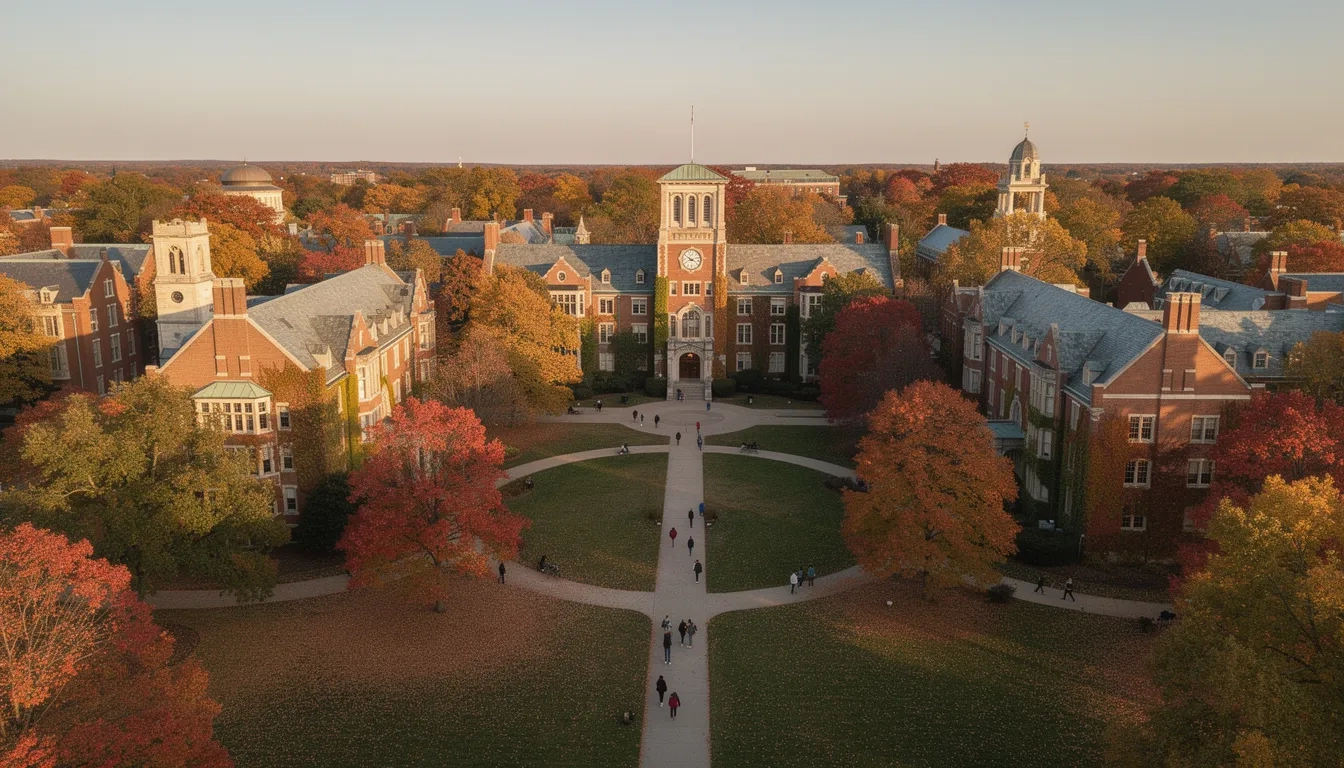
Harvard's sticker price for 2025-2026 runs close to $91,000 a year. Most families see that number and immediately close the tab. But Harvard's average net price is $18,037 — and for families earning under $75,000, the number is effectively zero. That math only works because Harvard has a $53 billion endowment and has spent decades building a financial aid system specifically designed to deploy it.
This is the most misunderstood fact in college affordability. The schools with the most terrifying sticker prices are often the cheapest to actually attend. Understanding why — and which schools mean it — is the whole game.
The 75 Schools That Actually Commit
About 75 colleges in the United States formally commit to meeting 100% of a student's demonstrated financial need. Out of roughly 4,000 degree-granting institutions. That's a specific, finite group.
"Demonstrated need" is the gap between what the federal government calculates your family can contribute (via FAFSA, and often the institutional CSS Profile) and the full cost of attendance. Schools in this tier are institutionally committed to covering that gap — not "trying to" cover it, but actually covering it.
Within that group of 75, roughly 33 go a step further: they eliminate loans from aid packages entirely, replacing borrowed money with grants and work-study. The Class of 2024 graduated with an average of $37,850 in student loan debt nationally. Students at no-loan schools graduated with none of that.
At no-loan colleges, the aid is genuinely free money — no debt clock starts running.
What the Tier System Actually Looks Like
Not all 75 schools operate identically. Here's the breakdown that matters for planning:
| Tier | What You Get | Example Schools |
|---|---|---|
| Need-blind + no-loan | Admission ignores finances; no borrowing required | Princeton, Harvard, Yale, MIT, Amherst, Pomona |
| No-loan, need-aware | No loans in package; finances may affect borderline admits | Dartmouth, Colby, Lafayette, Williams |
| Full need with possible loans | Covers 100% of gap but may include loans | Georgetown, USC, Barnard, Carnegie Mellon |
| Income-threshold free tuition | Free tuition below a specific income cutoff | Rice ($140k cap), Stanford ($150k), Columbia ($150k) |
| Public guarantee programs | Tuition-free for in-state residents under income limits | UNC, Michigan, UVA, UC San Diego, UW-Madison |
The tier you're targeting matters as much as the school name. A family earning $95,000 qualifies for radically different packages depending on which category they're approaching.
The Income Threshold Breakdown at Elite Schools
These are the specific numbers for 2025-2026 that most comparison articles gloss over:
- Princeton: Families earning under $65,000 typically pay nothing for tuition, room, and board. Aid scales up to $180,000 in household income. Average aid package per the Princeton Review's 2026 rankings: $73,711.
- Harvard: Under $75,000 means no tuition, room, or board. Families up to $150,000 pay 0–10% of income. Average net price: $18,037.
- Yale: Under $75,000 is effectively free; the sliding scale extends to $200,000.
- Stanford: Families under $150,000 receive free tuition. Under $75,000 typically covers room and board as well.
- MIT: Under $90,000 pays nothing. Under $140,000 receives meaningful aid. Average aid: $53,500.
- Rice (via the Rice Investment program): Full tuition coverage for families earning up to $140,000. Free for families under $65,000.
- Columbia: No-loan packages for families earning under $150,000.
A family earning $110,000 should run these numbers carefully. At Harvard, Yale, and Stanford, that family would receive substantial grants. At a $50,000-per-year regional private school without a comparable endowment? Probably a modest scholarship and a loan suggestion.
The non-obvious takeaway: middle-income families between $75,000 and $150,000 benefit most from elite private schools specifically, because mid-tier private schools rarely have the endowment infrastructure to serve this bracket at all.
No-Loan Policies: The Detail That Changes the Math
Most financial aid conversations focus on total scholarship size. Fewer people focus on whether a school includes loans in the aid package, and that gap is where families often get surprised.
When a school "meets 100% of demonstrated need" but uses loans to do it, you're still borrowing. The aid covers cost, but a debt schedule starts running. When loans are replaced with grants, the money doesn't have to be paid back. Full stop.
Schools that formally eliminate loans across the board include Princeton, Yale, Harvard, MIT, Columbia, Amherst, Pomona, Swarthmore, Williams, Bowdoin, Davidson, Smith, and Grinnell, among others. Some apply the policy only below income cutoffs (Dartmouth eliminates loans for families under $100,000; Lafayette extends its no-loan commitment to families earning under $200,000, which directly targets the middle-income gap).
Worth verifying the exact policy for every school on your list. "We've eliminated loans for families in need" and "we've eliminated loans for all students" are different sentences.
Liberal Arts Colleges Flying Under the Radar
Ivy League aid dominates the conversation. The liberal arts colleges on this list get far less press, and their packages are just as strong.
Williams College (Williamstown, Massachusetts) meets 100% of demonstrated need with no loans required. Average aid: $68,966 per year. Williams's endowment per student is among the highest of any college in the country — a fact that rarely surfaces in mainstream rankings coverage.
Amherst, Pomona, Swarthmore, and Bowdoin operate under identical no-loan models. Grinnell College in Iowa is worth a serious look: need-blind for domestic students, meets 100% of demonstrated need, and holds roughly a $3 billion endowment serving about 1,700 students. That ratio of endowment-to-enrollment is extraordinary, and it shows up directly in aid packages.
Then there's Berea College in Kentucky, which operates unlike anything else on this list. Berea charges zero tuition to every student it admits. Every single one. The annual net cost (covering room, board, and fees) typically runs around $1,196 per year. Berea specifically recruits students from families with limited financial means, and for academically competitive applicants who qualify, it's genuinely singular.
Olin College of Engineering doesn't meet full demonstrated need but does something distinctive: every admitted student automatically receives a merit scholarship covering half of tuition, no separate application required.
Public University Programs That Actually Deliver
Public universities have historically underserved most students on aid. A handful of flagship programs have changed the math for lower-income families, though.
UNC Chapel Hill's Carolina Covenant covers the full cost of attendance (not just tuition) for families earning below 200% of the federal poverty line, with zero loans required. It was one of the first programs of its kind when it launched, and other publics have been trying to replicate it ever since.
Michigan's Go Blue Guarantee covers full in-state tuition for families earning under $65,000. The University of Virginia's AccessUVA covers full demonstrated need with no loans for lower-income students. California residents benefit from the UC Blue and Gold Opportunity Plan (families under $80,000 get fees covered), with UC San Diego posting an average net price around $14,864 for aided students.
Here's the point most families miss: an in-state student at a flagship with one of these programs often pays less than they would at a second-tier private school with no equivalent guarantee. A Wisconsin resident whose family earns $55,000 can invoke Bucky's Tuition Promise at UW-Madison and graduate from a research university carrying almost no debt. That option exists. Not enough families build it into their planning.
How to Build an Aid-Aware College List
The most useful shift is moving from "can I get in?" to "what will this actually cost my family?" Those are different questions. Only the second one has a concrete answer before you apply.
Here's a practical framework:
Run the net price calculator on every school you're seriously considering. Every college with federal aid programs is legally required to have one on their website. Do this before paying application fees — not after getting emotionally invested.
Match your income tier to the right schools. Under $75,000: every no-loan Ivy and equivalent should be on your list. $75,000–$130,000: Stanford, Yale, Rice, Columbia, and MIT still have meaningful programs in this range. $130,000–$180,000: Princeton's aid extends here; most others taper significantly.
Verify need-blind vs. need-aware status. Need-blind schools (Harvard, Princeton, MIT, Amherst, and others) don't consider financial circumstances in admission. Need-aware schools may weigh that for borderline candidates.
Check whether the commitment is binding policy or aspirational language. "We strive to meet full need" is not the same as a formal institutional commitment. Read the financial aid policy page, not just the brochure.
Put at least one public flagship guarantee program on the list as a genuine financial floor, not just an academic safety school.
Students who build this list in the spring of junior year can evaluate aid policies before paying application fees. Starting in the fall of senior year, when emotional attachment to schools has already formed, makes objective financial comparison much harder to do honestly.
Bottom Line
Sticker price is essentially a red herring. My honest take: families earning under $130,000 should treat well-endowed private schools as serious financial candidates — not aspirational long shots — because the endowment math works in their favor in ways that mid-tier private schools simply cannot match.
- Run net price calculators at any school you're considering before writing a check for the application fee
- Prioritize schools with formal no-loan commitments over schools that merely "meet full need" (they can do that with loans)
- Know your income tier and match it to schools with the strongest programs at that specific bracket
- Include at least one public flagship guarantee program as a real financial floor
- Look hard at Berea, Grinnell, and Williams if they fit your academic profile — the coverage is as strong as anything in the Ivy League
The average American family currently pays over $175,000 out-of-pocket for a private college degree. At the right schools, with the right income, that number can drop by 80% or more.
Frequently Asked Questions
Can an elite private school actually cost less than a public university?
Yes, for the right income brackets. Harvard's average net price of $18,037 sits below the all-in cost (tuition, room, board, fees) at many state universities, especially for out-of-state students. For families earning under $75,000, schools like Princeton, Harvard, Yale, and MIT cost close to nothing. The comparison depends on the state and institution, but for lower-income families in states without strong guarantee programs, the elite private route is often cheaper.
What's the real difference between "meeting full need" and a "no-loan policy"?
Meeting full demonstrated need means the school covers 100% of the gap between cost and your expected family contribution — but loans count toward that coverage. A no-loan policy means every dollar in the package is a grant or work-study arrangement. You leave without owing the school anything. About 33 schools currently combine both commitments; the other 42 in the "full need" group may still require borrowing.
Does applying for financial aid hurt my chances of admission?
At need-blind schools — including Princeton, Harvard, Yale, MIT, Amherst, and Dartmouth — financial circumstances play no role in the admission decision, full stop. At need-aware schools, applying for aid can theoretically affect borderline cases. It's worth verifying each school's stated policy. Assuming every school is need-blind is a common and expensive mistake.
What does "demonstrated need" actually mean, and who calculates it?
It's the figure representing the gap between the full cost of attendance and what the government (via FAFSA) or the college (via CSS Profile) determines your family can contribute. Families with similar incomes can get meaningfully different numbers depending on assets, family size, number of students in college simultaneously, and whether the school uses the federal formula or its own institutional methodology. CSS Profile schools have more flexibility to evaluate financial circumstances and often produce different (sometimes more favorable) need calculations than FAFSA alone.
Are middle-income families completely left out of these programs?
No — this is a common misconception worth pushing back on. Several schools specifically target the $100,000–$175,000 range. Rice's Investment program covers tuition for families up to $140,000. Stanford covers tuition up to $150,000. Columbia and Yale both have sliding-scale programs that extend meaningfully past $100,000. Lafayette College eliminates loans for families earning under $200,000 specifically because its leadership identified the middle-income gap as the problem worth solving.
How accurate are college net price calculators?
Accurate enough for comparison shopping, not reliable enough to treat as a guarantee. They use estimated FAFSA inputs and can't account for every factor in an institutional methodology. Use them to compare schools and eliminate clear financial mismatches before applying — but understand the output as an informed estimate. The only binding number is the actual aid letter you receive after admission.
Sources
- Top 25 Colleges with the Best Financial Aid 2026 | Edvisorly
- 25 Most Generous Colleges and Universities for Financial Aid | BestColleges
- These 75 Colleges Promise to Meet 100% of Students' Financial Need | Money
- Schools That Meet 100% of Demonstrated Financial Need | CollegeVine
- Top 10 Colleges with the Best Financial Aid | Fastweb