Colleges with the Best On-Campus Housing: What Actually Matters
The era of cinderblock walls and communal showers is fading. At the best schools today, campus housing has evolved into something genuinely worth choosing a college for. Washington University in St. Louis students sleep on TempurPedic mattresses and can use a service called "Wash-U-Wash" that delivers folded laundry to their door within 48 hours. MIT's Simmons Hall has a literal ball pit installed for stress relief. High Point University runs a free ice cream truck and a first-run movie theater where students screen new releases before the general public. Saint Leo University installed a 2,100-gallon saltwater aquarium — the one from Animal Planet's Tanked — inside a residence hall lounge. Whether this amenity competition benefits all students or mostly functions as a recruiting tool for the already-affluent is a fair question. But housing quality now shapes the college experience in ways that matter well beyond comfort.
What the Rankings Actually Measure
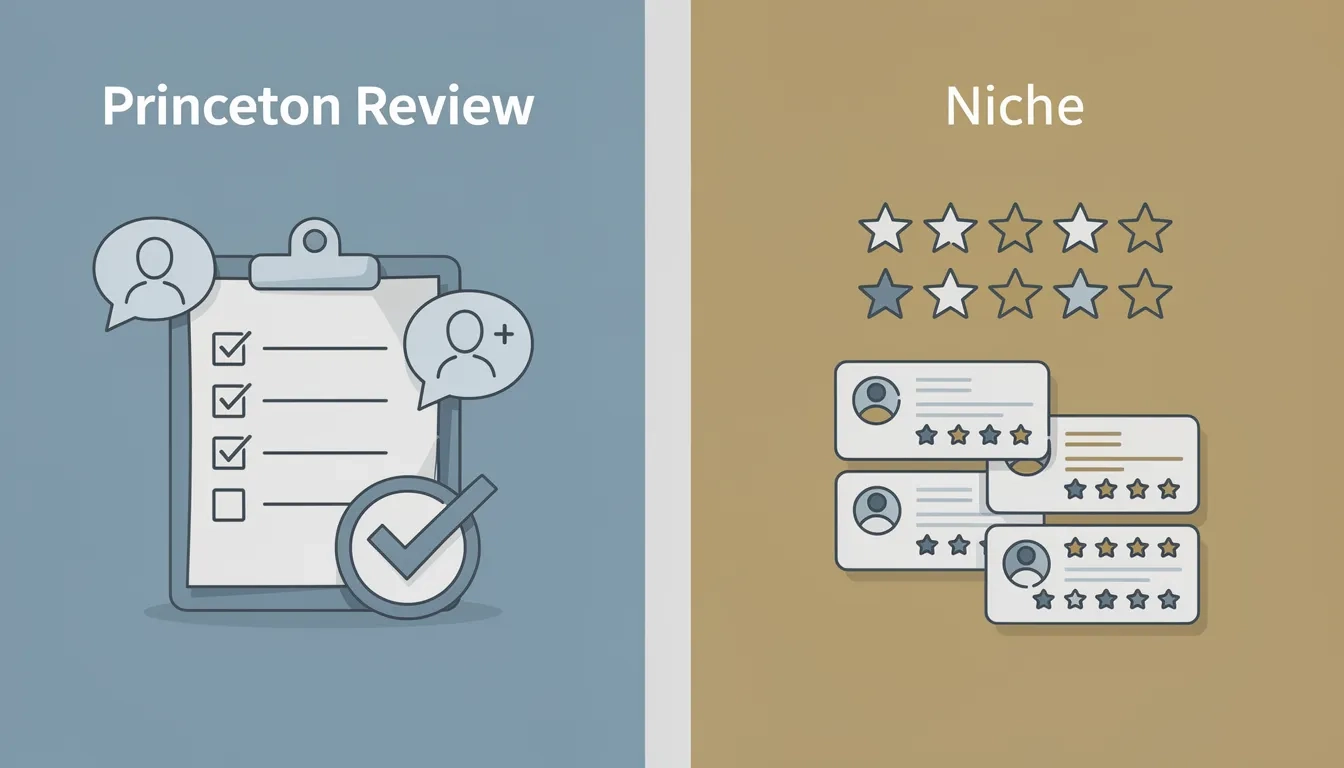
Most people searching for the best dorms land on two main sources: The Princeton Review and Niche. They measure different things, and knowing the distinction helps.
The Princeton Review surveys roughly 170,000 students across 391 schools — averaging about 435 responses per school — and asks them directly how they rate their campus housing. It's entirely perception-based. Schools score well when students actually feel good about where they live, not just when the facilities look impressive in a brochure.
Niche blends student reviews with hard data on housing costs, safety records, and amenities. Their grade-based system lets you filter by state, school type, and housing style, which is useful for comparison shopping in ways the Princeton Review isn't.
Neither ranking is definitive. The Princeton Review misses physical condition data entirely — a well-maintained older dorm could score identically to a brand-new building. Niche weights factors that don't always predict what individual students care about. Take both as starting points for investigation, not final verdicts.
The Schools That Consistently Lead
Washington University in St. Louis holds the #1 spot in Princeton Review's 2026 rankings for both Best College Dorms and Best Quality of Life. Vice Chancellor Dr. Anna Gonzalez describes the residence halls as "designed as vibrant, supportive communities where students receive holistic support." The physical evidence backs that up: the South 40 residential area features private suite bathrooms shared by 4-6 students, multiple dining locations, fitness centers, and technology spaces throughout.
Here's how the Princeton Review's 2026 top tier breaks down:
| Rank | School | What Sets It Apart |
|---|---|---|
| #1 | Washington University in St. Louis | TempurPedic mattresses, Wash-U-Wash laundry delivery, private suites |
| #2 | Bowdoin College | College Houses system, annual lobster bake tradition, spacious common areas |
| #3 | Scripps College | Claremont Consortium access, garden-integrated residential design |
| #4 | Bryn Mawr College | Walk-in closets, stained glass windows, skylights in historic halls |
Bowdoin is worth examining because its housing culture runs deeper than the amenities list. First-years live in eight traditional residence halls, then migrate into the "College Houses" system — smaller communities that function as genuine social anchors throughout the remaining three years. Texas Christian University, also near the top of multiple rankings, takes a different tack: XL full-size beds, free laundry on every floor, and apartment-style options for upperclassmen that feel more like off-campus living than a traditional dorm.
The Residential College Model: A Different Philosophy
Some schools don't just offer nice rooms. They've built entire social architectures around residential life, and that distinction matters more than any single amenity.
Yale University divides undergraduates into 14 residential colleges, each with its own dining hall, library, courtyard, gym, and common rooms with fireplaces, bay windows, and hardwood floors. Students identify as much with their residential college as with Yale itself. The model was borrowed from Oxford and Cambridge, and the community bonds it creates routinely outlast graduation by decades.
Rice University runs a similar system with 11 residential colleges. The newest feature private bathrooms, sundecks, reading nooks, and dedicated music rooms. Rice's model is partially self-governing — each college elects its own leadership, manages its own events, and maintains distinct traditions that make it feel like choosing a small college within a larger university.
Harvard places first-years in the Yard, then assigns upperclassmen to one of 12 undergraduate Houses, each with its own dining hall, library, fitness facilities, and senior common rooms where faculty affiliates mingle with students.
The best campus housing isn't necessarily the building with the nicest amenities. It's the one that makes students want to stay.
This distinction between "amenity-rich" and "community-rich" housing matters because research backs it up. Students living on campus are 3.3 percentage points more likely to persist into their second year compared to off-campus peers. That gap isn't explained by swimming pools. It comes from proximity, belonging, and the friction-reducing effect of having academic resources, social support, and meals within a five-minute walk of your bed.
The Amenity Arms Race
The physical facilities do matter, and some schools have gone to genuinely extraordinary lengths.
- High Point University runs a first-run movie theater, an arcade, a putting green, swimming pools with hot tubs, and that free ice cream truck. Their Centennial Square area offers 50 townhomes with full kitchens and private bathrooms for upperclassmen.
- MIT's Simmons Hall has the ball pit — not metaphorically — plus PlayStation setups in common areas, floor-by-floor dining halls, and what students consistently rate as one of the best dining experiences in American higher education.
- University of Cincinnati connects its Campus Recreation Center Housing directly to a facility with a 40-foot climbing wall, an Olympic-size pool, an indoor river channel for kayaking, a six-court gymnasium, and over 200 fitness machines.
- Florida Gulf Coast University's North Lake Village gives freshmen waterfront access, fire pits, volleyball courts, resort-style pools, game rooms, and a movie theater — the kind of setup that makes campus visitors wonder if they wandered onto the wrong property.
- Pomona College built rooftop gardens into its newer Dialynas and Sontag Halls, with LEED-certified design throughout its residential buildings.
My honest read: some of these amenities genuinely enhance student life, and some are expensive recruiting tools that mainly impress parents on campus tours. A rooftop pool doesn't help anyone during finals week. A well-designed quiet study floor does. Schools like MIT and Bowdoin invest in both, which is probably why they keep showing up at the top of lists that measure what students actually report — not what looks good in a photo.
What Students Actually Want (And What They're Getting)
The StarRez survey, which gathered data from hundreds of higher-ed housing professionals in 2025, revealed a telling split between student preferences and typical institutional offerings.
Students overwhelmingly prefer apartment-style housing (34%), followed by suite-style (27%) and traditional corridor dorms (21%). Yet most campuses still lead with traditional or suite configurations. The mismatch hits hardest for upperclassmen, who often leave campus rather than stay in housing that doesn't match what a reasonably priced off-campus apartment would offer.
A few more findings from that survey worth knowing:
- 51% of institutions report single rooms as students' top choice on housing applications
- Over 10% of residents request room transfers annually
- 73.3% of institutions reported high resident satisfaction — a nearly seven-point drop from 2024
- Nearly 60% of schools now receive student requests for dedicated mental health programming in residential spaces
That satisfaction decline is significant. As costs rise (average room and board hit $14,544 for 2025-2026), students apply more scrutiny to what they're paying for. Georgetown charges $18,722 annually for a single room; East Carolina University charges $5,916 for a standard double. That's the same floor plan, roughly, with a $12,806 gap. The schools winning on housing are the ones treating residential life as a genuine academic and social infrastructure investment — not just a line item that gets passed through to the student bill.
How to Actually Evaluate Campus Housing Before You Commit
Rankings surface schools worth investigating. They're poor substitutes for doing the actual legwork.
A decision framework that works:
- Request a housing tour on a regular weekday — not during admitted students weekend when everything is staged. See the building when it's lived in.
- Ask about specific buildings, not general policies. First-year housing often differs dramatically from upperclassman options. Find out where you'd actually live as a sophomore.
- Check the housing guarantee. Many schools guarantee housing for first-years only. Schools that guarantee all four years — Bowdoin and Bryn Mawr among them — eliminate a stressor that derails more students than admissions offices like to admit.
- Look at voluntary occupancy rates for upperclassmen. A school where 80%+ of juniors stay on campus is telling you something real. A school where that number is 25% is telling you something different.
- Read student reviews on Niche and school-specific subreddits. Admissions offices don't control those threads, and the complaints are usually more informative than the praise.
One thing admissions marketing won't say out loud: housing quality tracks uncomfortably with institutional wealth. High-amenity housing at well-endowed private colleges costs roughly twice what state school housing runs. Access to the "best" campus housing is, in part, a function of who can afford the price tag — and that's the elephant in the room when these rankings get framed as a pure meritocracy of comfort.
Bottom Line
- WashU, Bowdoin, Scripps, and Bryn Mawr lead the Princeton Review's 2026 rankings because their students report genuine satisfaction — not because the amenities photograph well.
- The residential college model at Yale, Harvard, and Rice produces something harder to measure but more durable than any pool or movie theater: community that persists beyond graduation.
- When evaluating housing, look past the amenities and investigate the housing guarantee, upperclassman occupancy rates, and what students actually report on Niche and Reddit.
- Budget carefully: average room and board is $14,544 nationally for 2025-2026, but costs range from under $6,000 to nearly $19,000 depending on school and room type.
- Living on campus increases your probability of returning for sophomore year by 3.3 percentage points. At schools with strong residential support systems, that advantage compounds over time.
Frequently Asked Questions
Which college has the #1 ranked dorms in the country?
Washington University in St. Louis holds the top spot in Princeton Review's 2026 rankings for Best College Dorms, a position it has held for multiple consecutive years. It also ranked #1 for Best Quality of Life in the same survey of 170,000 students at 391 schools.
Are expensive on-campus dorms worth the cost compared to living off-campus?
Often yes, but it depends on the market. In high-rent college towns, on-campus housing at $14,000–$16,000 per year can be competitive with off-campus rent plus utilities, groceries, and transportation. The retention data — a 3.3 percentage point increase in sophomore persistence — adds an academic argument that's easy to overlook when you're comparing dollar figures alone.
What housing style do most college students actually prefer?
According to the 2025 StarRez survey, apartment-style housing is the top preference (34%), followed by suite-style (27%) and traditional corridor dorms (21%). Most schools still lead with traditional or suite options, which is a big reason upperclassmen at many campuses move off-campus by junior year.
Is it a myth that older dorms are always worse?
Mostly yes. Older buildings can have genuine charm — Bryn Mawr's historic halls with stained glass windows and walk-in closets are a good counterexample to the assumption that newer is better. But older facilities often lack modern HVAC, fiber infrastructure, and accessible design. The real question isn't age; it's renovation history and ongoing maintenance investment.
How do I confirm a school actually guarantees housing for all four years?
Ask for the housing policy document directly — not the marketing copy. Some schools imply multi-year guarantees in admissions materials without those guarantees existing in writing. Schools like Bowdoin and Bryn Mawr have explicit four-year guarantees on record; most large public universities do not, and availability depends on lottery outcomes.
Do dorm amenities actually affect academic performance?
The amenities themselves have weak direct evidence. But the community infrastructure surrounding housing — living-learning communities, faculty proximity, peer support — does affect outcomes. Four of five colleges now offer living-learning communities, and programs that pair academic themes with residential life consistently report better retention and GPA outcomes for participants compared to general-population dorms.
Sources
- WashU Tops National Rankings for Residence Halls and Quality of Life
- 10 Colleges with the Best Dorms – Fastweb
- 15 College Dorms with Crazy-Awesome Amenities – Fastweb
- 2025's Best College Dorms & How To Find the Best Fit – Campus Library
- Survey: Student Preferences in On-Campus Housing – Inside Higher Ed
- 2026 Best College Dorms & Rooms in America – Niche
- Best College Dorms – The Princeton Review