Colleges With the Best Fitness Facilities in 2026
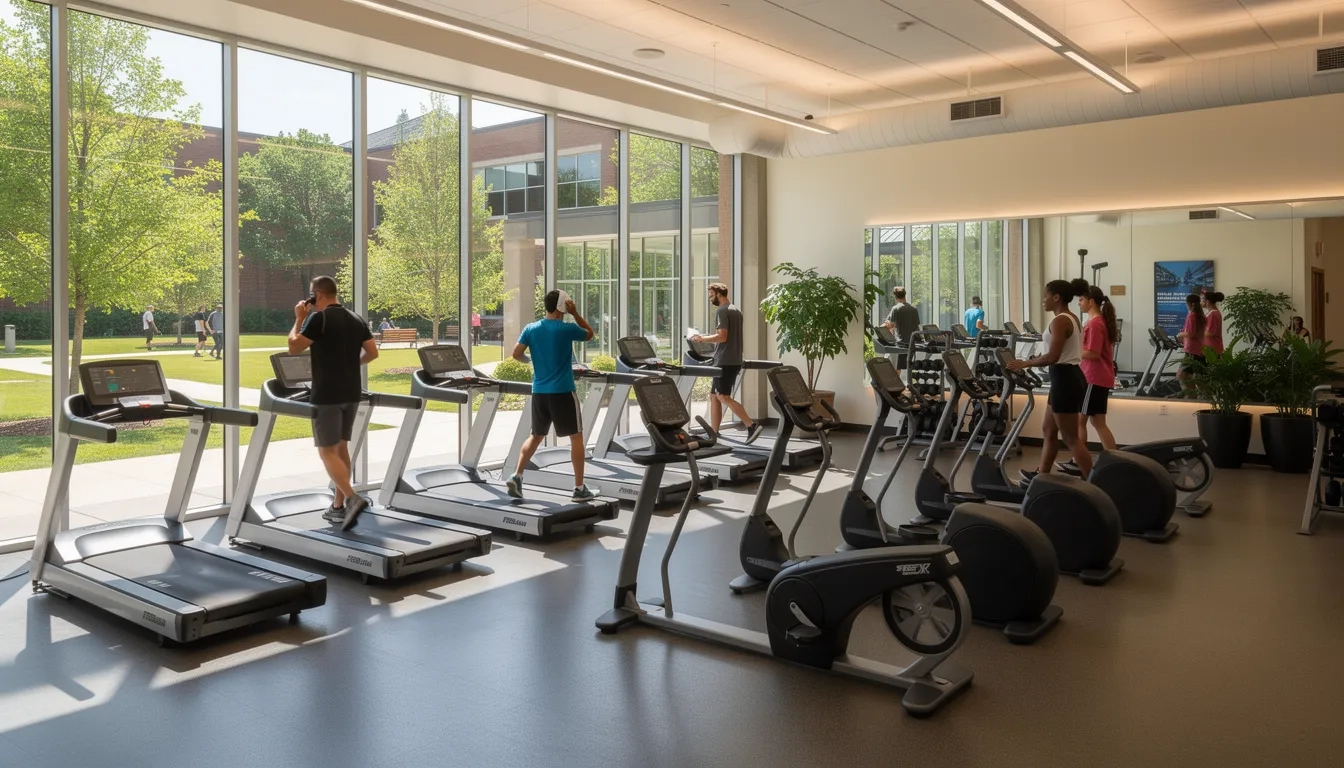
When students started asking campus tour guides "can we see the gym before the library?" rec directors noticed. Now that question is practically routine. A lazy river next to the weight room or a 50-foot rock-climbing tower isn't just a luxury anymore — it's a recruiting pitch, a retention strategy, and for many applicants, the deciding factor between two otherwise equal schools. If you're trying to figure out which colleges actually deliver on fitness, here's what the data and student reviews say in 2026.
Why the Rec Center Deserves More Weight in Your Decision
The mental health case for exercise on campus is well-established. Regular physical activity reduces anxiety, improves sleep quality, and correlates with better academic performance. Universities have absorbed this research and responded with facilities that rival commercial gym chains — because students who thrive physically tend to stay enrolled.
The enrollment math is real. Campus recreation professionals have documented a clear shift: fitness facilities have moved from "nice to have" to genuine enrollment drivers, particularly for students choosing between schools with similar academic profiles. When two schools offer comparable programs and costs, the rec center often breaks the tie.
And the bar keeps rising. Today's students arrive expecting squat racks, group fitness studios, bouldering walls, and aquatic centers — not just a treadmill room. Paying $30,000 to $80,000 per year in tuition, students reasonably expect the campus gym to compete with what they left behind at home.
The Schools Setting the Standard
Ohio State's Recreation & Physical Activity Center (RPAC) is the undisputed titan by nearly every metric. At over 569,000 square feet, it's among the largest student recreation facilities in the country. Five separate bodies of water — including the Bill and Mae McCorkle Aquatic Pavilion with competition and recreation pools. A Tom W. David Climbing Center with walls, overhangs, cliffs, and artificial caves. Multiple full-size courts, cardio decks overlooking the action, and a campus café inside the facility. The Princeton Review ranked Ohio State #1 for best athletic facilities based on direct student surveys, and with thousands of reviews, students give it a 4.8 on Google.
Auburn University wins by a different measure: it earned a perfect 5.0 Google rating in LendEDU's national study — the only school to do so. Its 240,000 sq ft Recreation & Wellness Center features two 50-foot rock-climbing towers, a 1/3-mile indoor track that winds through the entire building, a PGA-certified golf simulator, and group fitness classes that fill to capacity daily. Men's Health named it one of the "Coolest College Recreation Centers in America."
University of Illinois at Urbana-Champaign sits at or near the top of most quantitative rankings. Its Activities & Recreation Center covers 340,000 square feet for 30,000 students, houses a 35-foot climbing wall, an on-campus ice arena, and a 35-person sauna that students reliably describe as the best part of winter semester. Score: 4.72 on LendEDU's composite index.
University of Texas at Austin goes big the Texas way. UT RecSports manages seven facilities totaling over 500,000 combined square feet of indoor space, plus 40 acres of outdoor recreation. Five pools, climbing walls, and courts for nearly every sport imaginable. It's less a single rec center than a distributed campus fitness network.
Vanderbilt University is the stealth pick — 290,000 square feet serving only 12,500 students, giving it the best square-footage-per-student ratio in the entire LendEDU study. For a private research university known mostly for academics and Nashville, that's a genuine surprise.
Side-by-Side Comparison
| School | Facility Size | Students | Standout Feature | Google Rating |
|---|---|---|---|---|
| Ohio State | 569,459+ sq ft | 58,663 | 5 bodies of water, cave climbing | 4.8 |
| Univ. of Illinois | 340,000 sq ft | 30,000 | Ice arena, 35-person sauna | 4.4 |
| Vanderbilt | 290,000 sq ft | 12,500 | Best sq ft-per-student ratio | 4.3 |
| Univ. of Akron | 287,332 sq ft | ~22,000 | 54-ft climbing wall, lazy river | 4.6 |
| Auburn | 240,000 sq ft | 28,953 | Golf simulator, perfect Google rating | 5.0 |
| UT Austin | 500,000+ sq ft (7 facilities) | 50,000+ | 40 acres outdoor, 5 pools | — |
How Rankings Actually Work — and Why They Disagree
There's no single authoritative source on college fitness facilities, which is why different lists produce different winners.
The Princeton Review surveys students directly: "How do you rate your campus' athletic facilities?" Pure satisfaction. That's why Gettysburg College sits at #3 on their list — ahead of schools with far larger facilities — because its 2,100 students genuinely love using it. Washington State University comes in at #2, Denison University at #6.
LendEDU's approach is more data-driven, combining Google review scores, square footage per enrolled student, available equipment and resources, and intramural and club sport programming. This method rewards schools where students actually have room to work out without queuing.
The most useful metric isn't raw square footage — it's square footage per student. A school with 200,000 sq ft and 8,000 students may offer a meaningfully better daily experience than a 570,000 sq ft showpiece shared by 59,000 people.
Ohio State's RPAC is massive, but students on the university's forums openly discuss scheduling workouts before 7 AM or after 9 PM to dodge peak-hour crowds. The number looks great on paper. The lived experience depends on when you show up.
What's Opening and Expanding in 2026
This is the part that matters most if you're a current high school student deciding between schools.
Michigan State University is building a 293,000-square-foot recreation center scheduled to open in summer 2026. The facility includes a turf arena, climbing wall, six multipurpose gyms, three group fitness studios, and a 50-meter competition pool. On day one, it will match or surpass facilities at schools that have spent decades building their reputation.
University of Michigan already opened a 200,000-square-foot center in fall 2025 with strength training zones, three pools, climbing walls, and turf courts — replacing aging facilities students had complained about for years.
Binghamton University is expanding its East Gym by 75,000 square feet (summer 2026). According to Director Tom St. John, the existing facility had been outgrown, with peak hours making efficient workouts genuinely difficult.
University of Kentucky is adding pickleball courts, outdoor lifting areas, and a 60-foot climbing wall — one of the tallest in the SEC — by end of 2026.
University of Arkansas completed a $24 million renovation in fall 2025: 13,000 square feet of functional training areas and rebuilt locker rooms.
Getting into Michigan State or Binghamton right now means spending your undergraduate years in a facility that hasn't been worn down by thousands of student users. That's real value most rankings don't capture.
Small Schools That Surprise
The big state flagships dominate lists by sheer facility size. But some smaller schools offer an experience that's arguably better — precisely because the student-to-facility ratio is so favorable.
Gettysburg College (#3, Princeton Review) has roughly 2,100 students. Their facilities were designed for a small residential campus: near-zero wait times, programming that's actually accessible, and a culture built around it.
Washington University in St. Louis (#8, Princeton Review, ~8,000 undergraduates) runs the Sumers Recreation Center — a competition-quality natatorium, fitness studios, and a bouldering wall, all without the crowding endemic to large public universities.
Denison University (#6, Princeton Review) serves fewer than 2,500 students and consistently ranks near the top for accessibility and quality of experience.
The pattern is consistent: schools where students feel like they have genuine access to the facility — not just the right to exist in a crowded one — score higher on satisfaction surveys, regardless of square footage.
How to Actually Evaluate a Rec Center on Your Campus Tour
Most applicants glance at the gym, nod at the equipment, and move on. That's the wrong approach.
Ask about peak hours and crowding. The best rec center in the country is useless if you can't access a squat rack between 4 and 7 PM on weekdays. Ask actual students (not tour guides) when the facility is manageable.
Here's a practical checklist for your rec center visit:
- Equipment-to-student ratio: Count the squat racks and benches relative to enrollment. One rack per 3,000 students is a bottleneck.
- Pool access reality: Competition pools are often reserved for swim teams during prime hours. Ask whether general lap swimming is actually bookable.
- Group fitness capacity: Popular classes fill in under three minutes at some schools. Ask how the booking system works.
- Weekend and late-night hours: Some facilities close at 10 PM on weekends. That's a problem for students who work or study late.
- Age of equipment: A 100,000 sq ft center with brand-new gear beats a tired 300,000 sq ft facility running 2009 treadmills.
Also look up the recreation fee before you visit. At most state universities, students pay between $200 and $600 annually in mandatory recreation fees (usually bundled into tuition). Schools investing heavily in new facilities tend to have higher fees — but those fees also fund the upgrades you're about to use.
Bottom Line
No single school wins for everyone. The right answer depends on how you actually work out and what you need from a facility.
- For raw size and amenities: Ohio State, UT Austin, or University of Illinois.
- For student satisfaction and experience: Auburn (perfect Google rating), Vanderbilt (best space-per-student ratio), or Washington University in St. Louis.
- For brand-new facilities: Michigan State (opening summer 2026) or University of Michigan (opened fall 2025).
- For small-school access without crowds: Gettysburg College, Denison University, or Washington University in St. Louis.
Visit the rec center on a real class day, not just a scheduled tour. Bring workout clothes. Spend 30 minutes trying to use it like a student. The difference between a gym that photographs well and one that actually fits your lifestyle shows up fast.
Frequently Asked Questions
Which college has the largest fitness facility in the US?
Ohio State University's RPAC is the largest, at over 569,000 square feet — with some estimates placing the full complex closer to 600,000 sq ft when adjacent facilities are included. It serves a student body of nearly 59,000 and houses five separate bodies of water, multiple courts, and a dedicated climbing center.
Does a bigger rec center always mean a better experience?
No. Square footage per student is a far more useful metric than raw size. Vanderbilt's 290,000 sq ft facility serves 12,500 students, giving it far better access than many larger schools. Auburn's center earned the only perfect 5.0 Google rating in LendEDU's national study despite being smaller than several competitors. Crowding — not size — determines daily experience.
Are college recreation centers free for students?
Most are covered through mandatory student fees bundled into tuition, so there's typically no separate membership cost. The fee usually runs between $200 and $600 per year. Faculty and alumni pay separate membership fees, commonly ranging from $30 to $80 per month depending on the school.
Which new college fitness facilities are opening in 2026?
Michigan State University's 293,000 sq ft center and Binghamton University's 75,000 sq ft expansion are both scheduled for summer 2026. The University of Kentucky is adding a 60-foot climbing wall, outdoor lifting areas, and pickleball courts by end of 2026.
Is the Princeton Review the best source for fitness facility rankings?
It's reliable as a student satisfaction measure, but it's not the whole picture. Princeton Review rankings are based entirely on student surveys, which can favor smaller schools where everyone loves the facility regardless of size. LendEDU's composite ranking incorporates Google ratings, facility size per student, and program diversity — useful when you want objective comparisons alongside satisfaction data. Using both together gives you a more complete read.
Do college rec centers help with mental health, not just physical fitness?
Many schools have intentionally integrated mental health programming into their recreation facilities. Schools like Vanderbilt and Ohio State now offer mindfulness rooms, stress-relief programming, and counseling referral resources inside their rec centers — operating on the premise that physical and mental wellness aren't separate priorities.
Sources
- Top 30 College Recreation Centers - LendEDU
- Best College Athletic Facilities - The Princeton Review
- Revamping Campus Recreation: Inside the Latest Renovations and New Builds - Campus Rec Magazine
- Recreation and Physical Activity Center (RPAC) - Ohio State Recreational Sports
- Facilities Overview - UT RecSports