The Complete College Roommate Living Guide: What Actually Works
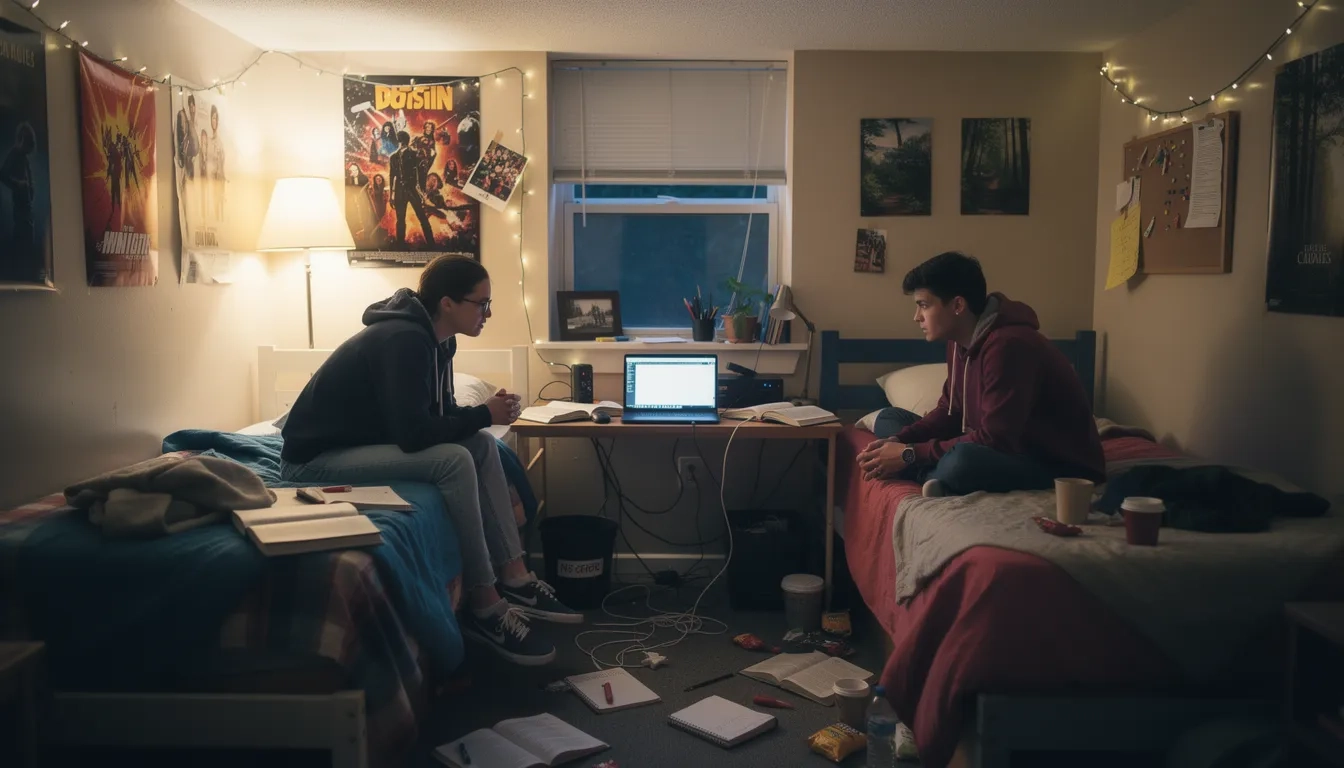
Your freshman roommate and your first-year GPA are more connected than most orientation packets let on. A 2025 study published in Frontiers in Psychology found that dormitory interpersonal conflict directly predicts depression and anxiety outcomes — not just discomfort or annoyance, but clinically measurable distress. The person sleeping six feet away from you can shape how you feel about college itself.
That's heavy context for what should feel like a simple arrangement. But getting it right matters more than most students realize going in.
Why Roommate Conflicts Are So Predictable
42.28% of college students report experiencing conflicts with their dormitory roommates, according to the 2025 Frontiers in Psychology analysis. A separate 2021 Higher Education Research Institute survey puts the number closer to 60% when including any form of disagreement. So if things get tense, you're not the outlier — you're in the majority.
What's actually driving it? The 2022 American College Health Association breakdown is revealing:
| Conflict Source | % of Disputes |
|---|---|
| Cleanliness / hygiene | 47% |
| Noise and sleep schedules | 33% |
| Shared expenses | 28% |
| Guest policies | 24% |
| Cultural / lifestyle differences | 11% |
The writing was on the wall the moment you looked at that table: the biggest culprit isn't politics or personality clashes. It's who cleaned the sink. That's either reassuring (it's fixable) or humbling (something so mundane can spiral into a miserable semester). Either way, all five categories can be addressed in a single conversation before they become problems.
One clear pattern across the data: conflicts addressed within the first few weeks of a semester resolve far more cleanly than ones that fester for months. Timing matters.
The Roommate Agreement: Do This in Week One
Campus housing research consistently shows that written roommate agreements reduce major conflicts by around 55%. That's not a rounding error — it's roughly the difference between a semester that goes fine and one that ends with a room change request.
Most residence halls will prompt you to fill one out. Do it seriously. The agreement isn't really about the rules — it's about the conversation those rules force you to have.
What to cover:
- Cleaning: Specific tasks, frequency, and what "clean enough" actually looks like for each of you
- Quiet hours: When music, calls, and TV are genuinely fine versus when silence matters
- Guests: Overnight stays, how many nights in a row, advance notice expected
- Borrowing: What can be used without asking vs. what's always off-limits
- Sleep schedules: Night owls and early risers can coexist, but only if both know what they're walking into
For students living off-campus, add rent payment dates, utility splitting, and what happens if one person can't pay on time (your name on the lease has legal weight that dorm life doesn't).
The Cornell College Residence Life Office's roommate agreement template asks both parties to describe their "ideal room environment." That framing is worth borrowing even if your school uses a different form — it shifts the conversation from rules to preferences, which lands entirely differently.
The Communication Gap That Determines Everything
When something bothers you, the instinct is often to let it go — especially early on when you're still reading each other. Bring it up too soon and you seem high-maintenance. Wait too long and you're seething in silence.
A 2024 study examining 347 first-year UCLA students offers a clear answer. Among students who addressed roommate conflicts, 41.8% used direct communication while 58.2% relied on "harmony-maintaining strategies" — hints, avoidance, hoping the other person would pick up the signal. Students who went the direct route had measurably better roommate satisfaction scores (r = .24, p < .001) and reported a stronger sense of belonging on campus overall.
The explicit conversation, even when awkward, works better. Passive signals don't land reliably in a room where two people barely know each other.
The research also identified a causal chain worth understanding: direct conflict resolution leads to better roommate relations, which leads to greater campus belonging, which leads to reduced psychological distress. That's a lot riding on one uncomfortable five-minute conversation.
How to Have the Conversation Without Blowing It Up
Timing and framing make the difference between a conflict that resolves and one that turns into a long grudge.
Pick a calm, neutral moment — not right after the incident. If your roommate got back at 2 a.m. and woke you up, don't bring it up at 2:03 a.m. Wait until the next afternoon when you're both relaxed.
Use "I" statements rather than "you" accusations. Not "you're always so loud" but "I've been having trouble sleeping when there's noise after midnight." Small linguistic shift, big difference in how it's received.
Here's a practical framework for the conversation itself:
- State the situation factually — what happened, not what it means about the person
- Describe your experience — how it affects you specifically
- Ask a question — "can we figure out something that works for both of us?"
- Agree on something concrete — even a trial period ("let's try this for two weeks") gives you both an out if it doesn't work
That last step is the one most people skip. A conversation without a resolution is just venting.
"Most conflicts aren't about what people are doing, but about how they're communicating about it." — Roompact's 2025 guide for residential advisors
The Hidden Disadvantage: First-Gen and International Students
This part doesn't get talked about enough, and it should.
The same UCLA study compared first-generation college students (average family income: $30,000–$39,999) with continuing-generation students (average: $80,000–$89,000). First-gen students were significantly more likely to use avoidant communication styles, reflecting cultural values around maintaining harmony and not creating friction. Those values aren't wrong. But the college residential environment runs on explicit communication norms.
The result: first-gen students reported higher psychological distress scores (18.06 vs. 14.53) and lower campus belonging scores (22.53 vs. 25.45). Not because of personality, but because of a mismatch between their communication background and what the dorm environment implicitly demands.
If you're a first-gen or international student, this framing might help: being direct with your roommate isn't aggression or confrontation. It's just the operating language of this specific environment. You're not abandoning your values — you're adding a tool for a particular context.
For continuing-generation students rooming with someone from a different background: assume less, ask more. Your roommate not raising an issue doesn't mean there isn't one.
When Talking It Out Isn't Enough
Sometimes the conversation doesn't fix it. Knowing the escalation path before you need it saves a lot of weeks of quiet misery.
Step one: Your Resident Advisor. This isn't tattling. RAs are trained mediators, and 75% of formally mediated roommate disputes reach a satisfactory resolution for both parties (according to campus housing data). An RA conversation is free, confidential, and designed for exactly this.
Step two: Campus housing or conflict resolution offices. Most universities offer free mediation workshops and individual coaching — the University of Colorado Boulder's Conflict Resolution office, for example, provides free mediation that most students don't even know exists until someone points them to it.
Step three: Room reassignment. This is genuinely a last resort, but it's there for good reason. Safety concerns, harassment, or situations where you can't sleep or study warrant a room change, not endless negotiation.
What not to do:
- Passive-aggressive retaliation (moving their stuff, leaving hostile notes)
- Venting to mutual friends who then escalate things sideways
- Suffering in silence because you don't want to "make it weird"
Weird already happened. The question is whether it gets resolved.
The Everyday Texture of Shared Living
Beyond the big conflicts, there's the daily friction that doesn't escalate but slowly grinds you down if you're not paying attention.
Ask before borrowing, every time. Even if your roommate has given open permission, a quick "hey, grabbing a granola bar from your shelf — okay?" builds trust faster than you'd expect. It signals you're paying attention and that the permission isn't being taken for granted.
Build in genuine alone time. Introverts especially need to recharge without company (and this is true even for people who seem extroverted — living with someone is different from spending time with them voluntarily). A simple "I'm heading to the library for a few hours" gives both of you breathing room without making it personal.
Notice their schedule. If your roommate has an 8 a.m. exam, that's worth knowing. Not because you're required to change anything, but because small adjustments — quieter the night before, lights out a bit earlier — create goodwill that pays back the next time you need consideration.
My honest take on all of this: the biggest mistake first-semester students make is trying to become their roommate's best friend from day one. The social pressure to make the relationship work, layered on top of everything else college adjusts you to, is too much. You don't have to be close. You have to be considerate and clear. Friendship can develop over time — or not. Both outcomes are fine.
Bottom Line
- Fill out a roommate agreement in week one. The 55% conflict reduction is real, and the conversation itself is worth more than the document.
- Say the thing directly. Every study on this points the same direction: explicit communication produces better outcomes, even when it's uncomfortable in the moment.
- Know the escalation path before you need it — RA first, then campus conflict resolution, then room reassignment.
- If you're first-gen or international: direct communication isn't aggression, it's the working language of dorm life. Add it as a context-specific tool.
- Lower the bar for success. You don't have to be friends. Respectful and clear is enough — and it's achievable with almost anyone.
Frequently Asked Questions
What should a college roommate agreement actually cover?
A solid agreement covers five areas: cleaning responsibilities and frequency, quiet hours and noise expectations, guest and overnight visitor policies, rules around borrowing food and personal items, and sleep schedules. For off-campus living, add rent payment dates and how utilities get split. The part most students skip — and shouldn't — is how you'll handle it when someone isn't following the agreement. That's the most important clause.
Is it normal to not like your college roommate?
Yes, and more common than students admit publicly. The 2021 Higher Education Research Institute found 60% of students experienced some form of disagreement with a roommate. Not liking or feeling indifferent toward your roommate is the normal outcome when two random strangers share roughly 180 square feet. The goal is civil, functional coexistence, not forced friendship.
What if my roommate won't communicate or avoids the issue entirely?
Try once more with a specific request ("Can we talk tonight at 7?") rather than a vague opener. If that doesn't work, involve your RA — not to get your roommate in trouble, but to have a facilitated conversation with a neutral party present. Mediated discussions reach satisfactory resolution 75% of the time. Unilateral suffering has a much worse track record.
My roommate and I have totally different cleanliness standards. Who decides what's right?
Neither of you, technically. Cleanliness standards are preferences, not moral positions — though they often feel personal. The practical question isn't who's right but what the shared standard will be for shared spaces (not personal desks or closets). Get specific: "kitchen counter wiped down every other day" is enforceable; "generally kept clean" is not.
How do I handle a roommate who constantly brings guests over?
Set a guest policy in writing before this becomes a problem. If it's already a problem, use the conversation framework: state what's happening, describe how it affects you (sleep, study time, privacy), and propose something concrete. "Could we agree that overnight guests need 24 hours notice and can stay a maximum of three nights in a row?" is specific enough to actually act on.
Can I request a room change, and will it hurt my reputation with the housing office?
You can request one, and no, it won't mark you as difficult if you've made a genuine attempt to resolve things first. Document your conversations — dates, what was said, what was agreed — before requesting a change. Housing offices move faster when there's a paper trail. Room changes for safety, harassment, or situations preventing sleep or study are treated with more urgency than general preference-based requests.
Sources
- Heterogeneity of dormitory interpersonal conflict coping style — Frontiers in Psychology (2025)
- Cultural modes of conflict resolution, roommate satisfaction, and school belonging — PMC (2024)
- Effective Conflict Resolution Tips for Student Living Spaces — Roompact (2025)
- Tips for Living with Roommates — University of Colorado Boulder
- Navigating Roommate Conflicts in College — University Village Rent
- Roommate Agreement — Cornell College Residence Life Office