How College Endowment Size Affects Student Experience
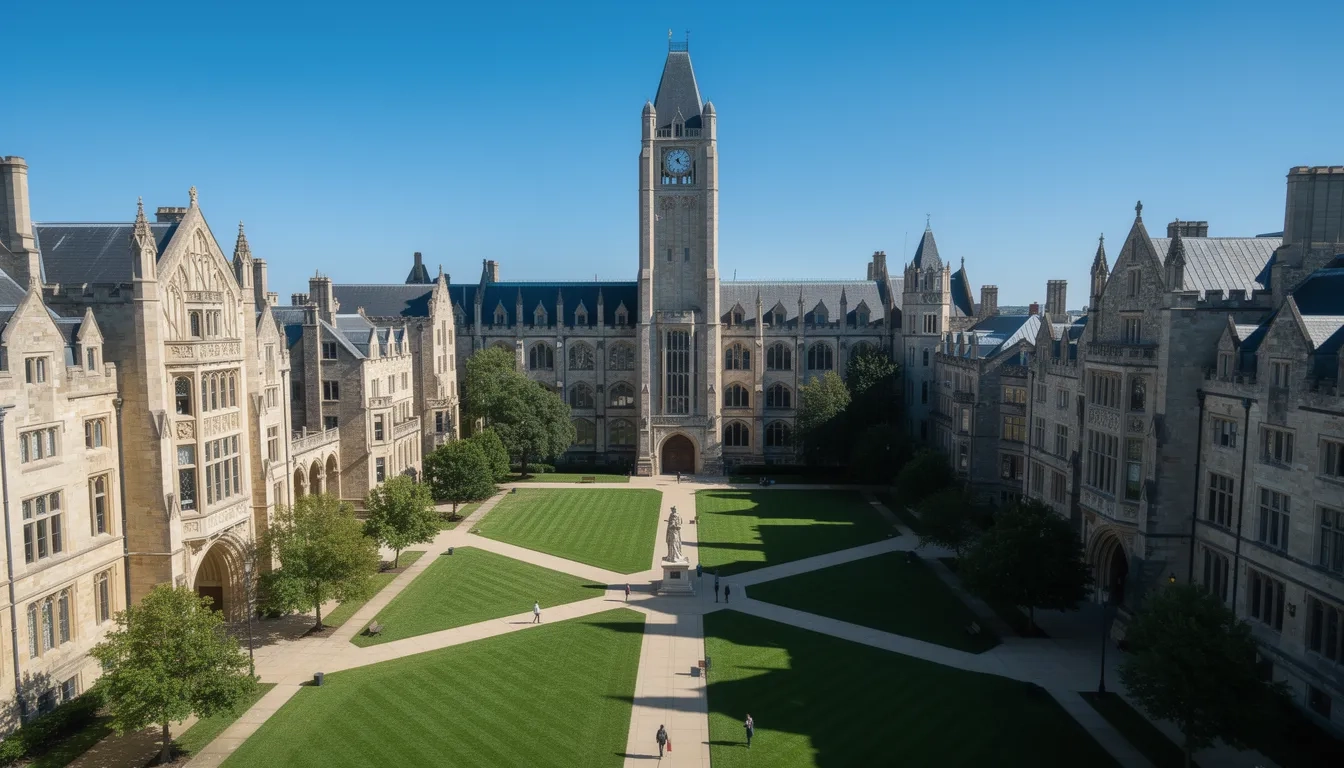
When Harvard announced in March 2025 that college would be free for families earning under $100,000 a year, it dominated higher education news for weeks. The less-discussed part: this was possible because Harvard's endowment had grown to $53.2 billion. For comparison, the median U.S. college endowment sits at $243 million. That's not a gap. That's a different species.
The Wealth Gap Nobody Likes to Say Out Loud
11% of U.S. colleges hold approximately 75% of total higher education endowment wealth. The 658 institutions that participated in the 2025 NACUBO-Commonfund Study reported combined endowment values near $874 billion — but most of that money lives in a handful of schools.
What this means in practice: a school with a $15 million endowment and one with $15 billion are both technically "endowed universities." The label masks a difference that shapes everything from the types of research students can participate in to whether a struggling student accesses counseling this week or waits six weeks.
The most useful comparison isn't total endowment size. Endowment per enrolled student is the number that actually tells you something. Princeton's total endowment is smaller than Harvard's, but at roughly $2.86 million per enrolled student, Princeton has more resources per person to deploy. Harvard runs around $1.55 million per student. Both are extraordinary — but the per-student metric changes how you think about smaller schools too, and that matters when you're building a college list.
Financial Aid: Where Endowment Money Lands
This is the most direct effect on students, and the data is clear.
According to NACUBO's FY25 report, 47.4% of all endowment spending goes to student financial aid — the single largest category by far. Institutions collectively spent $33.4 billion from endowments in fiscal year 2025, meaning roughly $15.8 billion of that went toward scholarships and grants.
But the impact isn't distributed evenly. Harvard eliminated loans from its aid packages in 2007. Starting in the 2025-26 academic year, Harvard covers all billed expenses — tuition, room, board, health insurance, and travel costs — for students from families earning under $100,000. Tuition is free for families earning up to $200,000. Harvard's annual financial aid budget for 2025-26 alone is $275 million.
MIT reported that 88% of its 2025 graduating class left with no debt. The University of Pennsylvania is rolling out similar no-loan commitments.
According to the Association of American Universities, member schools provide nearly $7 in institutional grants for every $1 the federal government provides in aid to incoming full-time students — a ratio made possible by endowment investment returns.
The practical consequence for students: applying to an expensive, well-endowed school may actually cost less than attending a cheaper-looking one, once you compare grant packages against loan-heavy offers. The assumption that elite schools are unaffordable is frequently wrong for families with demonstrated financial need.
Research Access: What's Listed vs. What's Real
17.7% of endowment spending flows to academic programs and research. For undergraduates, this shows up in ways that genuinely shape career trajectories — not in abstract ways, but in whether you can afford to work in a lab.
At schools with strong endowments, funded undergraduate research fellowships are the norm. Summer stipends of $4,000-$6,000 let students work in labs without taking a second job to cover rent. Faculty have research budgets that include student assistants. Conference travel gets funded. At schools where the endowment is thin, "undergraduate research opportunity" often means unpaid work wedged into the semester. Students without financial cushion simply can't take it.
Some of what endowment-funded research actually buys:
- Paid summer fellowships that compete with private internship compensation
- Named research centers with specialized equipment unavailable at lower-resourced schools
- Endowed lecture series bringing active scholars and practitioners to campus
- Funds for students to attend and present at professional conferences
Small schools can punch well above their weight here. Grinnell College, with an endowment around $3 billion for roughly 1,700 students, has a per-student ratio strong enough to fund research access that larger universities can't match. When the denominator is small enough, even a mid-sized endowment produces exceptional per-student support.
The Endowed Chair Effect on Your Education
10.8% of endowment spending goes to faculty positions. This category is chronically underappreciated by students choosing schools.
An endowed chair isn't ceremonial. The endowment generates perpetual income that supplements a professor's salary, funds graduate assistants, covers research expenses, and frees up time — including time to mentor undergraduates. Professors holding endowed chairs typically carry lighter teaching loads. From a student's perspective, that means more access, more advising bandwidth, and genuine research mentorship rather than a 20-minute meeting squeezed between office hours.
At heavily endowed institutions, a meaningful share of the faculty hold named chairs. Stanford, Harvard, and MIT compete for top scholars partly by offering these positions. At schools without that financial leverage, retaining the most in-demand researchers becomes hard when peer schools make better offers. The downstream effect for students is real: at well-endowed schools, the professor whose paper you cited in your seminar is frequently your actual professor, actively working on problems at the frontier of the field.
Campus Life and the Resources You Forget to Ask About
7.6% of endowment spending goes to facilities — operations, maintenance, and upgrades. But the larger effect is the operating breathing room that endowment income creates across all student services.
Institutions with the largest endowments funded 18-19% of their total operating budgets from endowment income in FY25. Schools with smaller endowments covered 7-13%. That difference funds mental health staffing levels, career services teams, accessibility resources, recreation infrastructure, and arts programming.
Here's how the experience gap typically plays out:
| Resource Area | High-Endowment School (>$1B) | Lower-Endowment School (<$100M) |
|---|---|---|
| Financial aid structure | Grant-first, often no-loan | Loan-heavy packages common |
| Mental health counseling | Same-week or next-week access | Wait times of 4-8 weeks |
| Undergraduate research | Paid fellowships available | Primarily unpaid, semester-only |
| Faculty mentorship | Lower course loads, more availability | High loads, limited advising time |
| Career services | Industry-specific staff on campus | General advisors covering all fields |
| Facilities | Regular renovation cycles | Deferred maintenance frequent |
This table oversimplifies (plenty of smaller schools excel in specific areas), but the pattern holds across the data on student satisfaction and support outcomes.
Why Endowment Per Student Changes the Whole Conversation
Raw endowment size is the wrong number. A school with $10 billion and 60,000 students has $167,000 per student. A school with $1.2 billion and 2,000 students has $600,000 per student. The second school can do significantly more for each person it enrolls.
This is why selective liberal arts colleges consistently outperform their total endowment rankings in terms of student experience. Williams, Amherst, and Pomona show up with endowments that look modest next to flagship universities — but their per-student ratios are strong enough to fund need-blind admissions, excellent faculty compensation, and quality support services.
The research process for prospective students isn't complicated:
- Find the school's total endowment (NACUBO publishes this annually; most schools also post it)
- Find total enrollment from the school's Common Data Set or institutional research page
- Divide, and compare across your shortlist
That single figure tells you more about what a school can realistically do for you than most ranking systems do.
What Endowments Can't Fix
There are real limits, and they deserve an honest look.
Donor restrictions are the writing on the wall. Most endowment funds are earmarked for specific purposes: a named scholarship program, a particular professorship, a building's upkeep. Harvard manages more than 2,000 individual endowment and gift funds. When budgets tighten, schools cannot redirect restricted endowment income wherever it's needed most. Unrestricted endowment spending is a much smaller number than the headline figure suggests.
During the 2008-09 financial crisis, Harvard's endowment lost 27% of its value in a single year. Despite having over $30 billion at its peak, the university faced genuine short-term cash pressure because much of the portfolio was illiquid and restricted. Endowment wealth protects over long timeframes — it doesn't eliminate year-to-year financial stress.
And endowment size doesn't automatically determine what a student actually gets from college. A motivated student at a school with a $40 million endowment who builds faculty relationships, pursues research, and develops professional networks will often outperform a passive student at Harvard on every outcome that genuinely matters: skills built, judgment developed, connections formed. The clearest case for endowment mattering is at the margins — for first-generation students and those from lower-income families who need institutional infrastructure to catch them when things get hard. The national 6-year graduation rate sits at roughly 51%. At highly endowed institutions, that number looks substantially better, because the resources exist to intervene before students fall through.
Bottom Line
Endowment wealth matters most for the students who can least afford for it not to.
- Use endowment per student, not total size. A $300 million endowment at a 1,800-student college ($166,000 per student) often delivers more than a $2 billion endowment at a 30,000-student university ($67,000 per student). Do the division.
- Ask specifically about no-loan policies before comparing sticker prices. A school charging $72,000/year with a strong grant policy can cost less out-of-pocket than a school at $28,000/year offering mostly loans. Run the actual net price calculator numbers.
- For families earning under $75,000, applying to highly endowed schools is worth it specifically because the schools with the most resources have committed to covering full demonstrated need. The assumption that elite schools are out of reach financially is wrong for a significant share of the income distribution.
- Endowment wealth doesn't teach a class, build a network, or develop judgment. It funds the conditions that make those things more accessible — especially for students who don't have family money as a backup.
Frequently Asked Questions
Does a bigger endowment guarantee a better education?
No. Donor restrictions, per-student ratios, and how a school deploys its resources all affect what students actually receive. A school with $5 billion and 30,000 students may deliver less per-capita than a college with $800 million and 2,000 students. The headline number is less important than the strategic choices an institution makes with what it has.
How do I find a school's endowment-per-student figure?
NACUBO publishes annual endowment values for over 600 institutions. Divide that figure by total enrollment — available on any school's Common Data Set or institutional research page. This single calculation is more informative than most ranking systems when evaluating what a school can actually offer you.
Is it worth applying to expensive elite schools just because of the endowment?
Often yes, particularly for families earning under $150,000. Harvard, Princeton, MIT, and several peer institutions have no-loan or free-tuition policies for a substantial portion of students. Many families pay less at a $72,000/year elite school than at a $30,000/year school once grant awards replace loans. Applying costs $75-$100 in fees; it's worth running the numbers before ruling a school out.
What's the common myth about endowments and tuition?
The widespread assumption is that wealthy schools should use endowment returns to reduce tuition for everyone. In reality, most endowment funds carry donor restrictions limiting their use to specific purposes — a particular scholarship, a named faculty position, a building's maintenance fund. Schools genuinely cannot redirect billions in restricted gifts to cut general tuition. The freely spendable portion of even a large endowment is much smaller than the headline figure implies.
What percentage of endowment spending goes toward financial aid?
According to NACUBO's FY25 report, 47.4% of all endowment spending at participating institutions goes to student financial aid — the single largest category. Academic programs and research account for another 17.7%, and endowed faculty positions take 10.8%.
How does endowment size specifically affect first-generation students?
First-generation and low-income students benefit disproportionately from high-endowment schools because the resources most relevant to them — grant-based aid, mental health counseling, academic support services, and career connections — are precisely where endowment spending shows up in concrete ways. Students without family financial safety nets or professional networks have more to gain from an institution that can fill those gaps directly.
Sources
- U.S. Higher Education Endowments Report Stable Returns, Increase Spending to $33.4 Billion in FY25 — NACUBO
- U.S. Higher Education Endowments Report 7.7% Return for FY23 — NACUBO
- University Endowments Support Students, Science, and American Competitiveness — AAU
- Harvard Expands Financial Aid — Harvard Gazette
- Financial Aid: How Aid Works — Harvard College
- University Endowments and Choosing a College — BestColleges