The Best Tech-Focused Liberal Arts Colleges for 2026
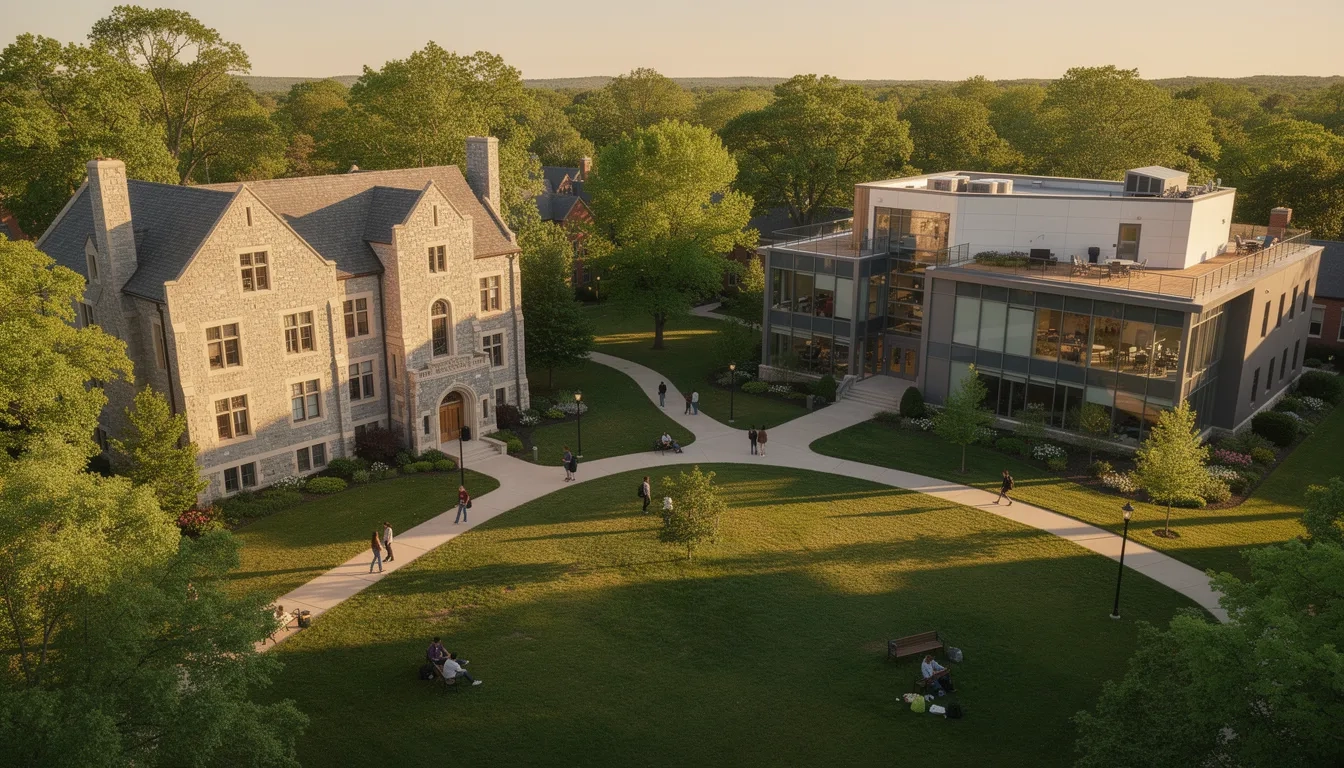
Williams College computer science graduates report a median starting salary of $129,152. That figure comes from Academic Influence's 2026 analysis of liberal arts college outcomes, and it should immediately recalibrate anyone who still thinks of liberal arts schools as career consolation prizes. Williams has no engineering department, no sprawling research park, no 20,000-student campus. It sits in the Berkshires, ninety minutes from the nearest major city, with around 2,000 total undergraduates. And its CS graduates out-earn alumni of programs five times its size.
The idea that technical education and a liberal arts experience sit in opposition is one of those assumptions that looks increasingly hard to defend when you run the numbers.
Why the Data Favors This Combination
Employers have been asking for more than code for a while. What shifted recently is the labor market started reflecting that preference in compensation. A CS graduate who can walk a non-technical stakeholder through a system architecture decision, write documentation other humans want to read, and understand the organizational context around a technical problem is genuinely rare. Liberal arts colleges with strong CS departments produce this graduate at an unusually high rate — not by watering down the technical curriculum, but by running both tracks simultaneously for four years.
There's also the mentorship effect, which is harder to quantify but shows up in outcomes. At a 2,000-student liberal arts college, a sophomore who wants to work on research with a professor can usually make that happen by sending one email. At a large research university, that same professor's attention goes to PhD students first. The structural difference compounds over four years.
The Top Tier: Real Technical Depth, Real Breadth
Harvey Mudd College
Harvey Mudd (Claremont, CA) is built differently than any other school on this list. At most institutions, STEM and the humanities coexist in separate buildings. At Mudd, they are structurally fused from orientation week.
Every student completes the Common Core regardless of major — a shared curriculum covering CS, engineering, biology, chemistry, and mathematics, plus 11 mandatory courses in humanities, social sciences, and the arts. You cannot graduate from Harvey Mudd without learning to write. You cannot avoid coursework that asks you to think about ethics and culture. The breadth requirement is not an afterthought; it constitutes roughly a third of the degree.
The career outcomes are hard to argue with. About 60% of Mudd seniors enter the workforce directly, with a median starting salary of $112,500. Another 30% head to fully-funded graduate programs at MIT, Stanford, and Caltech. PayScale's 2024 College Salary Report ranked Harvey Mudd first nationally for educational return on investment — not first among small schools, first among all colleges. Acceptance sits around 10–11%, so treat it as a reach. But for students who want the deepest integration of technical and humanistic education in the country, nothing else comes close.
Swarthmore College
Swarthmore's CS department (Swarthmore, PA) consistently surprises people with what it offers at a school of 1,600 students. The curriculum runs deep: strong theory, solid systems work, and a range of interdisciplinary combinations with engineering, linguistics, cognitive science, and philosophy that you rarely see at schools this size.
Swarthmore is one of a small number of liberal arts colleges offering both a BA and an ABET-accredited BS in engineering. Students who want the full technical credential — not just a liberal arts approximation of one — can get it without transferring to a large university. Graduates report a median starting salary of $100,676, with a 12-year investment recoup time according to Academic Influence's 2026 data.
The acceptance rate is 7%. That places it roughly where Dartmouth and Columbia sit.
Pomona College and the Claremont Advantage
Pomona College ranks #36 for CS among liberal arts schools in CollegeVine's 2026 analysis, but what sets it apart has less to do with its own department and more to do with geography.
Pomona is a member of the Claremont Colleges consortium, which means students can take CS courses at Harvey Mudd, engineering labs at Mudd and Harvey jointly, and math coursework at Claremont McKenna — all while living in a traditional liberal arts environment. You effectively access a small research university's course catalog without giving up small class sizes. For students who want the structural benefits of both worlds and aren't certain which major to commit to, the consortium flexibility is a genuine differentiator.
The Salary Leaders Worth Knowing
I'd argue Williams and Amherst are the most underrated picks on this list for students with clear tech career goals.
Williams College tops Academic Influence's 2026 liberal arts CS ranking by graduate starting salary at $129,152. The CS department is small but strong in theory and distributed systems, and Williams feeds top tech firms and PhD programs at rates that researchers studying small-college outcomes consistently find surprising. The writing was on the wall when Williams started scaling its CS department during the mid-2010s, but the general perception hasn't fully caught up yet.
Amherst College sits at $119,804 for median starting CS salary, with a cost recoup time of 11 years. What makes Amherst specifically worth considering is the Five College Consortium (shared with UMass Amherst, Hampshire, Mount Holyoke, and Smith). Students can cross-register for courses, access research labs, and work with a faculty network that effectively operates at the scale of a major research university, all while living on a 1,900-student campus. It's one of the better structural arrangements in American higher education.
| School | Acceptance Rate | CS Starting Salary | Cost Recoup | Notable Feature |
|---|---|---|---|---|
| Harvey Mudd | ~10% | $112,500 | Top ROI nationally | Mandatory 11-course humanities core |
| Swarthmore | 7% | $100,676 | 12 years | ABET-accredited engineering option |
| Amherst | 7% | $119,804 | 11 years | Five College Consortium access |
| Williams | 8% | $129,152 | 10 years | Highest CS salary in category |
| Wellesley | 14% | $103,264 | 12 years | Strong fintech pipeline, Boston area |
| Wesleyan | 14% | $91,183 | 13 years | BA/MA five-year STEM track |
Salary and recoup data: Academic Influence 2026 rankings.
The Hidden Gems
Olin College of Engineering
Olin College (Needham, MA) isn't technically a liberal arts college. It grants engineering degrees, and it should probably be categorized differently than the rest of this list. But its educational philosophy is closer to Swarthmore than to MIT, and ignoring it would mean missing one of the best options for students who want liberal-arts-style learning in an explicitly engineering context.
Olin enrolled its first class in 2006, making it younger than every peer institution here by roughly a century. It ranks #2 nationally for undergraduate engineering programs without doctoral offerings (U.S. News 2025), and a 2025 ROI study placed it 6th nationally for bachelor's degree return on investment — ahead of Princeton in that particular analysis. The curriculum runs on project-based learning with explicit communication training, design thinking, and cross-functional team structures baked into every year. Average cohort size is around 350 students. Acceptance rate sits near 14%, which is more accessible than most of the schools above.
Carleton College
Carleton (Northfield, MN) appears at #48 in CollegeVine's 2026 CS rankings for liberal arts schools, which undersells what the program actually produces. CS and Mathematics can be combined into a single rigorous major, and faculty publish research at rates that look more like a small R1 university than a 2,000-student liberal arts school.
Carleton feeds MIT, Berkeley, Carnegie Mellon, and other top PhD programs at rates that consistently outperform what raw enrollment numbers would predict. The mechanism is straightforward: undergraduates here get genuine research co-authorship opportunities that at large universities typically require being a PhD student. The First-Year Inquiry Seminars establish an interdisciplinary expectation from the start, connecting incoming CS students to philosophy, economics, and environmental studies before they've declared a major.
Barnard College
Barnard in New York City gets dismissed in STEM conversations because of its historical identity as a humanities-focused women's college. That reputation no longer matches the program.
Barnard students access Columbia University's CS department through institutional affiliation, and Barnard has built substantial data science and computational methods coursework of its own since 2022. The BA/MS pathway through Columbia (without re-applying separately) lets motivated students earn a master's degree in roughly five years. But the most undervalued asset is simply the location: students build professional networks and pursue internships in one of the densest tech markets in the world before they graduate, rather than bootstrapping a network after the fact.
How to Actually Decide
The rankings matter less than which structure fits how you work. Here's a practical decision framework:
- Want maximum technical depth plus required breadth from day one: Harvey Mudd or Swarthmore
- Want the best shot at a fully-funded PhD in CS, math, or a related field: Carleton or Amherst (research access and faculty mentorship are the deciding factors)
- Want metro-area recruiting and industry connections while still in school: Barnard (New York) or Wellesley (Boston suburbs)
- Want a build-and-design culture that reads more like a startup than a lecture hall: Olin College
- Want the highest salary outcomes from a school with strong brand recognition: Williams or Amherst
One factor that consistently gets underweighted: financial aid policies. Williams, Amherst, and Wellesley all operate no-loan financial aid programs, replacing loans with grants entirely for students who demonstrate need. For families earning under roughly $75,000 annually, the net price at these schools can come in below what a flagship state university charges after aid is applied. Run the net price calculators on each school's website before making any assumptions based on list price.
The Misconception About Rigor
The most persistent myth about these programs is that students get a less rigorous version of what a large research university offers. The evidence runs the other direction.
Smaller departments create more access. At Swarthmore or Carleton, a junior CS student can co-author a published paper with their professor. At a 500-person CS program, that kind of collaboration typically requires being admitted to a PhD program first. The tradeoff is real: narrower course selection means you probably won't find a graduate-level seminar in distributed systems or compilers at most liberal arts schools. But the mentorship quality, the undergraduate research opportunities, and the writing and reasoning development from adjacent coursework produce graduates who perform well in both industry roles and research tracks.
There's also a longer-term career argument. A CS graduate who spent four years alongside economics, linguistics, or political science students writes better, argues more clearly, and tends to navigate the organizational complexity of tech work more comfortably than someone whose entire education was single-discipline. Technical skill is necessary. It's rarely sufficient by itself.
Bottom Line
- The salary data settles the "liberal arts vs. tech" debate. Williams at $129,152, Amherst at $119,804, and Harvey Mudd at $112,500 are not outliers. They reflect a consistent pattern across top-performing liberal arts CS programs.
- Match structure to how you learn. Harvey Mudd pushes you technically in a structured, required way. Carleton rewards self-direction and research curiosity. Olin rewards builders. These are real differences, not marketing variations.
- Use consortium access as a multiplier. Amherst's Five College network and Pomona's Claremont access dramatically expand what a small campus actually offers in practice.
- Check financial aid before assuming you can't afford it. No-loan policies at Williams, Amherst, and Wellesley make these schools more affordable than their sticker prices suggest for families who qualify.
- The deepest argument for any school on this list isn't the salary figure or the acceptance rate. It's that four years of training your brain to work across both technical and humanistic problems simultaneously produces a kind of compounding that a purely technical education rarely does.
Frequently Asked Questions
Do liberal arts college CS graduates actually get hired by top tech companies?
Yes, and consistently so. Harvey Mudd, Williams, and Swarthmore graduates regularly place at Google, Stripe, Jane Street, and similar firms. Smaller programs often mean faculty-mediated recruiting relationships rather than anonymous on-campus pipelines, which some students find more effective, not less.
How is Harvey Mudd different from MIT or Caltech?
The core structural difference is required breadth. At MIT or Caltech, you can spend nearly all four years in your technical field. At Harvey Mudd, every student regardless of major completes 11 courses in humanities, social sciences, and the arts alongside the technical core. The bet is that engineers and scientists do better work when they understand the broader context they're building for.
Are liberal arts CS programs rigorous enough for PhD applications to top programs?
For the schools at the top of this list, yes. Carleton, Swarthmore, and Harvey Mudd all place undergraduates in fully-funded PhD programs at MIT, Berkeley, Stanford, and Carnegie Mellon at rates that rival large research universities. The mechanism is undergraduate research access, which these schools make available earlier and more reliably than most large institutions.
Isn't Olin College just an engineering school?
Structurally, yes. Olin grants engineering degrees and is categorized as an engineering college. It's included here because its pedagogy — project-based learning, integrated communication training, design thinking, cohort sizes of 350 students — operates much closer to the liberal arts philosophy than traditional engineering school culture does. Students who want engineering credentials plus liberal-arts-style learning should consider it seriously.
What's the best school on this list for students who aren't sure about their major yet?
Pomona College or Carleton. Pomona's Claremont Consortium gives you access to Harvey Mudd's engineering and CS courses without committing to Mudd's intensity, while retaining the flexibility of a traditional liberal arts curriculum. Carleton's culture of intellectual breadth and its genuine support for double majors and interdisciplinary work makes it forgiving for students still figuring out the right direction.
Do these schools offer strong financial aid for CS students?
Several do, in ways that significantly change the affordability calculation. Williams, Amherst, and Wellesley meet 100% of demonstrated financial need with no-loan policies, replacing loan packages with grants. For families with household incomes under approximately $75,000, net attendance cost at these schools can be competitive with or lower than an in-state public university. Always use the institution's net price calculator before drawing conclusions from sticker price.
Sources
- Best Liberal Arts Colleges for Earning Computer Science Degrees 2026 | Academic Influence
- Alumni Outcomes | Harvey Mudd College
- Top Colleges Bridging Liberal Arts and STEM | IvyWise
- Best Liberal Arts Colleges For Computer Science | CollegeVine
- Olin College Ranks as Top College for ROI | Olin College of Engineering