Best Colleges for Wildlife Biology Programs 2026: Where to Actually Apply
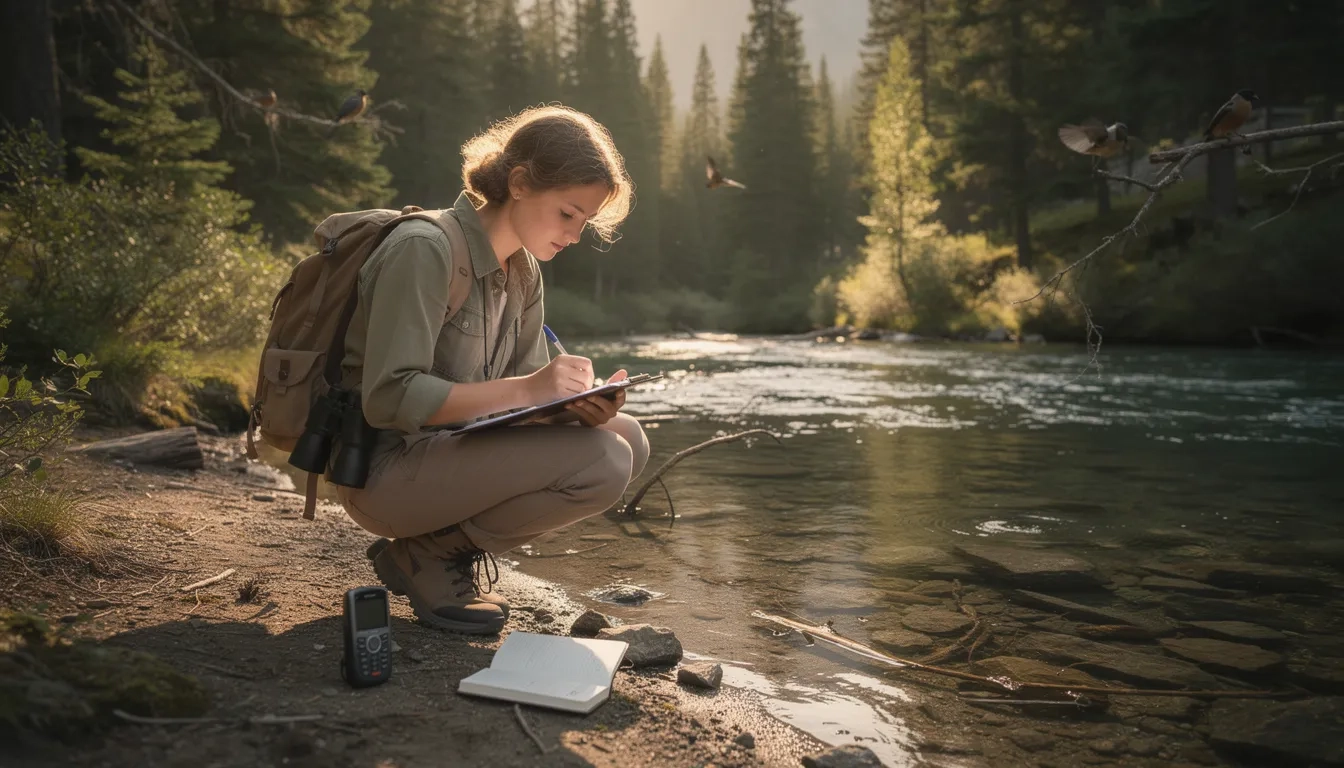
Picking a wildlife biology program is nothing like picking a business school. Rankings matter less here than zip codes. A program planted in the middle of Montana's wilderness gives students something no lecture hall can replicate — and the agencies that actually hire wildlife biologists know exactly which programs produce ready-to-work graduates.
The median annual wage for zoologists and wildlife biologists hit $72,860 in May 2024, according to the Bureau of Labor Statistics, with senior federal positions reaching above $113,350. About 18,200 people hold these jobs nationally. That's a small field. Which means the program you choose, the internships it connects you to, and the agency relationships it builds will shape your career more than almost any other decision you make right now.
What Separates a Good Wildlife Biology Program from a Great One
Not all biology programs are created equal, and the gap surfaces fast when you apply for federal jobs.
Field experience is the real currency. Programs that require internships, field station rotations, or cooperative research unit placements produce graduates who can step directly into work with the U.S. Fish & Wildlife Service, state game agencies, or conservation nonprofits. Programs that don't? You're building that experience on your own time after graduation, while competing against candidates who already have it.
The Wildlife Society — the main professional organization for wildlife biologists — offers a Certified Wildlife Biologist credential that employers recognize widely. Many top programs align their curricula with TWS requirements. If your program doesn't, you may spend years playing catch-up on a credential your peers earned in school.
Research productivity matters too. Look for programs whose faculty publish in the Journal of Wildlife Management or Ecology. A program with active, federally funded research is one where undergraduate students can actually participate in something real — not just read about it.
The Programs That Deliver
Colorado State University (Fort Collins) leads on sheer volume. CSU awarded 127 wildlife biology degrees in 2024 — 108 bachelor's, 17 master's, and 2 doctoral — more than nearly any program in the country. The Warner College of Natural Resources houses a Department of Fish, Wildlife and Conservation Biology with facilities that cover a remarkable range: conservation genetics lab, analytical chemistry lab, fish ponds and culture facilities, a mountain campus, and the Quinney Natural Resources Research Library. Students interested in aquatics will find CSU's fish-side programs as strong as its terrestrial ones.
University of Montana (Missoula) has built its identity around getting students outside. The program runs as a joint initiative between the W.A. Franke College of Forestry and Conservation, the Division of Biological Sciences, and the Montana Cooperative Wildlife Research Unit — one of 40 units nationally that directly links universities to federal and state wildlife management. Students have access to 25,000 acres of university-managed land, including Lubrecht Experimental Forest and the Flathead Lake Biological Station. Every undergraduate is required to complete an internship and at least two credits of hands-on field experience. Not optional. Built into the degree.
Cornell University (Ithaca, New York) brings a different kind of edge. The College of Agriculture and Life Sciences runs wildlife and conservation biology through its Department of Natural Resources and the Environment, and students benefit from proximity to the Cornell Lab of Ornithology — one of the world's leading bird research institutions. If your interests intersect with environmental policy, international conservation, or science communication, Cornell's institutional network reaches places that western land-grant schools simply don't.
University of Wyoming (Laramie) produces 36 bachelor's graduates per year with a 15:1 student-to-faculty ratio, one of the best among large public programs. The BS in Wildlife & Fisheries Biology and Management runs through the Department of Zoology and Physiology, and the Greater Yellowstone region sits about an hour from campus. That proximity is a genuine teaching advantage — students are near one of the most studied large mammal assemblages on Earth.
University of Alaska Fairbanks is the only university in Alaska offering a graduate degree in wildlife biology and conservation (which tells you something about the level of specialization available there). Faculty research covers environmental adaptation, Arctic mammal reproductive biology, epidemiology, and human-wildlife conflict in subarctic systems. For students serious about caribou, polar bears, or climate-driven habitat loss, UAF has no peer. The tradeoff is real: Fairbanks averages lows around minus 22°F in January.
SUNY College of Environmental Science and Forestry (Syracuse, New York) quietly graduated 46 students in wildlife-related programs in 2024 — more than Cornell — at a fraction of the price. SUNY-ESF has deep ties to the New York State Department of Environmental Conservation and consistent placement into state and federal agency work. It's not a household name. That's exactly the kind of thing the career-focused student should notice.
Oregon State University (Corvallis) adds coastal and marine-adjacent research that most inland programs can't match. The Hatfield Marine Science Center in Newport puts students within reach of Pacific coastline fieldwork — salmon, shorebirds, marine mammals. If your interests run toward Pacific Northwest species, OSU's research breadth is a real differentiator.
Program Comparison at a Glance
| School | Location | Degrees | 2024 Graduates | Standout Feature |
|---|---|---|---|---|
| Colorado State University | Fort Collins, CO | BS, MS, PhD | 127 | Highest output; genetics & aquatics labs |
| University of Montana | Missoula, MT | BS, MS, PhD | ~50 | Mandatory internship; 25,000 acres research land |
| Cornell University | Ithaca, NY | BS, MS, PhD | N/A | Cornell Lab of Ornithology; policy network |
| University of Wyoming | Laramie, WY | BS | 36 | 15:1 faculty ratio; Yellowstone access |
| Univ. of Alaska Fairbanks | Fairbanks, AK | MS, PhD | N/A | Arctic specialization; only AK grad program |
| SUNY-ESF | Syracuse, NY | BS, MS | 46 | Strong state agency pipeline; lower cost |
| Oregon State University | Corvallis, OR | BS, MS, PhD | N/A | Hatfield Marine Science Center |
Why Location Is Half the Curriculum
This is the part most college guides underplay. Where a program sits shapes what you can actually study. A wildlife biology student in Montana is learning elk population dynamics and grizzly movement corridors in genuinely wild terrain. A student in Ohio is learning about agricultural landscape fragmentation and urban wildlife management. Neither is a lesser education — they're just training for different careers.
The BLM, USFS, U.S. Fish & Wildlife Service, and National Park Service concentrate their field operations in the Mountain West and Alaska. Being local during school means more internship access, more seasonal positions nearby, and more face time with the agency biologists who eventually write the recommendation letters that matter.
Don't sleep on programs in the Southeast or Midwest if your interests run toward wetland birds, white-tailed deer, or longleaf pine restoration. The University of Florida's wildlife ecology and conservation major puts students in one of the most biodiverse states in the country, with access to faculty running research on Everglades wading birds and Florida panther habitat connectivity.
Graduate vs. Undergraduate: When to Specialize
Most guides dodge this question. Here's a direct answer based on where the job market actually sits:
If your goal is a government wildlife technician, game warden, or entry-level field position, a bachelor's degree is standard. Focus on fieldwork quality, state agency partnerships, and internship connections at the undergrad level — those relationships open more doors than your GPA does.
If you want to be a permanent research biologist with state or federal agencies, an M.S. has become the practical baseline. Most competitive federal job postings list it as "preferred" in ways that functionally mean required. A strong bachelor's from a field-intensive program followed by a master's at a research-active university is the established path.
If you're aiming for faculty positions or lead scientist roles, you need a PhD, and at that point your advisor relationship and publication record matter more than the program's name. Choose your graduate advisor before you choose your graduate school.
The trap students fall into is choosing a prestigious bachelor's program with weak fieldwork, then struggling to compete for graduate admissions because they have no real research experience. A hands-on undergraduate program consistently beats name recognition in this field. Utah State University, for example, awards a small cohort of master's students each year — graduates who publish in top journals and land competitive federal positions partly because they got focused faculty attention rather than anonymity in a large cohort.
Career Outlook: What You're Actually Signing Up For
The Bureau of Labor Statistics projects 2% job growth for zoologists and wildlife biologists through 2034 — slower than the national average. About 1,400 openings are expected per year, most of them coming from retirements and career changes rather than new positions.
"The wildlife biology job market rewards commitment and relationships, not just credentials. Most of those 1,400 annual openings go to candidates who spent their undergrad years building agency connections, not just completing coursework."
That's the real picture. It's a small, competitive field with a ceiling that requires strategic navigation. Students who treat internships as auditions — showing up in June and still emailing their supervisor in November — are the ones who land the permanent positions. Federal roles at senior levels can pay above $113,350, but getting there takes years of demonstrated competence, not just the right degree.
A growing slice of the market now involves technical skills layered on top of traditional field biology: GIS analysis for conservation mapping, drone surveys for population counts, remote sensing for habitat assessment. Programs that integrate these tools into their curriculum are preparing students for positions that didn't exist a decade ago. Students who leave school fluent in ArcGIS Pro and R, alongside standard field protocols, are consistently more competitive than those who aren't.
Bottom Line
- For field-intensive training and mandatory real-world experience, the University of Montana is the strongest choice for most students. The research land access, cooperative unit connections, and required internship create a program designed to produce working wildlife biologists, not just graduates with biology knowledge.
- For program breadth and the highest graduate output, Colorado State leads. 127 degrees awarded in 2024 across three tracks, with facilities that support research from conservation genetics to fisheries toxicology.
- Choose your region with purpose. Your school's location shapes your agency contacts, your internship pipeline, and your first job. Western programs feed federal land management positions. Eastern and Southern programs connect into state agencies and conservation NGOs.
- Build technical skills deliberately. GIS, wildlife population modeling, and remote sensing are increasingly required. Programs that teach them during the degree save you from learning them after the fact.
- The $72,860 median salary is livable but not lavish. Go in knowing that. People who stay in this field do so because they want to, and that matters more than it sounds.
Frequently Asked Questions
Is a wildlife biology degree the same as a zoology degree?
Not quite. Zoology covers animal biology broadly — physiology, taxonomy, evolutionary biology. Wildlife biology focuses on applied conservation, population management, and field ecology. If your goal is working with wild animals in natural habitats, wildlife biology is the more direct path. Many schools offer one or the other; a handful offer both as distinct tracks.
Do I need a master's degree to work as a wildlife biologist?
For entry-level field technician or seasonal positions, a bachelor's is standard. For permanent federal or state agency roles — the ones with benefits, stability, and salary above $60,000 — an M.S. has become the practical expectation. Government job listings increasingly list it as "preferred," which in a competitive applicant pool functions the same as required.
Can I study wildlife biology at a school that isn't in a rural area?
Yes, though what field work looks like will differ. Cornell and SUNY-ESF both balance institutional resources with access to wild lands in upstate New York. The key question is whether the program has strong field station partnerships and internship pipelines. A program that sends students to work at Adirondack or Appalachian research stations can deliver solid field training even if campus is surrounded by a city.
Is The Wildlife Society student membership worth it during undergrad?
Yes. Programs with active TWS student chapters tend to align their curricula with TWS professional guidelines, which directly supports your path to the Certified Wildlife Biologist credential post-graduation. CWB recognition by employers is wide, and the years it takes to earn means starting in a compliant program gives you a measurable head start. Active chapter involvement also puts your name in front of professionals at conferences while you're still in school.
What's the most common mistake students make choosing a wildlife biology program?
Prioritizing institutional prestige over field experience. A wildlife biology degree from a well-known university that treats the major as secondary — few agency connections, minimal field work, no cooperative research unit — will consistently underperform against a dedicated program at a regional public university with strong placement ties. Wildlife biology hiring runs on experience and professional relationships, not alma mater recognition.
Which program is best for students interested in marine mammals or coastal species?
Oregon State's connection to the Hatfield Marine Science Center in Newport makes it the strongest option for Pacific coast species. For Atlantic coastal research, the University of Florida and several programs in North Carolina and Virginia have active faculty in estuarine and coastal wildlife work. For Arctic marine mammals specifically, the University of Alaska Fairbanks is in a category of its own.
Sources
- Best Wildlife Biology Degree Colleges in the U.S. | 2026 – Universities.com
- 2025 Best Wildlife Biology Schools – College Factual
- Wildlife Biology Program – University of Montana
- The Best Wildlife Biology Colleges 2026 – College Raptor
- Zoologists and Wildlife Biologists – Bureau of Labor Statistics Occupational Outlook Handbook