Best Colleges in Vermont 2026: Ranked and Compared
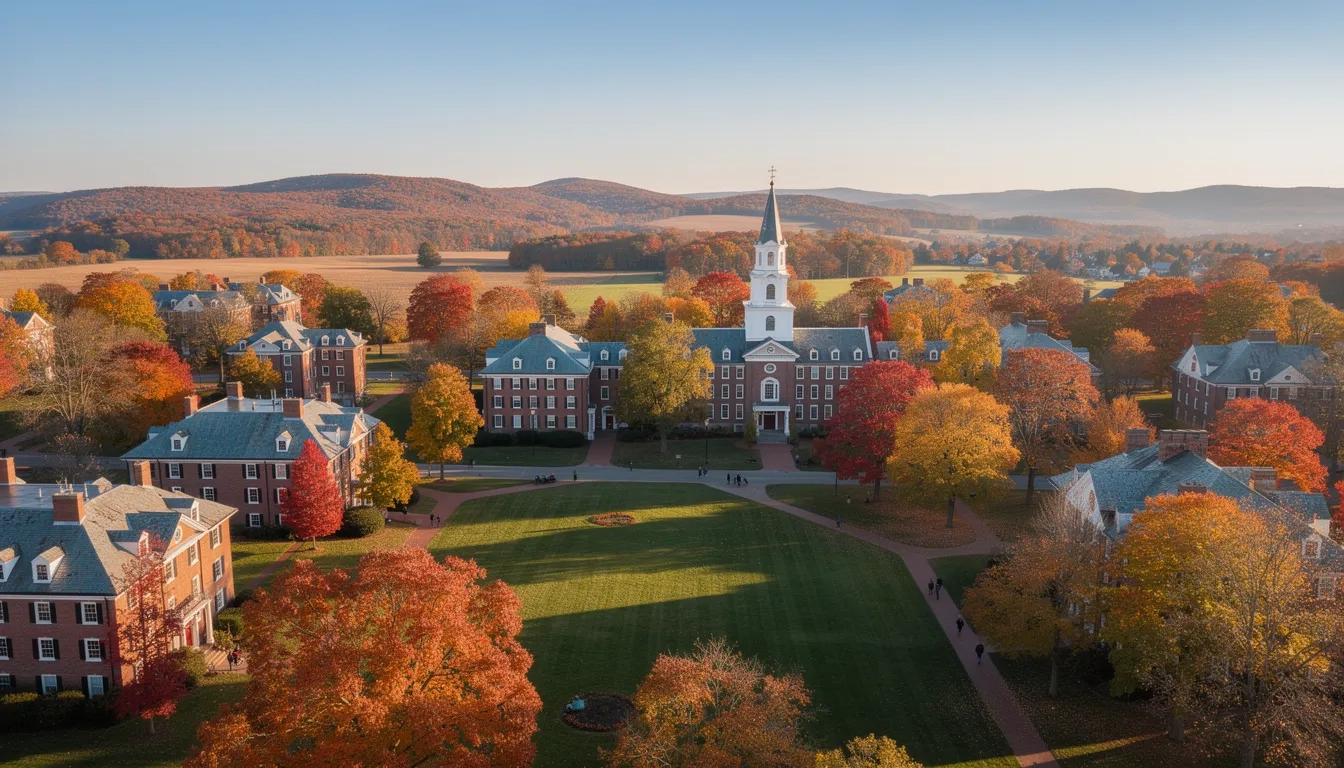
Vermont pulls off something unusual in American higher education. The entire state has just 11 nationally ranked four-year colleges — you could fit all of their combined enrollments inside Ohio State — yet it houses one of the most selective liberal arts schools in the country, a genuine Public Ivy, and the oldest private military university in America. Small footprint, outsized reach.
If you're building a college list that includes Vermont, or trying to understand what actually separates these schools, here's what you need to know.
Vermont's Higher Education in One Snapshot
The numbers tell a story of enormous spread. Vermont's 11 ranked institutions average a 59.1% graduation rate and $48,623 in median graduate earnings, according to CampusGuide's 2026 analysis. But averages hide the range: Middlebury graduates hit $76,310 at career midpoint. Bennington graduates average closer to $38,400. Same state, completely different outcomes.
One thing you should know before looking at any tuition sticker: Vermont has the highest average out-of-state tuition among four-year public institutions in the country, per Education Data Initiative data. That $41,900 average makes UVM look punishing for out-of-staters. But net price — what families actually pay after aid — frequently tells a different story, so treat sticker prices as starting points, not verdicts.
The schools below are organized by profile type rather than strict rank, because "best" is a useless word without context.
Middlebury College: Vermont's Crown Jewel
Middlebury is the name everyone knows, and the selectivity backs it up. Founded in 1800 — the first operating college in Vermont — it has tightened its acceptance rate to around 10% for the 2026 cycle, with SAT scores clustering between 1430 and 1550. The six-year graduation rate of 92.6% is essentially best-in-class for liberal arts colleges nationally.
The number that really earns attention: Middlebury graduates earn a median of $76,310 ten years after enrollment. That places them ahead of alumni from many schools with considerably more name recognition. And despite a listed tuition of $65,280, Niche's 2026 data puts the average net price at $22,912, because Middlebury meets 100% of demonstrated financial need without loans.
The language programs are genuinely without peer. Middlebury's Language Schools operate at the Vermont campus each summer across more than 10 languages, and at international institutes in 16 countries year-round. Students sign a Language Pledge committing to speak only their target language — no exceptions — for the duration. No other U.S. undergraduate institution runs anything close to this at scale.
Who belongs here: Students with top-tier academic profiles who want a rigorous, internationally minded environment. Middlebury's environmental studies program ranks among the best in the country, which fits Vermont's geography. This is a real reach for most applicants, but one worth taking seriously.
University of Vermont: The Public Ivy Option
UVM is the anchor of Vermont's public system, and it earns its reputation. Ranked #132 among National Universities and #68 among Top Public Schools in the 2026 U.S. News rankings, it holds its position against larger research flagships while maintaining a campus feel much closer to a liberal arts college (about 12,168 undergrads). It's regularly called a Public Ivy, a designation it shares with schools like the University of Michigan and UNC Chapel Hill.
In-state tuition sits at $19,514. Out-of-state tuition is $47,554, which sounds brutal until you look at the aid side: 45% of first-year students received need-based scholarships in fall 2023, averaging $24,421 per student. Students from outside Vermont who qualify for strong aid can land at a net price that makes the math work.
Pre-med students should pay specific attention here. UVM's Larner College of Medicine and its undergraduate research infrastructure give pre-med students real laboratory access at a price that most peer medical pipelines can't match. The 78.6% graduation rate signals that students are staying and finishing, which matters when you're evaluating institutional quality.
Burlington is also just a good place to live (for a city of 45,000, at least). That quality-of-life factor isn't trivial — it affects retention, mental health, and internship access in ways that get underweighted in ranking systems.
Champlain College: Career-First and Underrated
Champlain doesn't get enough credit in Vermont college conversations. Tucked on a hill in Burlington, two blocks from UVM, it graduates students into median earnings of $58,386 — higher than Norwich, higher than Vermont State, and within striking distance of UVM. The school's 63% graduation rate is respectable for its price range and student demographics.
The reason for the strong career outcomes is structural. Champlain builds internship requirements directly into degree tracks in cybersecurity, game design, healthcare management, and business. Students don't scramble to assemble their own professional experience junior year — the program does it with them from the start.
At $45,550 in tuition, this is private-school pricing. But for students heading toward cybersecurity specifically, where the talent shortage remains real and persistent, that investment has a clearer payoff than at many higher-ranked schools.
One caveat worth naming clearly: Champlain does not serve undecided students well. The career-focused architecture works best when students arrive knowing their direction. Walk in undeclared, and you'll spend expensive semesters finding your footing.
Norwich University: Structure, Service, and Engineering
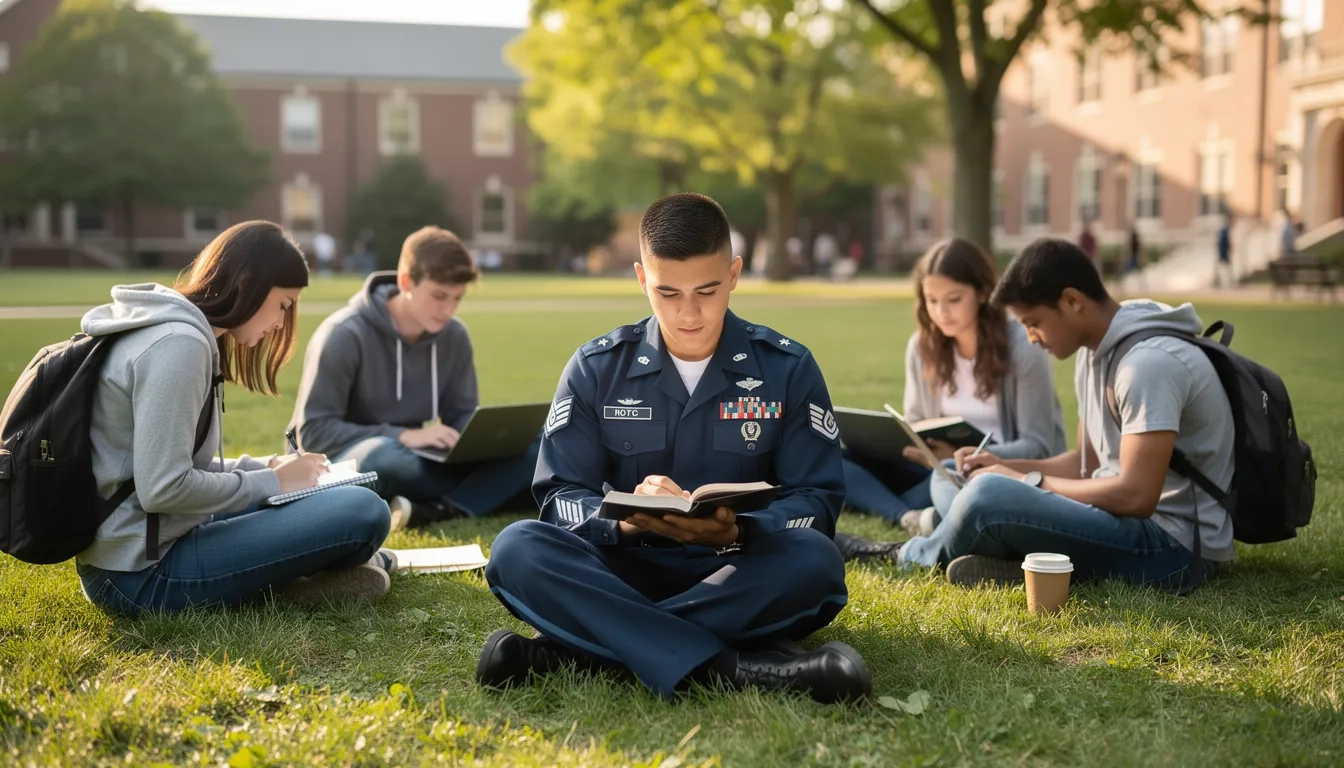
Norwich University is unlike anything else in New England. Founded in Northfield in 1819, it holds the title of oldest private military university in the United States and is recognized as the birthplace of ROTC. About 60% of students participate in the Corps of Cadets; the other 40% are civilian students pursuing engineering, architecture, cybersecurity, or criminal justice without military obligations.
The culture carries weight either way. Norwich runs on structure and discipline, and students who thrive there tend to want that environment. Those who don't realize it until they arrive sometimes struggle.
Starting salaries average $57,100 for Norwich graduates, driven by strong engineering and federal/defense sector placement. The school advertises 250+ internship partners, and the military alumni network — one of the tightest in New England — genuinely delivers for students pursuing defense contracting, federal law enforcement, or government work.
Acceptance rate sits at 83%, making Norwich one of the more accessible schools on this list. The combination of accessibility and strong post-graduation earnings makes it a serious option for students who fit the ethos.
Vermont State University and Bennington: Two Very Different Bets
Vermont State University came into existence in 2023 through the merger of Castleton University, Northern Vermont University, and Vermont Technical College. The unified institution is still sorting out its identity, but the value proposition for in-state students is clear: $11,952 tuition, the lowest among four-year schools in the state, and a practical focus on applied and technical fields.
The 48.9% graduation rate is a legitimate concern. That number reflects retention challenges that the institution is actively working through post-merger, and any prospective student should ask direct questions about student support before enrolling.
Bennington College is almost the inverse of every school on this list. Small (under 1,000 students), expensive ($61K tuition), and built around student-designed academic plans, Bennington attracts a specific kind of learner: one who wants maximum autonomy over their education.
"Bennington is an excellent school for exactly the right person — and a risky financial bet for everyone else."
The alumni roster in writing, arts, and media is genuinely impressive and disproportionate to the school's size. But the $38,400 median graduate earnings are the lowest on this list. If you're considering Bennington, go in with full awareness that financial returns are not the reason to choose it.
How to Match Vermont Schools to Your Priorities
Choosing between these schools means matching your actual situation to what each school does well.
| Your Priority | Best Fit | Runner-Up |
|---|---|---|
| Academic prestige + selectivity | Middlebury College | Bennington College |
| Research + in-state affordability | University of Vermont | Vermont State University |
| Career placement in tech | Champlain College | Norwich University |
| Military / ROTC pathway | Norwich University | University of Vermont |
| Lowest cost, in-state | Vermont State University | Community College of Vermont |
| Arts / self-directed learning | Bennington College | Middlebury College |
A few decision-making factors worth factoring in beyond the table:
- Net price calculators are mandatory reading. Vermont's high sticker prices hide genuine generosity at Middlebury and UVM for qualifying families. Run the calculator before ruling anything out.
- Location type shapes daily life. Burlington (UVM, Champlain) feels like a real city. Middlebury, Norwich, and Vermont State University sit in small towns where campus is basically everything. Neither is wrong, but they produce very different four-year experiences.
- Graduation rate as a signal of support. A school with a 49% completion rate is saying something about its retention systems. Weigh that honestly against price.
Vermont is small enough that campus visits have unusually high return. Middlebury at 2,760 students and UVM at 12,168 feel completely different even though they're an hour apart.
Bottom Line
- Middlebury is the reach worth taking if your academic profile and intellectual interests align. The 10% acceptance rate intimidates, but the net price and career outcomes often justify the application.
- UVM is the strongest all-around choice for in-state students and for out-of-staters with real financial need — especially in pre-med, environmental science, and business.
- Champlain consistently outperforms its reputation on career outcomes. Don't discount it because it lacks national name recognition.
- Norwich suits students who want structure, military networking, or engineering pathways with strong federal sector placement.
- Vermont State University makes sense for cost-conscious in-state students willing to engage with an institution still building itself. Bennington rewards the right student enormously and confuses everyone else.
The single most important step before finalizing any Vermont college list: run every school's net price calculator. Vermont has some of the most expensive-looking sticker prices in the country — and some of the most generous aid packages sitting quietly behind them.
Frequently Asked Questions
What is the #1 ranked college in Vermont for 2026?
Middlebury College holds the top position in Vermont across Niche, CampusGuide, and most comparative rankings for 2026. Its 10% acceptance rate, 92.6% graduation rate, and $76,310 median graduate earnings drive that placement. It's also the oldest operating college in the state, founded in 1800 by Congregationalists before Vermont was even a decade into statehood.
Is the University of Vermont a good school nationally?
Yes. UVM ranks #132 among National Universities and #68 among Top Public Schools in the 2026 U.S. News rankings. Its Larner College of Medicine and environmental science programs carry genuine national reputations. For in-state students paying $19,514 in tuition, it delivers research university resources at a price that most comparable institutions can't match.
Are Vermont colleges expensive for out-of-state students?
Significantly so. Vermont carries the highest average out-of-state tuition among four-year public institutions in the country, according to Education Data Initiative. UVM's out-of-state sticker price is $47,554. That said, need-based aid can close that gap substantially — 45% of UVM first-year students received need-based aid averaging $24,421 in fall 2023.
Is Middlebury College an Ivy League school?
No. Middlebury is a highly selective liberal arts college, not a member of the Ivy League. The Ivy League is a specific athletic conference comprising eight schools (Harvard, Yale, Princeton, Columbia, Penn, Brown, Dartmouth, Cornell). Middlebury frequently competes with Ivy-level schools for the same applicants and produces comparable career outcomes, but it operates under a distinct educational model with different priorities.
What's the most affordable four-year college in Vermont?
Vermont State University charges $11,952 in-state tuition, making it the least expensive four-year option in the state. Goddard College in Plainfield runs around $18,000 among private institutions. For students open to two-year programs, the Community College of Vermont charges approximately $3,560 in-state — among the lower-cost community college options in New England.
What should I actually look for when comparing Vermont colleges?
Graduation rate, net price (not sticker price), and median earnings at 10 years out are the three metrics that matter most. Rankings are a shortcut, but they can mislead: a school ranked higher on prestige might have lower graduate earnings and a weaker support infrastructure for your specific major. Vermont's colleges are small enough that a campus visit changes most people's minds — do it before committing.
Sources
- 2026 Best Colleges in Vermont | U.S. News Rankings
- 2026 Best Colleges in Vermont - Niche
- Best Colleges in Vermont 2026 | CampusGuide
- What is the best college in Vermont? Niche ranks 3 best universities for 2025 | Yahoo News
- Best Colleges in Vermont 2026 | AcademicInfluence
- University of Vermont Tuition and Costs | BigFuture College Board