Best Colleges in the Southwest 2026: A Region Worth Taking Seriously
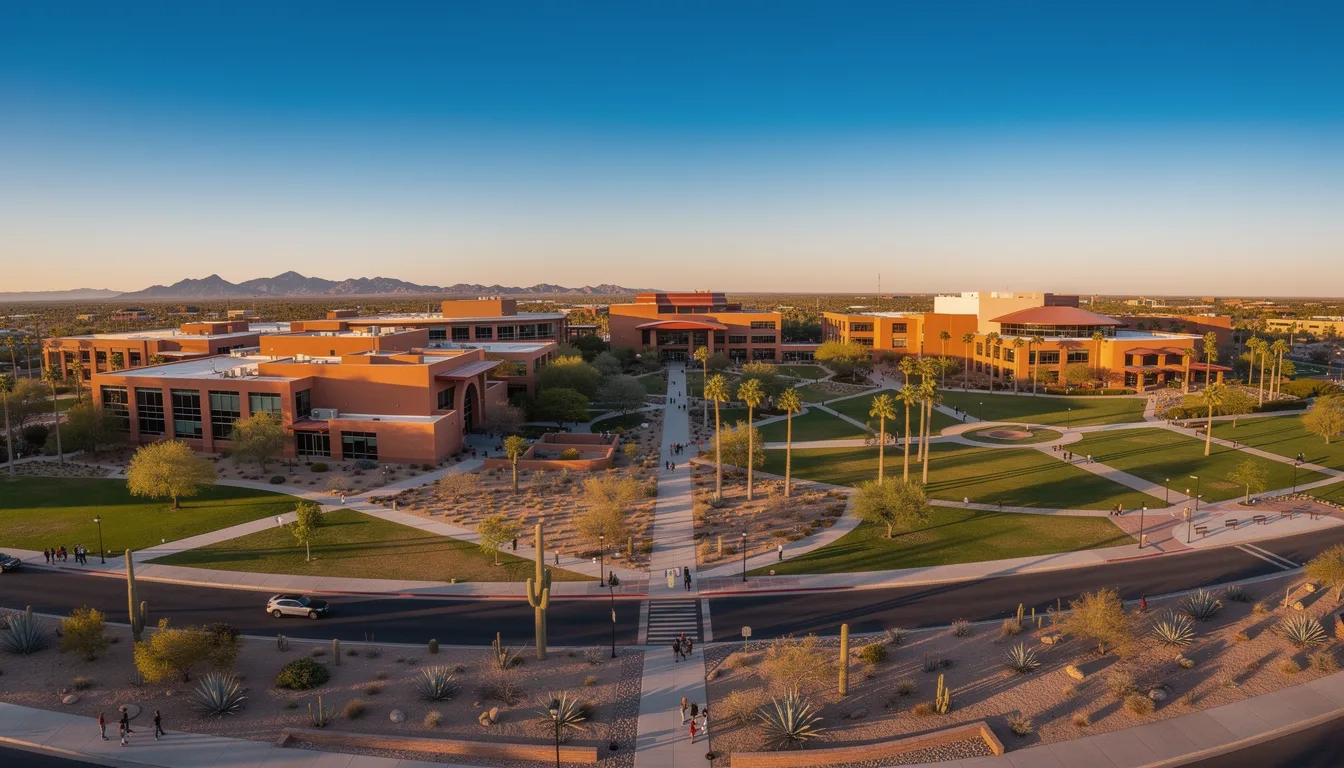
The Southwest is having a moment in higher education. Rice University sits at #17 nationally. UT Austin has held its top-30 position for two consecutive years. Arizona State University just claimed the #1 Innovation title for eleven straight years. This region is no longer the runner-up in conversations about great American universities — it's the main event for a growing slice of students.
Whether you're sorting out where to apply from Texas, Arizona, Colorado, or Nevada, or you're out-of-state and eyeing the sunshine, this guide covers the schools worth your attention. Not just who ranked where, but what the rankings don't tell you.
How We're Defining the Southwest
For this piece, the Southwest covers Texas, Arizona, New Mexico, Nevada, Utah, and Colorado. (Oklahoma gets a mention too. It fits geographically even if some ranking systems classify it as the South.) That's a massive region with wildly different school types, from tiny private liberal arts colleges to ASU's flagship campus in Tempe, which enrolls north of 80,000 students.
The right school depends on what you want. A research-intensive flagship with graduate-level faculty access? A private university with real national prestige? A career-focused state school with strong industry connections and an honors track? All of these exist here. Let me work through them.
The Prestige Tier: Rice and UT Austin
Rice University in Houston is the Southwest's highest-ranked university by a significant margin — No. 17 nationally in the 2026 U.S. News & World Report rankings. Rice jumped 86 spots in social mobility rankings over just two years, hired over 250 faculty members in three years, and its biomedical engineering program ranks 9th in the country. The George R. Brown School of Engineering placed 21st nationally for undergraduate engineering, with entrepreneurship programs climbing to No. 12.
Rice also holds the No. 5 spot for Best Value nationally, which is remarkable for a private school. The trade-off is selectivity. Rice admits around 9% of applicants historically, and the residential college system (think Hogwarts-style houses that shape student social life entirely) is a defining feature of the campus. If you're a strong STEM or social sciences applicant who wants an Ivy-adjacent experience in a major metro area, Rice belongs on your list.
UT Austin held its No. 30 national ranking for the second consecutive year, ranking 7th among all public schools nationwide. That places it alongside Michigan and UCLA in the public university conversation. At the flagship in Austin, 29% of applicants get in — significantly more selective than most state flagships. In-state tuition sits at $11,678 annually, which is genuinely one of the better deals in American higher education at that ranking tier.
UT Austin consistently ranks among the top 7 public universities in the country, placing it in a tier that competes directly with Michigan, UCLA, and UC Berkeley for prestige and post-graduate outcomes.
The McCombs School of Business and Cockrell School of Engineering anchor UT Austin's national reputation. But Austin's transformation into a tech hub — Dell, Apple, Tesla, and Oracle all have significant Austin presences — creates networking opportunities that spill outside campus in ways that isolated campuses simply can't replicate.
Private Universities Worth a Second Look: SMU, TCU, and Baylor
Dallas and Fort Worth house two quietly impressive private universities.
Southern Methodist University (SMU) climbed to No. 88 nationally in 2026, up three spots from the prior year. The Cox School of Business carries real name recognition in Texas corporate circles. SMU's location in Dallas's University Park neighborhood gives it an unusual combination of urban amenities and a traditional campus feel, plus direct access to one of the country's strongest job markets.
Texas Christian University (TCU) tied at No. 97 nationally after jumping eight spots this year. The nursing anesthesia program ranks 9th in the U.S. — a genuinely elite result for a mid-size private school. TCU also has strong graduate programs in business and education that regularly surface in U.S. News specialty rankings.
Baylor University in Waco sits just south of the DFW corridor. It's a Baptist-affiliated institution that has climbed national rankings steadily. The pre-med pipeline and research investment have grown considerably over the past decade. If the religious affiliation fits, it's one of the more underrated options in the region.
| University | 2026 US News Rank | Location | Acceptance Rate | Annual In-State Tuition |
|---|---|---|---|---|
| Rice University | #17 | Houston, TX | ~9% | N/A (private) |
| UT Austin | #30 | Austin, TX | 29% | $11,678 |
| Texas A&M | ~#77 | College Station, TX | 63% | ~$13,000 |
| SMU | #88 | Dallas, TX | 49% | N/A (private) |
| TCU | #97 (tied) | Fort Worth, TX | 44% | N/A (private) |
| CU Boulder | #97 (tied) | Boulder, CO | 76% | ~$12,000 |
| ASU | #117 | Tempe, AZ | 90% | $12,817 |
| U of Arizona | #127 | Tucson, AZ | 86% | $13,573 |
| University of Utah | #151 | Salt Lake City, UT | ~80% | ~$9,000 |
The Innovation Powerhouse: Arizona State University
If any school in the Southwest gets unfairly dismissed because of its size, it's ASU. Yes, it's enormous. But ASU's eleven consecutive years as the #1 innovation university in U.S. News isn't a marketing tagline. It reflects real structural choices about access, online education, and industry partnership that most schools talk about and ASU actually built.
The Barrett Honors College functions as a selective liberal arts experience inside a massive public university — acceptance rates hover around 25%, and Barrett students get research access that rivals what you'd find at schools ranked 50 spots higher. The W. P. Carey School of Business and the Fulton Schools of Engineering have strong pipelines into Phoenix's growing tech sector.
The caveat is real: a 56% four-year graduation rate is lower than peer institutions. The sheer scale can feel impersonal if you're not deliberate about seeking out community. ASU rewards students who find their specific school within the university. Students who arrive passively often get lost in the crowd.
For in-state Arizona students, the numbers are hard to argue with: $12,817 in annual tuition, a campus that punches above its ranking in innovation, and career prep that connects directly to Arizona's fastest-growing industries.
Colorado and Utah: Mountain West Gems
University of Colorado Boulder tied at No. 97 nationally in 2026. CU Boulder carries arguably the most recognizable brand of any school at this ranking tier. The Leeds School of Business and College of Engineering are the strongest academic units. A 76% acceptance rate makes it more accessible than peers ranked nearby, though out-of-state tuition jumps substantially. Colorado residents get a meaningfully better deal.
University of Utah sits at No. 151 nationally, but that ranking undersells it in specific areas. The Kahlert School of Computing has direct ties to Salt Lake City's tech scene — Adobe, Qualtrics, and Pluralsight are all headquartered there. The medical school is nationally regarded. With approximately $9,000 in annual in-state tuition, it's one of the most affordable paths to a legitimate research university education in the entire region.
The Arizona Second Tier and New Mexico/Nevada Options
University of Arizona dropped to No. 127 in 2026 after nearly cracking the top 100 last year. The Eller College of Management and optical sciences programs remain strong. Worth watching whether the rankings stabilize or continue shifting downward.
Northern Arizona University in Flagstaff ranks No. 242 nationally but draws loyal in-state students for environmental sciences, nursing, and education. The campus sits at 7,000 feet, surrounded by ponderosa pines. No other research campus in the country quite looks like it.
University of New Mexico and UNLV serve important roles as access institutions. UNM has a respected law school and cultural studies programs connected to the region's Hispanic heritage. UNLV's hospitality management program is one of the best in the country, which isn't surprising given its location in Las Vegas.
How to Actually Pick: A Framework
Students consistently make the same mistake: assuming the highest-ranked school on this list is automatically the best fit. It isn't.
If prestige and post-graduate earnings are your top priority:
- Rice, UT Austin, or targeted programs within Texas A&M (engineering, agriculture, business)
- These schools carry brand recognition that opens doors outside the region
If you want a strong private university experience without extreme selectivity:
- SMU, TCU, or Baylor
- All three have acceptance rates above 40%, meaningful scholarship programs, and strong regional alumni networks
If you're cost-conscious and staying in-state:
- Your state's flagship first: UT Austin for Texans, ASU for Arizonans, CU Boulder for Coloradans, U of Utah for Utahns
- In-state tuition across these schools ranges from roughly $9,000 to $14,000 annually
If undergraduate research access matters most:
- Rice and UT Austin lead here
- ASU's Barrett Honors College offers surprisingly comparable research access at a fraction of the private-school cost
A student who thrives in a small-college environment will likely struggle at ASU regardless of the innovation rankings. A student who wants a campus embedded in a city's economic engine might find CU Boulder's mountain-town setting limiting in ways the rankings can't capture. Know what you want before you start chasing scores.
Bottom Line
- Rice at #17 is the Southwest's top pick for students chasing elite research, biomedical, and engineering programs — with surprisingly strong value for a private school.
- UT Austin at #30 delivers public-school pricing with near-private-school prestige, especially for Texans who qualify for in-state rates.
- ASU, CU Boulder, and U of Utah are the best in-state value options. All three have specific programs that significantly outperform their overall rankings.
- SMU and TCU are the best private alternatives for students who want a tight-knit campus with strong regional networks, without Rice's extreme selectivity.
- Start by identifying what type of college experience you actually want — not just what ranks highest. Then filter by cost, selectivity, and program fit. The Southwest has enough variety that most students can find a genuine match here.
Frequently Asked Questions
What states count as the Southwest for college rankings purposes?
The Southwest most commonly includes Texas, Arizona, New Mexico, Nevada, Utah, and Colorado. Some systems include Oklahoma. Texas dominates the tier list simply because it has the most high-ranked institutions, but all six states have notable universities worth serious consideration — especially for in-state students.
Is UT Austin worth attending for out-of-state students?
For most students, the math is tough. Out-of-state tuition at UT Austin runs close to $40,000 annually, eliminating the public-school cost advantage. Out-of-state applicants are also held to a higher admissions bar. That said, for STEM and business programs where UT Austin's brand carries weight nationally, the calculation shifts. Run the comparison against what private schools like SMU or TCU are offering in merit aid before deciding.
Is the "party school" reputation at ASU still accurate?
Largely outdated for serious students. The Barrett Honors College is genuinely selective and rigorous. The engineering and business schools have strong industry ties in Phoenix's tech sector. The reputation survives because the large student body and Greek life culture are real — but they coexist with serious academic programs. The 56% four-year graduation rate is a real data point to weigh, but it reflects the school's broad access mission more than the quality of instruction in specialized programs.
Which Southwest school is best for pre-med students?
University of Arizona, UT Austin, Rice, and Baylor are the strongest options. Rice's proximity to the Texas Medical Center in Houston (the largest medical complex in the world by floor space) is particularly valuable for clinical exposure and research. Baylor has a well-regarded pre-med advising program with strong medical school acceptance rates for qualifying graduates.
How does financial aid work at private Southwest universities versus public flagships?
Private schools — Rice, SMU, TCU, Baylor — typically offer more generous merit aid packages than the public flagships for out-of-state students. Rice meets 100% of demonstrated financial need, which makes its sticker price misleading for many families. The public flagships have lower base tuition but limited out-of-state aid. Use each school's net price calculator before drawing conclusions from sticker prices alone.
Which Southwest university has the strongest tech industry connections?
UT Austin and ASU lead, but for different reasons. UT Austin benefits from Austin's explosive tech growth — Apple, Tesla, Dell, and Oracle all recruit heavily on campus and have major offices in the city. ASU has built formal partnerships with companies across Phoenix's tech sector and operates large corporate education programs. For students focused on startups and venture capital specifically, UT Austin's proximity to Austin's funding ecosystem is currently hard to beat.
Sources
- Rice Rises in US News Rankings, Recognized for Value, Teaching and Innovation
- 5 Austin Universities Land on U.S. News' 2026 List of Best Colleges
- ASU Named Top Arizona University in Best US Colleges Ranking
- TCU Ranks Among Top 100 in U.S. News' Best Colleges for 2026
- CU Boulder No. 97 on U.S. News & World Report's 2026 Best Colleges
- Times Higher Education Ranks U of A No. 1 Public University in the Southwest