Best Colleges in South Dakota 2026: Ranked for Real-World Outcomes
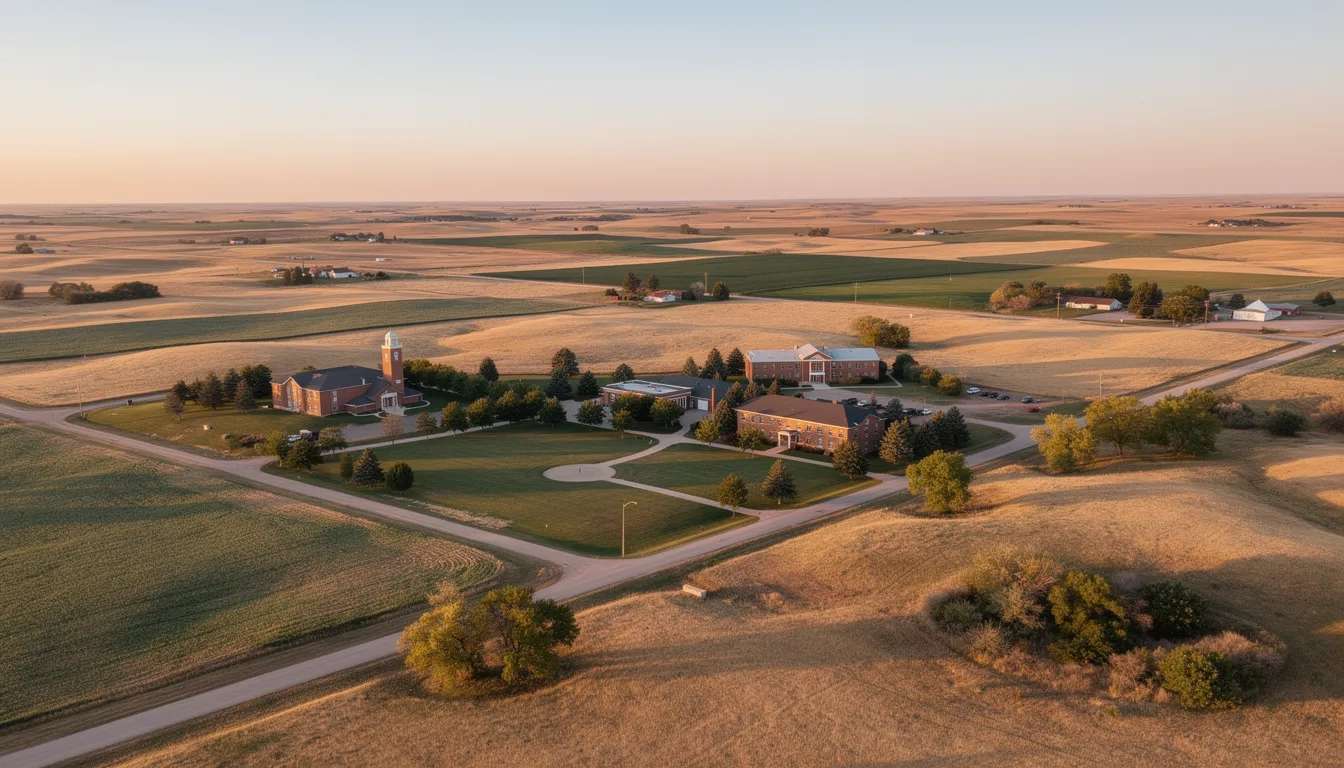
South Dakota isn't the first state most students picture when building a college list. No Big Ten flagship, no coastal private research university pulling in hundreds of millions in endowment income. But for students who know what they're after, this state holds some genuine surprises.
Dakota State University, for instance, is one of only three universities in the entire country to hold all three National Centers of Academic Excellence in Cybersecurity designations from the NSA. The other two are the University of Arizona and Old Dominion University. Most applicants doing college research have never heard of DSU. That gap between reputation and reality is what this guide exists to close.
How South Dakota's College Map Actually Works
Quick orientation: about a dozen degree-granting four-year institutions operate in South Dakota, but only five or six merit serious attention for traditional undergraduate study. The public flagships are South Dakota State University (SDSU) in Brookings and the University of South Dakota (USD) in Vermillion. The strongest private option sits in Sioux Falls. Two specialist schools round out the picture for specific career tracks.
Total annual costs (tuition, room, board, and fees combined) range from roughly $24,920 at the most affordable public schools to over $58,600 at private institutions. That spread matters, because financial aid at the private schools can close much of the gap.
None of the four-year schools here surpass 10,000 undergrads. That means smaller classes, real faculty access, and a campus where you actually know people. The tradeoff is fewer niche graduate research programs and no big-city employment corridor walking distance from campus.
Augustana University: The State's Best-Rounded School
Augustana University in Sioux Falls topped WalletHub's 2026 South Dakota rankings, and the case for it is straightforward. Augie (the name students use) offers 54 undergraduate majors, a 10:1 student-faculty ratio, and roughly 1,800 undergrads on campus. This is the scale where professors learn your name.
The sticker price is the first thing everyone notices. Full-time tuition runs $40,664 for 2025-26, but 97% of undergrads receive scholarships or grants, with an average award of $28,594 per student. The real out-of-pocket cost for most families lands considerably below that headline figure.
There's also the Launch Program, which covers full tuition for qualifying South Dakota residents for four consecutive years of enrollment. That program has changed the math for many in-state students who would have defaulted to USD or SDSU without actually running the numbers first.
Career outcomes are where Augustana earns its ranking. It sits second in the state for post-graduation median salary, behind only SD Mines, and maintains direct pipeline connections to Sanford Health (the dominant healthcare employer in Sioux Falls) through nursing and health sciences programs. For students targeting healthcare or business careers in the upper Midwest, that combination of outcomes and proximity is hard to match.
SD School of Mines: Best Engineering Value in the State
SD School of Mines and Technology in Rapid City occupies a narrow lane. Engineering, computer science, geology, and hard sciences. Not much else. Within that lane, it's excellent.
In-state tuition runs approximately $10,601 for 2026. SD Mines ranks first among all South Dakota schools for post-graduation median salary. The 12:1 student-faculty ratio is competitive with many small private colleges, and SAT scores cluster between 1130 and 1320.
You won't find a journalism department here. What you will find: undergrads co-authoring peer-reviewed papers alongside faculty, strong industry ties to energy and mining sectors, and a placement culture built around getting graduates into roles quickly. The National Science Foundation has funded multiple research programs at SD Mines in materials science and atmospheric science over consecutive grant cycles.
One honest tradeoff worth naming: Rapid City has about 80,000 residents, and the campus skews around 70% male. The social scene is genuinely quiet compared to a state flagship. Students who prioritize career outcomes over campus activity tend to thrive. Students who want a socially rich environment frequently feel out of place by sophomore year.
South Dakota's Public Flagships: USD and SDSU
Both public flagships accept roughly 99% of applicants, which creates a stubborn misconception that neither school is rigorous. The admissions door is wide open. What happens inside depends entirely on your program and how seriously you take it.
SDSU in Brookings is the state's largest university, with 7,716 full-time undergrads and more than 200 academic programs. US News ranks it #257 nationally and #145 among public schools in 2026. Agriculture, pharmacy, and nursing are program standouts with real regional credibility. As a land-grant institution, SDSU carries deep applied science ties to the state's agricultural economy. In-state tuition runs about $8,000 per year for a full course load.
USD in Vermillion holds the state's only law school and medical school. That distinction matters considerably if either is your career path. US News places it at #283 nationally and #157 among public schools. USD also earns the best campus safety rating of any South Dakota institution (a metric that tends to get overlooked in headline rankings but that families notice). Graduation rate sits at 61%, highest in the state. In-state tuition runs around $11,283 annually.
Picking between them mostly comes down to major. Agriculture, pharmacy, and nursing: SDSU. Law or health professions: USD. If you're undeclared, visit both. Brookings and Vermillion have genuinely different campus energy, and that daily environment shapes your experience more than the 26-spot US News gap.
Dakota State University: A Cybersecurity Program Flying Under the Radar
Madison, South Dakota has about 6,500 residents. Dakota State University sits here with around 1,533 full-time on-campus undergrads, and it almost never appears in national college conversations.
That's a real oversight for anyone aiming at a cybersecurity career.
DSU's Beacom College of Computer and Cyber Sciences holds all three NSA National Centers of Academic Excellence in Cybersecurity designations. As of 2025, only two other universities in the country share that distinction: the University of Arizona and Old Dominion University. Most schools ranked above DSU in general college lists cannot say the same.
The program's recognition track is consistent. Cybersecurity Guide ranked DSU's online cybersecurity PhD the most affordable in the country in December 2025, the third straight year for that recognition. US News ranks the online Graduate IT program #33 out of 97 nationally. The DSU Cyber 27 Initiative represents a specific institutional commitment to building a graduate pipeline for government and private-sector cyber roles.
On-campus enrollment is modest, and the 18:1 student-faculty ratio is the highest on this list. That's a real tradeoff. But within the Beacom College specifically, program mentorship tends to outperform what that ratio suggests. For anyone targeting federal IT security or penetration testing work, DSU belongs on your list. Its reputation in that specific field has quietly grown past what its size and location would predict.
Other South Dakota Schools Worth Knowing About
Mount Marty University in Yankton stands out as the most selective school in the state, with a 48% acceptance rate. That's tighter than even Augustana. About 620 undergrads, strong nursing and health sciences offerings, and an 11:1 student-faculty ratio. The Catholic liberal arts tradition shapes the curriculum and campus culture in ways that appeal to students looking for a smaller, faith-grounded environment.
A few others worth a quick mention:
- Northern State University in Aberdeen: strong teacher education pipeline; the best fit for students staying in northern South Dakota
- Oglala Lakota College in Kyle: serves the Pine Ridge community with focused programs in tribal governance and Indigenous community health
- Dakota Wesleyan University in Mitchell: small United Methodist school with solid nursing and social work tracks
None of these are wrong choices if they match your goals. They're simply more defined in their purpose.
How to Choose: A Practical Framework
Here's a side-by-side comparison of the main contenders:
| School | Best For | Approx. In-State Tuition | Acceptance Rate |
|---|---|---|---|
| SD School of Mines | Engineering, hard sciences | ~$10,601/yr | ~80% |
| Augustana University | Liberal arts, health, business | $40,664 (net often ~$12K) | 59% |
| University of South Dakota | Law, health professions | ~$11,283/yr | 99% |
| South Dakota State | Agriculture, pharmacy, nursing | ~$8,000/yr | 99% |
| Dakota State University | Cybersecurity, IT | low-moderate | 98% |
| Mount Marty University | Small Catholic liberal arts | moderate | 48% |
A few practical decision shortcuts:
- South Dakota residents with strong academics should apply to Augustana's Launch Program before writing off the sticker price. The net cost after aid is often competitive with public university pricing for qualifying students.
- Out-of-state STEM students should compare SD Mines's tuition directly against their home state's flagship rate. The post-graduation salary data frequently tips in SD Mines's favor.
- Anyone targeting law or medicine: USD is the pipeline. There's no comparable alternative in the state.
Students who build their college list in spring of junior year give themselves time to run each school's federal Net Price Calculator before spending on application fees. The difference between Augustana's $40K sticker and its typical net cost (often well below $14,000 for South Dakota residents with solid grades) is one of the more underappreciated value gaps in regional higher education.
Bottom Line
- SD Mines delivers the clearest return on investment for STEM students: low tuition, first-in-state salary outcomes, and a focused culture that rewards students who know what they want.
- Augustana is the best-rounded private option. Run the Launch Program numbers before deciding it's unaffordable. Sticker price and real cost are very different things here.
- USD is not a safety school. The state's only law school and medical school run through Vermillion. Apply there with intention if that's your path.
- DSU is underrated for cybersecurity. Nationally credentialed and attended by far fewer students than should be applying there.
- Start your list in 11th grade, use Net Price Calculators, and visit before committing. The school that fits your major and your financial reality is the right school.
Frequently Asked Questions
Is South Dakota affordable for out-of-state college students?
It can be, particularly at SD Mines. Out-of-state tuition there runs about $14,900 to $15,000 per year, which is lower than in-state tuition at many flagships elsewhere. SDSU and USD charge standard out-of-state premiums, but merit aid can offset some of that. Augustana's private tuition applies equally to in-state and out-of-state students, with merit scholarships available to both groups.
Is University of South Dakota or South Dakota State University better?
It depends entirely on your major. USD is the only institution in the state with an accredited law school and medical school, making it the clear choice for pre-law and pre-med pathways. SDSU is stronger for agriculture, pharmacy, and nursing. For undeclared students, both are solid public options, but the campus culture in Brookings (SDSU) tends to feel larger and more energetic; Vermillion (USD) is quieter and more professionally oriented.
Is Dakota State University well-regarded nationally?
In cybersecurity specifically, yes. DSU holds all three NSA National Centers of Academic Excellence in Cybersecurity designations, shared as of 2025 by only the University of Arizona and Old Dominion University. For general rankings, DSU is a smaller regional player. But for students targeting federal cybersecurity roles or information security careers, the program's national standing outpaces what the school's enrollment and location would suggest.
What is the Augustana University Launch Program, and who qualifies?
The Launch Program covers full tuition for qualifying South Dakota residents for up to eight consecutive semesters (four years) or until they complete a bachelor's degree. Incoming first-year students enrolling in fall 2026 are eligible. The program is specifically designed to make Augustana price-competitive with in-state public universities for high-achieving South Dakotans who might otherwise overlook it based on the sticker price alone.
What's the best South Dakota college for pre-med students?
The University of South Dakota in Vermillion. USD houses the Sanford School of Medicine, the only medical school in South Dakota, and the pre-med pipeline there is direct and well-established. Students who want to practice medicine in South Dakota should prioritize building relationships with faculty and advisors at USD early in their undergraduate years.
How much does graduation rate actually matter when choosing a college?
More than most 17-year-olds realize. USD leads the state at 61%, and Augustana and Mount Marty are competitive. Graduation rate reflects how well a school supports students through to completion, not just how selectively it admits them. A school with a 99% acceptance rate that graduates 61% of students is outperforming one with a 40% acceptance rate that only graduates half its class. Factor it into your decision alongside tuition and program strength.
Sources
- 2026 Best Colleges in South Dakota | U.S. News Rankings
- 2026's Best Colleges in South Dakota: New Rankings Released
- Best Colleges in South Dakota | Stacker
- DSU Named No. 1 Most Affordable Cybersecurity PhD Program | Dakota State University
- Comprehensive Costs | Augustana University
- Tuition and Fees | SD School of Mines