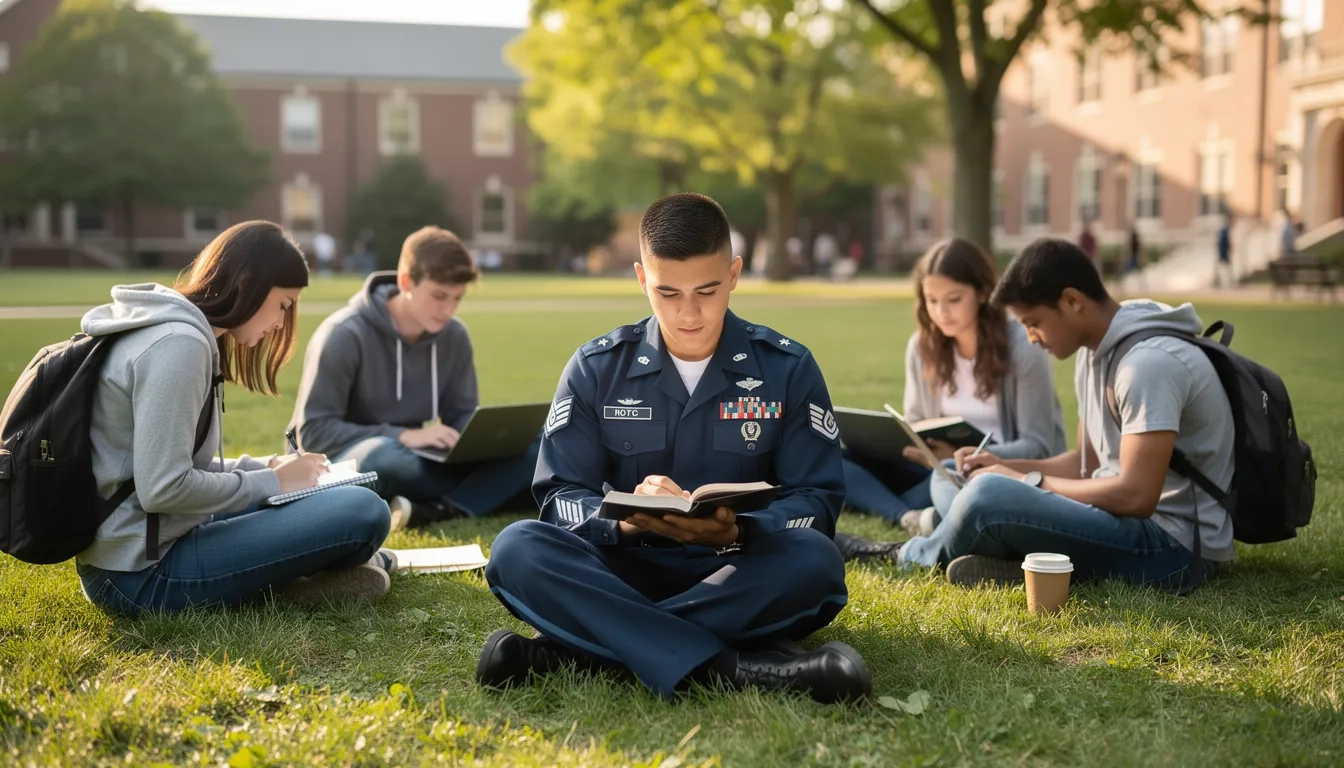
The Best Colleges for Public Speaking and Rhetoric in 2026
Here's the thing nobody tells you when you start researching this: "public speaking and rhetoric" isn't one major. It's three different worlds wearing the same trench coat — competitive debate programs, academic Rhetoric departments, and Communication Studies schools — and they barely overlap. Pick the wrong one and you'll spend four years learning persuasion theory when what you actually wanted was a varsity debate scholarship and a shot at the National Debate Tournament.
I've spent time digging through debate rankings, department course catalogs, and scholarship pages to sort out which schools actually deliver, and for whom. Below is the breakdown.
The Three Paths, and Why They Don't Mix
Before you build a college list, figure out which of these you're actually chasing. Conflating them is the single biggest mistake applicants make.
- Competitive forensics/debate: You want to compete at tournaments — policy debate, Lincoln-Douglas, parliamentary — and possibly earn a scholarship for it. Fit depends on coaching staff and travel budget, not academic ranking.
- A Rhetoric major: A small number of schools (Berkeley chief among them) still teach Rhetoric as its own discipline, descended from Aristotle and Cicero rather than social science.
- Communication Studies: The broader, more career-oriented track — persuasion theory, media, organizational communication — with public speaking as one course among many, not the whole point.
A debate scholarship and a Rhetoric degree solve completely different problems. One is about competing on a circuit; the other is about training how you think.
Most "best colleges for public speaking" listicles blur all three together and rank by acceptance rate, which tells you nothing about whether you'll actually get better at speaking.
The Debate Powerhouses
If competitive debate is the goal, program prestige and coaching depth matter more than the school's overall ranking. American Liberty Media's 2025 assessment of 50 programs weighed competitive success, coaching staff, and resources across eight debate formats, from American Parliamentary to Cross Examination.
Harvard topped that list, largely on the strength of its American Parliamentary Debate Association showing. The University of Chicago and UC Berkeley rounded out the top three, with the University of Kansas and Northwestern close behind.
But rankings shift by format. As of the fall 2025 semester, the University of Kansas duo of Rose Larson and Luna Schultz sat atop the College Policy Debate Rankings — with Michigan, Emory, Northwestern, and Georgetown filling out the top five.
Then there's Wake Forest, which in 2023 became the first program in the history of intercollegiate debate to win the "Triple Crown" — the American Debate Association, the National Debate Tournament, and the Cross Examination Debate Association national championship, all in one season. Wake Forest had already won the NDT in 1997 and 2008, and its 2023 title made junior Iyana Trotman the third Black woman ever to win it.
| Program | Known for | 2025-26 signal |
|---|---|---|
| Harvard | APDA / parliamentary depth | #1 overall, American Liberty Media |
| Wake Forest | Policy debate dynasty | Only "Triple Crown" winner in history |
| University of Kansas | Policy debate | #1 team, fall 2025 semester |
| Northwestern | Cross-format strength | Top 5 in both major rankings |
| UC Berkeley | Parliamentary + academic Rhetoric dept. | #3 debate, standalone Rhetoric major |
Wake Forest also backs this up financially. Its Presidential Scholarship for Distinguished Achievement awards twenty renewable scholarships of $16,000 a year to incoming students with documented talent in debate, art, music, dance, or theater — a real incentive, though worth noting it's a partial award, not a full ride.
Schools With an Actual Rhetoric Department
This is the part most rankings skip entirely, and it's the detail that matters most if you want to study rhetoric as a discipline rather than a communication skill.
UC Berkeley is the outlier here — it runs one of the only standalone undergraduate and PhD Rhetoric departments in the country, tracing its lineage to classical rhetorical theory rather than housing the subject inside a broader Communication school. Students there read Aristotle, Quintilian, and Kenneth Burke alongside contemporary argumentation theory.
Compare that to most schools, where "rhetoric" shows up as a single course inside Communication Studies or English. According to Universities.com's 2026 program data, the median acceptance rate across the top ten rhetoric and composition programs sits around 34%, and Pennsylvania and California each claim two of those ten spots.
A few other programs worth knowing:
- University of Texas at Austin — multiple rhetoric and composition degree tracks, strong ties to the Moot Court and debate community in Austin.
- University of Minnesota–Twin Cities — a rhetoric program with roots in the land-grant tradition of civic communication.
- George Mason University and Old Dominion University — both cited by College Raptor as Southeast-region leaders in rhetoric and composition, useful if you want a lower-cost public option.
The tradeoff is real: a classical Rhetoric degree is intellectually rich but narrower on the job market than Communication Studies, so you'll want a minor or double major (poli-sci, law-track, English) to widen your options after graduation.
The Communication Studies Heavyweights
If your goal is a career where speaking is a tool, not a scholarly subject, Communication Studies programs at research universities are the better fit. They combine persuasion theory with practical coursework and, at the strongest schools, direct pipelines into media, law, and politics.
Northwestern's School of Communication houses the Department of Communication Studies, which offers an interdisciplinary PhD in Rhetoric, Media, and Publics built jointly with Weinberg College and the Medill School of Journalism. Undergrads there take courses like Theories of Persuasion and Rhetoric of Social Movements, taught by working faculty, not adjuncts.
USC's Annenberg School for Communication and Journalism is the other heavyweight, especially if media and entertainment industries are the target career. Its graduate program runs a competitive 44% acceptance rate, and Los Angeles proximity means internship access most other Comm programs can't match.
Syracuse's Department of Communication and Rhetorical Studies is smaller but punches above its weight, consistently named among the ten best communications programs and feeding graduates into media, politics, and law. San Francisco State, USC, and CSU Long Beach also graduate large cohorts — 356 Speech Communication and Rhetoric majors from Long Beach alone in 2024, more than most private colleges enroll in the entire major across four years.
The Historical Anchor: Bates College
Here's a school most people miss entirely, and it deserves better.
Bates College in Maine has run a debate program continuously since 1896, when it won the championship of the newly formed New England Debating League under founding coach Jonathan Y. Stanton. Within a decade it was known, in the language of the era, as "the power centre of college debating in America."
Bates hosted the first international intercollegiate debate in history in 1908, against Queen's College in Ontario, and the first transatlantic debate in 1921, against Oxford. It was also the first American college to field women and Black students as varsity debaters — a milestone that predates most schools' entire existence as coeducational institutions.
The program, now called the Brooks Quimby Debate Council, produced alumni including Senator Edmund Muskie and civil rights leader Benjamin Mays. It's a small liberal arts college, not a debate factory with a recruiting budget like Kansas or Wake Forest, but for students who want rhetoric taught inside a 200-person student body where professors know your name, it's hard to beat.
How to Actually Choose
Don't pick a school off a prestige ranking. Match the program type to what you want out of the next four years.
| If your goal is... | Look at... | Because... |
|---|---|---|
| Competitive debate + scholarship money | Wake Forest, Kansas, Northwestern | Active coaching staff, tournament budget, named scholarships |
| Classical rhetoric as a discipline | UC Berkeley | Only major standalone undergrad Rhetoric dept. in the US |
| Media/entertainment career | USC Annenberg | LA pipeline, industry-facing curriculum |
| Small-school mentorship + debate legacy | Bates College | 130-year continuous program, tiny classes |
| Broad career flexibility | Northwestern, Syracuse | Comm Studies breadth + strong alumni networks |
A common misconception is that going to a "top debate school" guarantees you'll make the travel squad and get coached. It doesn't. Roster spots at powerhouse programs are brutally competitive, and a talented debater at a mid-tier program with an engaged coach often develops faster than a benchwarmer at Harvard. Ask directly, during a campus visit, how many first-years actually travel to national tournaments in year one.
Another mistake: assuming a Rhetoric major limits you to academia. It doesn't — law schools in particular value the argumentation training, and Berkeley Rhetoric grads regularly land in top-14 law programs. The narrower path is treating rhetoric as vocational training instead of leveraging the analytical skills it builds.
Bottom Line
- If you want to compete, apply where the coaching staff and travel budget are proven — Wake Forest, Kansas, Northwestern, and Harvard lead current rankings, but visit and ask about first-year roster spots before assuming you'll travel.
- If you want the academic discipline, Berkeley's standalone Rhetoric department is genuinely unusual and worth the application even with a competitive acceptance rate.
- If you want career flexibility, choose Communication Studies at a research university like Northwestern, USC, or Syracuse over a narrower rhetoric track.
- Don't ignore small programs like Bates — a 130-year-old debate legacy inside a small liberal arts college can outperform a big name if mentorship matters more to you than tournament prestige.
- Money is on the table: ask every school directly about talent-based scholarships like Wake Forest's $16,000 Presidential Scholarship before assuming debate isn't affordable.
Frequently Asked Questions
Is a Rhetoric degree the same as a Communication degree?
No. Rhetoric traces back to classical argumentation theory (Aristotle, Cicero, Quintilian) and is taught as a humanities discipline at schools like UC Berkeley. Communication Studies is broader and more applied, covering media, persuasion, and organizational communication, with public speaking as one component among several.
Do I need to join the debate team to study rhetoric well?
No, and this is a common misconception. Competitive debate builds fast argumentation and improvisation skills, but a strong Rhetoric or Communication Studies curriculum builds the same analytical muscle through coursework, without the travel schedule or tournament pressure.
Which schools give debate scholarships?
Wake Forest offers renewable $16,000-a-year Presidential Scholarships to students with documented debate talent, and many programs with strong forensics teams — Kansas, Northwestern, and others — offer merit aid tied to competitive record. Contact each program's debate director directly, since these awards rarely show up in general financial aid materials.
How do I evaluate a college's debate program before applying?
Look past the overall ranking and ask three things: how many first-year students traveled to national tournaments last season, what the coach-to-competitor ratio is, and which debate formats the team actually competes in (policy, parliamentary, Lincoln-Douglas). A program strong in one format may be weak in another.
Is public speaking ability something colleges actually teach well, or is it mostly innate?
It's trainable, and the data backs that up — debate programs with decades of continuous coaching, like Bates's since 1896, exist precisely because structured practice compounds. Talent gets you in the door; repetition under a good coach is what wins tournaments.
What's the acceptance rate for top rhetoric and communication programs?
It varies widely by school type. The median acceptance rate across the top ten rhetoric and composition programs nationally is around 34%, according to Universities.com's 2026 data, though flagship public Comm Studies programs like CSU Long Beach admit far more broadly than a specialized department like Berkeley's Rhetoric major.
Sources
- Top 50 Competitive College Debate Programs in the US - 2025
- KU debaters are top-ranked team in the country - KU News
- Wake Forest makes intercollegiate debate history with 'Triple Crown'
- Catfacts: Celebrating the 100th Anniversary of the Bates-Cambridge Debate
- Rhetoric, Media, and Publics - Northwestern University
- Best Speech Communication and Rhetoric Degree Colleges in the U.S. | 2026
- Presidential Scholarship for Distinguished Achievement - Wake Forest University