Best Colleges for Oceanography Programs 2026: A Real Ranking
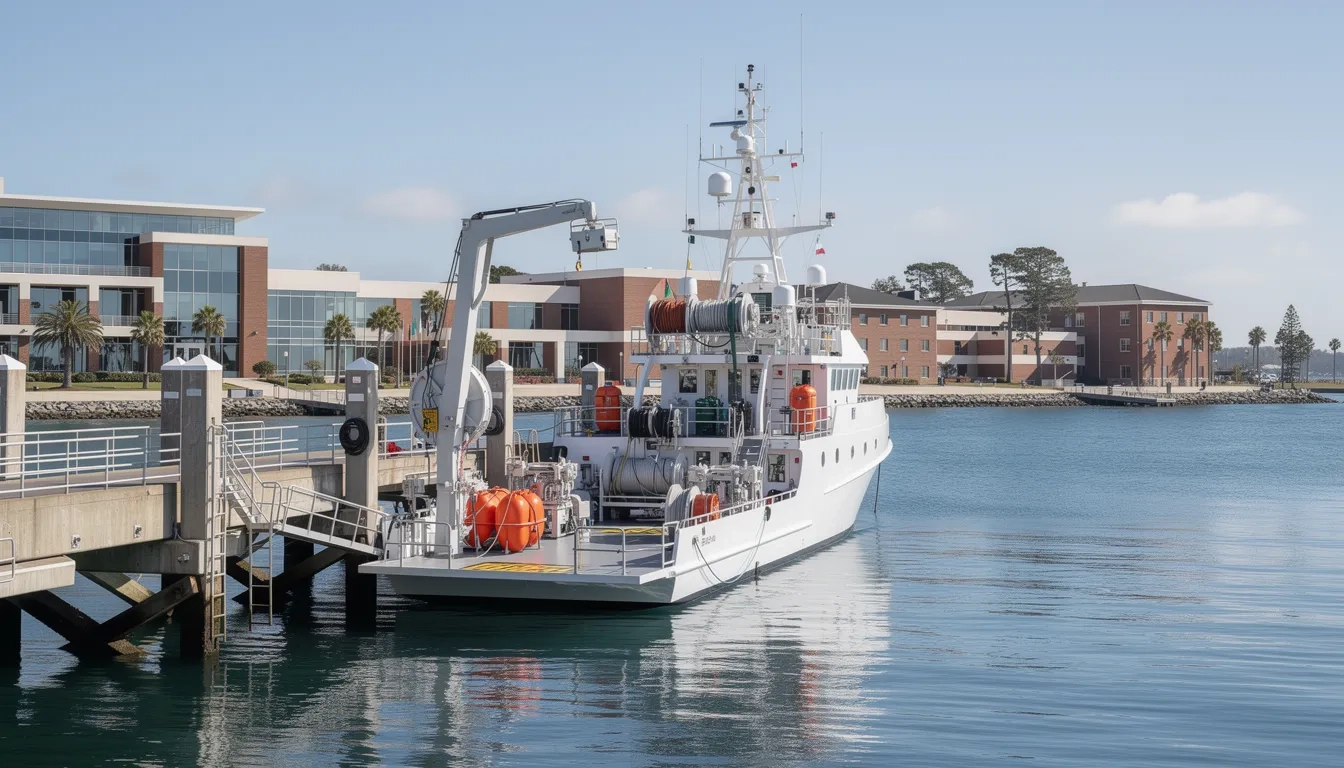
The ocean covers 71% of Earth's surface, and we've mapped less than 25% of it in high resolution. That gap isn't just a trivia fact. It's a hiring signal. Oceanography is accelerating — driven by climate modeling, deep-sea mineral surveys, marine renewable energy, and sea level research — and the universities training the next generation of ocean scientists are not always the ones that top a general prestige list.
Choosing the right program matters more in this field than most. The wrong fit means four years on a campus 900 miles from saltwater, studying from textbooks instead of from water samples collected on a research vessel.
What Actually Makes an Oceanography Program Worth Attending
Unlike law or finance, where institutional brand carries most of the weight, oceanography is deeply infrastructure-dependent. The best programs share a few things you won't find on a marketing brochure:
- Access to research vessels: Getting on the water isn't optional — it's the whole point. Schools operating their own fleets give students fieldwork experience that lab courses can't replicate.
- Faculty with active federal funding: NOAA, NSF, and NASA grants create paid research assistant positions and fellowships. Check whether the faculty you'd study under are actively publishing, not just emeritus.
- Proximity to relevant field sites: A biological oceanographer studying coral systems benefits from being near tropical reefs. A physical oceanographer studying upwelling systems belongs on the Pacific coast.
- Cross-disciplinary structure: Oceanography pulls from chemistry, physics, biology, and geology simultaneously. Programs with rigid departmental walls make this harder.
One mistake that derails students: picking a school based on its U.S. News overall ranking. A top-25 university with a thin marine science program will underserve you compared to a school ranked 80th overall with world-class oceanographic infrastructure.
Tier 1: The Research Powerhouses
Scripps Institution of Oceanography (UC San Diego)
If there's one institution that shaped modern oceanography more than any other, it's Scripps. Operating since 1903, the institution maintains the Keeling Curve — the oldest continuous record of atmospheric CO2, started in 1958 — and co-manages the Argo float network, which tracks global ocean temperature and salinity from roughly 4,000 autonomous floats.
Scripps is primarily graduate-focused. Undergraduates at UC San Diego access it through the Earth Sciences department and REU (Research Experiences for Undergraduates) positions, but the full program is PhD-level. In 2022, UC San Diego graduated 52 oceanography students: 38 master's and 14 doctoral degrees.
The institution recently received a $15 million grant from the Fund for Science and Technology and is co-leading the next generation of Deep Argo float deployments with NOAA and WHOI. That's the kind of globally consequential science PhD students can touch directly. For students aiming at climate research, chemical oceanography, or physical oceanography careers, Scripps is the standard everything else is measured against.
University of Washington School of Oceanography
UW's School of Oceanography occupies a different but equally strong niche: it's one of the few elite programs where undergraduates get genuine research integration rather than just exposure to famous scientists. The school is organized around four disciplines — physical, biological, chemical, and marine geology/geophysics — and students can work across them.
The school operates three research vessels, including the 274-foot R/V Thomas G. Thompson, one of the largest university-owned research ships in the U.S. In 2022, UW graduated 49 oceanography students: 33 bachelor's, 8 master's, and 8 doctoral degrees. Graduate acceptance sits around 49%, with admitted students averaging a GRE composite of around 316.
A newer asset: the Student Seaglider Center, recently funded to give undergrads hands-on experience with autonomous underwater vehicles before they finish their degree. That's unusual access at the undergraduate level.
MIT-WHOI Joint Program
Woods Hole Oceanographic Institution doesn't grant degrees on its own. But the MIT-WHOI Joint Program in Oceanography is, by most accounts, the most selective and research-intensive path into physical and chemical ocean science in the world.
Admitted students split time between MIT's Cambridge campus and WHOI's facility on Cape Cod, accessing WHOI's research fleet including the deep-submergence vehicle Alvin. In 2022, MIT graduated 15 oceanography students — 12 doctoral and 3 master's — which means advising ratios most programs can't touch. NASA recently awarded WHOI dual funding for Ocean Worlds research, including investigation of subsurface liquid oceans on moons like Europa. That's the frontier.
Tier 2: Strong Programs with Broad Access
| School | Best For | Degree Levels | Notable Feature |
|---|---|---|---|
| Texas A&M (College Station) | Chemical/physical oceanography | BS, MS, PhD | Own research fleet; College of Geosciences |
| Oregon State University | Interdisciplinary ocean science | BS, MS, PhD | Tied to NOAA Pacific Marine Environmental Lab |
| University of Miami (Rosenstiel) | Marine and atmospheric sciences | BS, MS, PhD | Located on Virginia Key, surrounded by open water |
| Louisiana State University | Coastal/geological oceanography | BS, MS, PhD | 45 graduates in 2022; strong Gulf Coast field access |
| UC Santa Cruz | Marine biology + ecology | BS, MS, PhD | 48% grad acceptance; proximity to MBARI |
| University of Rhode Island | Undergraduate to grad pipeline | BS, MS, PhD | Graduate School of Oceanography nationally ranked |
Texas A&M is genuinely undersold by popular rankings. The College of Geosciences has run research vessels since the 1970s and covers all four major oceanographic subdisciplines. For students wanting a flagship public university experience with serious marine infrastructure outside of California, A&M makes a strong case.
Oregon State's College of Earth, Ocean, and Atmospheric Sciences benefits from physical proximity to the Pacific and deep institutional ties to NOAA's Pacific Marine Environmental Laboratory in Seattle. The structure makes it easier to work across oceanography, atmospheric science, and geophysics than at more compartmentalized programs.
Undergraduate Programs Worth a Closer Look
Most of the brand-name oceanography programs are graduate-heavy. But a few schools give undergrads an experience that rivals graduate programs elsewhere.
University of Rhode Island offers a bachelor's in oceanography alongside a well-regarded ocean engineering track. URI's Graduate School of Oceanography is consistently ranked among the top programs nationally for research output.
Florida Institute of Technology (Melbourne, FL) puts students near open water from day one. Being on Florida's Space Coast also creates unusual crossover with remote sensing and satellite oceanography — relevant as ocean observation increasingly happens from orbit.
Eckerd College in St. Petersburg, Florida is the kind of place rankings miss entirely. A small liberal arts school with a marine science program that regularly gets students into top PhD programs. First-year students begin field research immediately — something that typically takes two or three years at large universities.
The real tradeoff with smaller schools: fewer fellowships, smaller alumni networks in federal agencies, and less name recognition with employers like the Naval Oceanographic Office or NOAA. But the research intensity at the undergraduate level often runs higher because competition for faculty attention is lower. It's a legitimate trade to make.
How to Choose Based on Your Goals
The framework is actually pretty clean once you're honest about what you want:
Research career (academia or major institutions): Target Scripps/UCSD, MIT-WHOI, or UW at the graduate level. These three train the scientists whose work everyone else builds on.
Industry or government career: A master's from Texas A&M, Oregon State, or Miami opens doors at NOAA, USGS, offshore energy firms, and environmental consulting companies. A PhD adds 4-5 years and is often unnecessary for these paths.
Undergrad building toward grad school: Look for active REU programs and faculty who publish regularly. UW and URI are strong choices for building a research record before applying to elite PhD programs.
Geography matters more than people admit. Students who train in Puget Sound study a fundamentally different ocean than students at Miami or La Jolla. Coral reef dynamics, cold-water upwelling systems, and estuarine chemistry are all distinct research areas. Let your scientific interests guide your geography, not the other way around.
One thing worth saying plainly: prestige matters less in oceanography than in finance or law. The research community is small and interconnected. A paper published from LSU carries the same weight as one from Harvard if the science holds up.
Career Outlook and What Oceanography Graduates Earn
The Bureau of Labor Statistics projects 5-8% job growth for oceanographers and related scientists through 2032. Solid, not explosive. The real demand driver right now is climate research funding — as governments scramble to model sea level rise, ocean acidification, and extreme weather patterns, the people who understand ocean systems mechanistically are in short supply.
Median salaries for oceanographers sit around $80,060 annually. Geological oceanographers working in offshore energy exploration average $112,110 per year. Entry-level positions start between $50,000 and $60,000; senior researchers with 20 or more years of experience can clear $135,000.
One career path most students overlook: oceanographic instrument and technology companies. Firms developing autonomous underwater vehicles, acoustic Doppler profilers, and satellite ocean sensors need people who understand the science deeply. These roles frequently pay above the academic median and don't require writing grant proposals every two years.
The people who understand how the ocean actually works — mechanistically, chemically, physically — are positioned to work on some of the most consequential problems of the next half-century. Climate, food security, energy. The ocean is involved in all of it.
Bottom Line
Scripps, UW, and MIT-WHOI are the clear leaders for research-track graduate students. That's not a controversial position.
For undergraduates, prioritize programs that get you on the water early, have faculty with active grants, and offer REU pathways. URI, UW, and Florida Tech punch above their weight in exactly this way.
- Research career goal: Scripps or MIT-WHOI for grad school; UW for the undergrad-to-grad pipeline.
- Industry or government goal: master's from Texas A&M, Oregon State, or Miami is the efficient route.
- Don't chase a school's general ranking. Check whether the faculty in your specific subdiscipline are actually there and actively publishing. That's the number that matters.
Frequently Asked Questions
Do I need a PhD to work as an oceanographer?
Not necessarily. NOAA, USGS, and most environmental consulting firms hire at the master's level for many roles. A doctoral degree is typically required for tenure-track faculty positions and senior research scientist roles at institutions like WHOI or Scripps. If academic research isn't your goal, a well-chosen master's program often gets you there faster.
What's the difference between oceanography and marine biology?
Marine biology focuses specifically on ocean organisms and ecosystems. Oceanography is broader — it encompasses ocean physics (circulation, waves, tides), ocean chemistry, and marine geology, in addition to biological systems. A physical oceanographer studies current dynamics and water mass formation, not fish behavior. Many programs overlap significantly, so check the specific curriculum before assuming they're interchangeable.
Is it a myth that you need to go to a coastal school for oceanography?
Mostly yes. Some inland schools offer oceanography coursework, but the hands-on fieldwork that defines the discipline requires coastal or ship-based access. Programs like those at UW, Scripps, Oregon State, and UM Rosenstiel have that infrastructure built in. A school without research vessel access or nearby field sites will put you at a disadvantage when applying to graduate programs or federal positions.
What GPA and test scores do top oceanography programs expect?
UC San Diego's Scripps program admits students with an average GRE composite around 322. UW's admitted master's students average about 316. Most competitive programs want a GPA above 3.5, but demonstrated research experience often matters more than test scores — faculty advisors are looking for students who can do the work, not just pass exams.
How do I pick a subdiscipline within oceanography?
Start by asking which of these questions genuinely interests you: How do ocean currents move heat around the planet? (Physical.) What happens to carbon when it enters the ocean? (Chemical.) How do ocean organisms respond to changing conditions? (Biological.) How did ocean basins form, and what do seafloor sediments reveal? (Geological/Marine Geology.) Most undergrads don't need to decide immediately, but knowing your direction by junior year helps you target the right graduate programs.
Which oceanography specialization pays the most?
Geological oceanographers working with offshore energy exploration firms average around $112,110 annually — well above the field-wide median of roughly $80,060. Physical and chemical oceanographers in federal agencies or university research typically earn $70,000–$95,000 depending on seniority. Private-sector roles in ocean technology and remote sensing are increasingly competitive with government and academic salaries.
Sources
- Scripps Institution of Oceanography
- University of Washington School of Oceanography
- YMGrad: Top Universities for Oceanography
- WHOI 2025 Summer Student Fellowship Potential Projects
- Research.com: Oceanography Degree Careers and Salary 2026
- Niche: Best Colleges with Marine Biology and Oceanography 2026
- EduRank: World's Best Oceanography Universities 2026
- CollegeRaptor: Best Marine Biology and Biological Oceanography Colleges 2026