Best Colleges for Museum Studies 2026: The Complete Guide
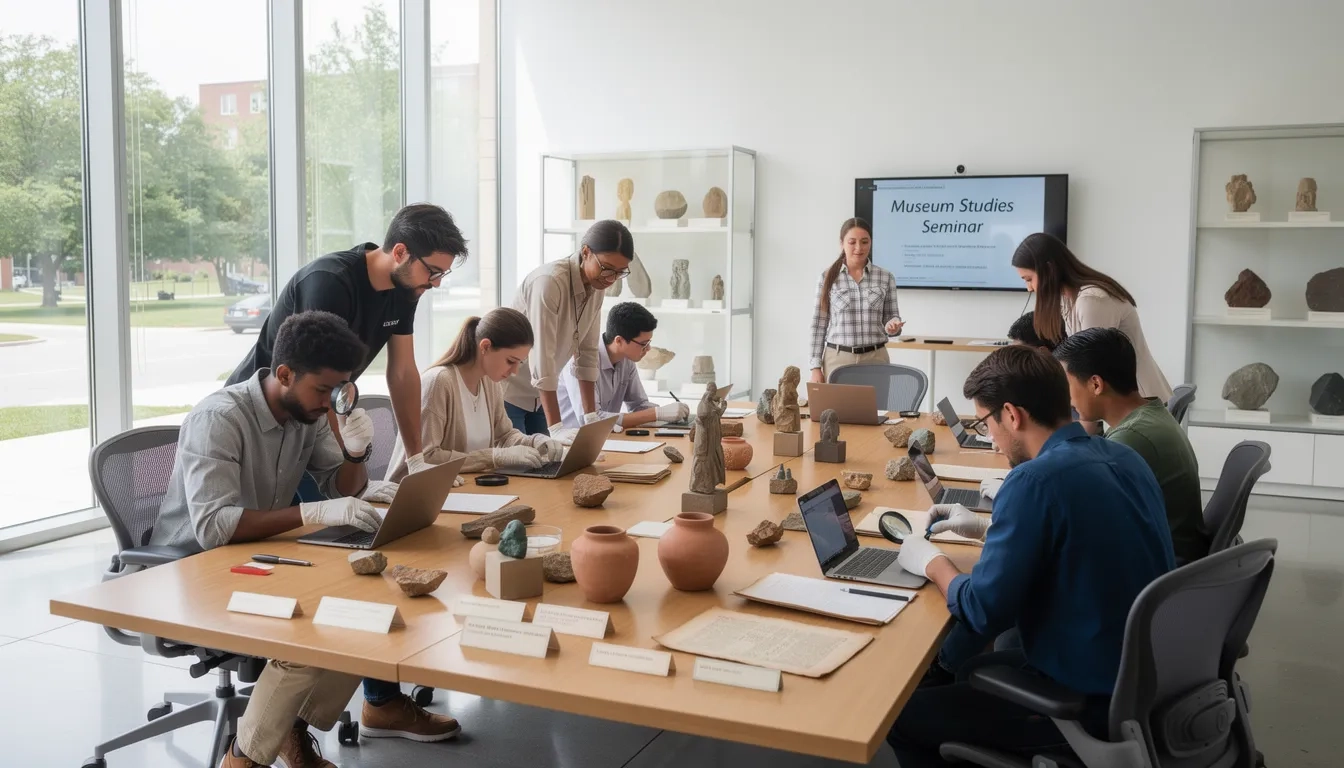
Here's something that surprises most people: museum careers are genuinely growing. The Bureau of Labor Statistics projects 19% employment growth for archivists, curators, and museum workers from 2020 to 2030, nearly triple the average rate across all occupations. About 4,900 new openings per year. The field is absorbing new roles in digital curation, community engagement, and repatriation work that barely existed a decade ago. If you're picking a museum studies program in 2026, you're entering a field with real momentum. But the programs vary wildly, and the choice matters more than most applicants realize.
What Makes a Museum Studies Program Worth Your Time
Not all museum studies programs are built the same. The good ones share a few characteristics that matter once you're job-hunting.
Internship infrastructure is the most underweighted factor in the application process. A program's location and institutional partnerships determine where you intern, and internship experience is what actually gets you hired. George Washington University requires students to complete 200 working hours (at least one 3-credit internship) at an approved institution. Because GWU sits blocks from the National Mall, students end up at the National Museum of American History, the National Gallery of Art, and the U.S. Holocaust Memorial Museum. That proximity is worth real money in terms of your professional network.
The second thing to check: specialization tracks. Museum studies covers curatorial work, collections management, museum education, conservation, and exhibition design. Programs with distinct concentrations let you go deep. Johns Hopkins runs four separate museology degree programs, so you can get specific rather than stay general.
Cohort size is counterintuitive but important. Smaller cohorts (10-20 students per year) usually mean more faculty attention, more individualized placement help, and a tighter alumni network. The University of Washington-Seattle graduated just 26 students in 2024, all earning master's degrees. That's a small group to compete within when alumni referrals come in.
One common mistake: applicants focus on a school's overall prestige and ignore whether the program has real museum sector connections. A famous diploma is valuable, but a program graduating 85 students annually competes hard for the same small number of high-profile positions.
The Top Graduate Programs for 2026
Graduate programs dominate museum studies education. Most career-track positions, especially curatorial and leadership roles, treat a master's degree as the minimum.
Johns Hopkins University (Baltimore, MD) is by enrollment the largest dedicated museum studies program in the country. 101 students graduated in 2024 — 88 earning master's degrees and 13 earning certificates. The program's breadth and flexibility are real advantages. Median starting salary for graduates: $41,463.
Harvard University (Cambridge, MA) graduates around 85 students per year in museum-related studies, with a median starting salary of $44,792. The highest starting salary figure among tracked programs. The Harvard alumni network opens certain institutional donor and board-level doors that most other programs simply can't.
George Washington University (Washington, D.C.) has formal affiliations with more than 60 museums and cultural organizations. GWU and Smithsonian Associates jointly offer a Master's in Decorative Arts and Design History — a specialty you won't find duplicated anywhere else in the country.
Tufts University (Medford, MA) ranks first or near-first on multiple aggregator sites for master's-level museum studies. Graduation rates have grown 25% in recent years. Median starting salary sits lower at $31,434, partly reflecting the types of institutions Tufts graduates tend to enter: smaller nonprofits, historical societies, and community museums.
University of Washington-Seattle earns a 4.25/5 institutional rating and all 26 of its 2024 graduates completed master's degrees. The Pacific Northwest museum scene, including the Seattle Art Museum and the Museum of Pop Culture, gives students a distinct professional context.
Texas Tech University (Lubbock, TX) earns the highest user rating of any program on universities.com at 4.536/5. Its 16 annual graduates describe strong faculty mentorship and genuine access to working collections. Small by design, which is the point.
Strong Undergraduate Options
76 universities offer bachelor's degrees in museum studies across the United States. Most are structured as interdisciplinary programs rather than standalone departments — which is fine, because museum work benefits from pairing with art history, anthropology, library science, or hard sciences.
The undergraduate programs worth knowing:
- New York University — The most popular undergraduate museum studies program in New York State, with direct access to the city's 200+ museums.
- Baylor University (Waco, TX) — Consistent top-10 presence in undergrad rankings, with strong emphasis on hands-on collections work.
- Indiana University-Purdue University Indianapolis (IUPUI) — An unusual combination of museum studies with information and library science, valuable for collections-focused careers.
- University of Michigan-Ann Arbor — Certificate and graduate-level coursework with research university resources behind it.
- Georgetown University (Washington, D.C.) — The Art & Museum Studies MA sits adjacent to some of the country's best museum internship infrastructure.
A note about undergraduate museum studies: unless you're continuing to a master's program, a bachelor's degree alone rarely gets you into curatorial roles. The smarter path is often to major in a substantive field (art history, archaeology, science, history) and add a museum studies minor or certificate. Then apply to graduate school with genuine subject expertise as your differentiator.
Comparing the Top Programs Side by Side
| School | Degree Level | 2024 Grads | Median Starting Salary | Notable Feature |
|---|---|---|---|---|
| Johns Hopkins | Master's + Certificates | 101 | $41,463 | 4 distinct programs; largest enrollment |
| Harvard | Master's | ~85 | $44,792 | Highest starting salary; alumni network |
| George Washington | Master's + Specializations | Not published | Not published | Smithsonian partnership; 60+ affiliations |
| Tufts | Master's | ~20 | $31,434 | Top-ranked on multiple aggregator lists |
| U of Washington-Seattle | Master's | 26 | Not published | High student ratings; Pacific NW focus |
| Texas Tech | Master's | 16 | Not published | Highest user rating (4.536/5) |
| NYU | Master's + Bachelor's | ~23 grad | Not published | NYC museum access; most popular in NY |
Career Outcomes: The Honest Picture
The museum job market is small and competitive. Go in knowing that.
Starting salaries are modest. Across museum studies graduates broadly, the average early-career salary is $37,401 per year. That's below the national median for bachelor's degree holders generally. The highest-paying sector is government: federal museums (Smithsonian branches, national parks service sites) and large state institutions pay a median of $56,890 within public administration structures.
By mid-career, Museum Curator roles average between $51,124 and $62,983 annually, with top earners clearing $77,000. These aren't exceptional numbers. But they're also not the whole picture.
The BLS projects roughly 4,900 new openings for archivists, curators, and museum workers per year through 2030, a figure that reflects genuine institutional demand, not just replacement hiring.
Museum careers trade salary for access. You work with irreplaceable objects. You shape how communities understand their own history. For many people in the field, that trade is entirely worth making. Just go in with eyes open about what the first few years will look like financially.
Digital engagement and repatriation work are the two fastest-growing areas creating new roles. Programs that include digital collections management coursework are giving graduates an edge in hiring that didn't exist five years ago.
How to Choose the Right Program for You
Here's a practical framework. Answer these three questions before you apply.
1. Where do you want to work after graduation? If you're aiming for the Smithsonian, the Metropolitan Museum of Art, or the Getty, choose a program with direct pipelines there. GWU, Harvard, and Johns Hopkins are your best bets. If you want to lead the county historical society or a regional science center, Texas Tech or Tufts will serve you just as well at significantly lower cost.
2. Do you have a subject specialty? Museums don't just hire generalists. They hire people who know things. If you have expertise in natural history, decorative arts, or Indigenous cultural heritage, find a program that deepens that specialty rather than replacing it with methodology coursework. GWU's joint Smithsonian MA in Decorative Arts and Design History is one concrete example of this done right.
3. Can you afford the city? Financial aid in museum studies programs is limited. Many charge full tuition with minimal fellowship support. A program in a lower cost-of-living city lets you take low-paid (or unpaid) internships without destroying your budget. A program in New York or D.C. gives you better access, but the math has to work.
My honest take: the best program is not the one with the most famous name. It's the one with the strongest connections to the specific institutions where you want to work. If you can't name three museums where the program's alumni currently hold jobs, you haven't done enough research yet.
Bottom Line
- Graduate programs are the real entry point to curatorial and leadership careers. Identify whether you want to land at a large federal museum or a community institution, then pick accordingly.
- Location is a feature, not a footnote. GWU's Smithsonian partnerships and NYU's New York access are genuine advantages that show up in where graduates work.
- Do the financial math before you commit. Museum starting salaries average $37,401, and many programs offer minimal aid. A higher-cost city program needs a very clear return in network and placement to justify the debt.
- The job market is growing (19% projected growth through 2030), but the field is still small. Your internship relationships, more than your GPA, will likely determine your first position.
Frequently Asked Questions
Do I need a master's degree to work in a museum?
For curatorial, collections management, and director-track roles, yes — a master's degree is effectively the entry requirement at most institutions. Some technician, education, and visitor experience roles hire at the bachelor's level, but career advancement past those positions almost always requires graduate education.
Is museum studies worth it financially?
That depends on what "worth it" means to you. The average early-career salary for museum studies graduates is $37,401, which is below the national median for degree holders. Mid-career museum curator salaries range from $51,124 to $62,983. If you're optimizing for income, this isn't the field. If you're optimizing for meaningful work with cultural heritage objects and communities, the financial picture is reasonable — just not exceptional.
What's the difference between museum studies and art history?
Art history is a subject discipline; museum studies is a professional practice program. Art history teaches you to analyze and interpret works; museum studies teaches you to manage collections, design exhibitions, work with donors, and run institutional operations. Many strong museum professionals have graduate training in both, which is why pairing a subject-matter master's with museum studies coursework (or vice versa) is a common path.
Which museum studies program has the best Smithsonian connections?
George Washington University, without much debate. GWU has formal affiliations with more than 60 museums and cultural organizations, a direct partnership with Smithsonian Associates for a joint master's degree in Decorative Arts and Design History, and its internship program regularly places students inside the National Mall complex. Students must complete 200 working hours at an approved institution — and the Smithsonian is practically next door.
Are online museum studies programs legitimate?
A few accredited programs offer hybrid or fully online museum studies degrees. The main limitation is internship access: online students are responsible for sourcing their own placements, which is harder without the program's local institutional network. If you're already working in a museum and seeking a credential to advance, online can work well. If you're breaking in fresh, an in-person program in a museum-dense city is worth the extra friction.
What careers can you pursue with a museum studies degree?
The most common paths are curator, collections manager, museum educator, registrar, conservator (usually requiring additional specialized training), and development/fundraising within cultural institutions. Government museums, historical societies, science centers, children's museums, art museums, and university galleries all hire from museum studies programs. Emerging roles in digital collections management and community engagement are increasingly common job titles in postings from larger institutions.
Sources
- 2025 Best Museum Studies Schools - College Factual
- Best Museology/Museum Studies Degree Colleges in the U.S. | 2026 - Universities.com
- Archivists, Curators, and Museum Workers - BLS Occupational Outlook Handbook
- Museum Studies - George Washington University Corcoran School
- The Best Museology/Museum Studies Colleges 2026 - College Raptor
- Smithsonian Internships - Office of Academic Appointments
- M.A. in Art & Museum Studies - Georgetown University