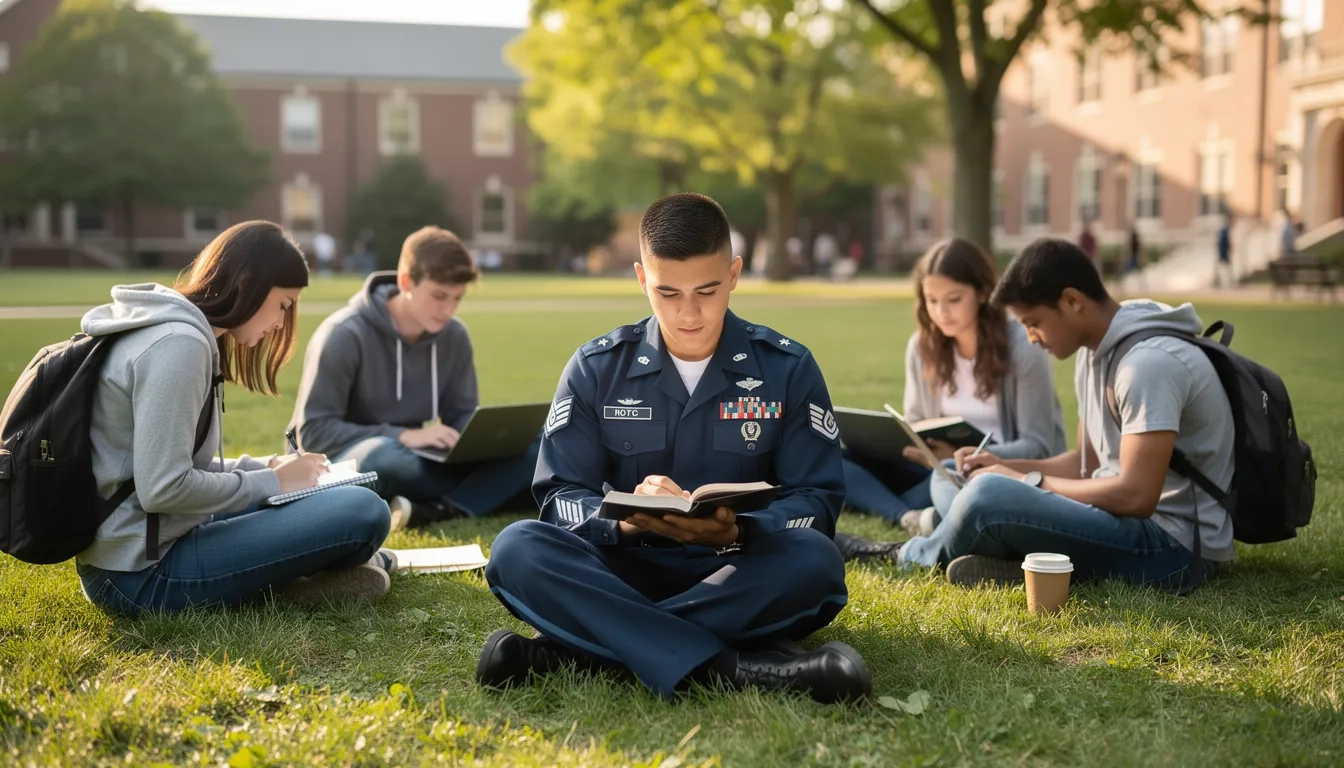
The Best Colleges for Military Dependents in 2026

The Post-9/11 GI Bill maxes out at $30,908.34 for the 2026-2027 school year. Tuition at George Washington University runs well past $65,000 a year. That gap — the one between what the VA pays and what a private school actually charges — is the whole reason the Yellow Ribbon Program exists, and it's the single most misunderstood piece of the military dependent college puzzle.
Most families start their search by Googling "military-friendly colleges" and landing on a badge some school bought from a ranking outfit. That badge tells you almost nothing about whether your kid can actually afford to go there. What matters is a lot more specific: which schools match VA dollars, which states waive tuition outright, and which scholarships stack on top of everything else.
What "Military-Friendly" Actually Means (And What It Doesn't)
A "military-friendly" label usually just means a school has a veterans' office and accepts GI Bill payments. That's the floor, not the ceiling. The label says nothing about dollar amounts, deployment flexibility, or whether dependents get the same treatment as the service member.
The schools worth real attention combine four things: dedicated advising staff who actually understand VA paperwork, credit-transfer policies that don't punish families for moving every two years, Yellow Ribbon participation with a real dollar cap, and financial aid officers who know the difference between Chapter 35 and Transfer of Entitlement. Most schools have one or two of these. Few have all four.
George Mason University is a good example of the difference between a badge and a real program. Its Office of Military Services runs six military-exclusive scholarships and — this is the part people miss — waives late fees and penalties for deployment-related absences, which matters enormously for a spouse trying to finish a degree between PCS orders.
Compare that to a school that just slaps "Yellow Ribbon Participant" on its admissions page without disclosing a cap. Some schools fund unlimited students at unlimited dollar amounts. Others cap it at 10 seats a year. You have to ask, every time — the website rarely says.
The Yellow Ribbon Program: How It Actually Stacks the Deck
Here's the mechanic, stripped of jargon: your GI Bill benefit pays up to the national maximum. If tuition costs more, the participating school agrees to waive a chunk of the difference, and the VA matches that waiver dollar-for-dollar.
Take a $55,000-a-year private university. If the school waives $10,000, the VA kicks in another $10,000. Add that $20,000 to the Post-9/11 GI Bill's $30,908.34, and you're covering roughly $50,908 of the bill — leaving the family to close a much smaller gap than the sticker price suggests.
The Yellow Ribbon Program only helps if you're already entitled to the maximum Post-9/11 GI Bill rate — active-duty service members and spouses of someone still on active duty generally don't qualify, only their post-service dependents do.
A few real numbers worth knowing, pulled straight from participating schools' published policies:
| School | Yellow Ribbon Detail | Why It Matters |
|---|---|---|
| University of Florida | Up to $6,500/year matched, $129/credit in-state tuition | Cheapest baseline even before Yellow Ribbon kicks in |
| University of Utah | Funds up to 250 students annually | Rare — most schools cap participation far lower |
| George Washington University | Full participant, private-school pricing | Yellow Ribbon exists specifically to close gaps this size |
| George Mason University | Six dedicated military scholarships plus Yellow Ribbon | Layers benefits instead of relying on one program |
The mistake families make constantly: assuming Yellow Ribbon status means unlimited funding. It doesn't. Call the financial aid office and ask for the exact per-student cap and the number of slots open for the coming year, because schools set both, and both change annually.
State Tuition Waivers: The Benefit Nobody Talks About
Every one of the 50 states offers some form of in-state tuition to military dependents, but "some form" is doing a lot of work in that sentence. The variation between states is wide enough that where a family is domiciled can be worth tens of thousands of dollars.
Texas runs the most generous program in the country. Under the Hazelwood Act, spouses and dependent children of service members who died in the line of duty or from service-related injury get a full exemption from tuition and most fees, up to 150 semester credit hours, at any state-supported college.
Other states with strong dependent waivers:
- Illinois — four consecutive years of in-state tuition at the University of Illinois for children of qualifying veterans
- Washington — waives tuition and fees for dependents of 100% disabled veterans or those who died in service, plus a book stipend
- Florida — up to 120 credit hours waived for spouses or dependents of deceased Florida National Guard or U.S. Armed Forces members
- Arizona — full waiver for dependent children when a parent died or was killed on duty
- California — College Fee Waivers for dependents of California National Guard members killed or permanently disabled on duty
Most of these programs require the sponsoring service member to have died, been killed, or been rated permanently disabled — they're not blanket "any military family gets in-state" deals. If your family doesn't meet that bar, you're back to the standard federal in-state tuition protections under the Veterans Choice Act, which still guarantee in-state rates at public schools for anyone using GI Bill benefits, regardless of residency.
Scholarships and Grants Beyond the GI Bill
The Department of Defense counted over 1.5 million children of service members and nearly 920,000 military spouses as of 2022 — a population large enough that dozens of dedicated scholarship funds exist specifically for them, layered on top of federal benefits rather than replacing them.
The strongest ones worth applying to:
- American Legion Legacy Scholarship — $5,000 to $20,000 for children of post-9/11 veterans who died in service or carry a 50%+ disability rating. Deadline is typically March.
- Folds of Honor Foundation — up to $5,000 for spouses and dependents of service members killed, wounded, or disabled. Also a March deadline.
- Fisher House Scholarship for Military Children — $2,000, open to kids with a DOD ID whose parent serves or served. February deadline.
- AMVETS Children/Grandchildren Scholarship — $4,000, requires a 3.0+ GPA, April deadline.
- Army Scholarship Foundation — $1,000 for children or spouses of active or former Army members under 24 with a 2.0+ GPA.
There's also the Iraq and Afghanistan Service Grant, worth $7,395, and Survivors' and Dependents' Educational Assistance (DEA Chapter 35), which provides up to 36 months of benefits for spouses and children of veterans who died or became permanently disabled. None of these require the recipient to attend a "military-friendly" school. Stack two or three of them with Yellow Ribbon and the math on a private school starts to look a lot less scary.
How to Actually Choose: A Framework
Skip the ranking lists. Build your own shortlist using four filters, in this order, because each one eliminates schools before you waste time on the next:
- Does the family qualify for a state waiver first? If yes, your home-state public flagship just became nearly free — that's your floor to beat.
- Is the school a real Yellow Ribbon participant with a published, current-year cap? Call and confirm; don't trust the marketing page.
- Does it stack at least one named scholarship on top of GI Bill funding? Schools that actively help families apply for Legacy or Folds of Honor money are signaling they understand the population, not just accepting their checks.
- Does deployment or PCS flexibility exist in writing? Look for stated policies on mid-semester withdrawal, credit transfer, and fee waivers for military-caused absences — not just a vague promise from an admissions rep.
A family that qualifies for the Hazelwood Act, for instance, should probably not chase a Yellow Ribbon private school two states away unless that program offers something the in-state option genuinely can't — a specific major, a research lab, a location near extended family. Benefits are a tiebreaker, not the whole decision.
Common Mistakes Military Families Make
The biggest one: treating "military-friendly" as a synonym for "affordable." A badge on a website costs the school nothing to display and tells you nothing about actual dollar caps.
Second mistake — assuming Chapter 35 and Transfer of Entitlement are interchangeable. They're not. Transfer of Entitlement requires the sponsoring service member to have transferred benefits while still serving, with specific time-in-service requirements. Miss that window and dependents may lose access entirely.
Third, and this one stings: families wait until senior year to check Yellow Ribbon caps, only to find the school already filled its allotted slots for the year. Yellow Ribbon seats often go first-come, first-served within an admitted class — apply and confirm eligibility early, ideally by fall of the applicant's senior year.
Bottom Line
- Check state residency benefits before anything else — a Hazelwood-style waiver or a 100%-disability tuition waiver can beat any private Yellow Ribbon deal outright.
- Call the financial aid office directly to confirm current-year Yellow Ribbon dollar caps and open slots — don't rely on marketing pages.
- Stack scholarships. American Legion Legacy, Folds of Honor, and Fisher House money layers on top of GI Bill funding without penalty.
- Confirm Chapter 35 vs. Transfer of Entitlement eligibility early — the rules diverge and missing a deadline can cost a family a full benefit.
- Weigh benefits against fit. A school that checks every military box but doesn't offer the right program is still the wrong school.
Frequently Asked Questions
Do military dependents automatically get in-state tuition everywhere?
No. The Veterans Choice Act requires public schools to offer in-state rates to anyone using GI Bill benefits, regardless of residency, but that protection applies to GI Bill users specifically. Separate state-level waivers (like Texas's Hazelwood Act) have their own eligibility rules, usually tied to a sponsor's death or disability rating.
Can a military dependent use both a state tuition waiver and the Yellow Ribbon Program?
Generally no, at the same school for the same year — Yellow Ribbon exists to close the gap above the GI Bill cap, and if a state waiver already brings tuition to zero or near-zero, there's no gap left to fill. Compare both options before assuming you need Yellow Ribbon at all.
Does Yellow Ribbon eligibility guarantee a spot at every participating school?
No, and this is the most common misconception. Schools set their own dollar caps and slot limits each academic year, and popular programs can fill before spring admissions decisions go out. Confirm current-year availability directly with the financial aid office, not just the general "we participate" listing.
What's the difference between Chapter 35 and Transfer of Entitlement benefits?
Chapter 35 (Survivors' and Dependents' Educational Assistance) is a standalone benefit for spouses and children of veterans who died or became permanently and totally disabled. Transfer of Entitlement lets a still-serving member share unused Post-9/11 GI Bill months with a spouse or child, but only if transferred while the sponsor was still in service and met time-in-service requirements.
How early should a military family start the college search?
Start researching Yellow Ribbon caps and state waiver eligibility by fall of junior year, since some programs fill seats on a first-come basis and state waiver paperwork can take months to process. Waiting until senior year spring often means missing a school's allotted Yellow Ribbon slots for that admissions cycle.
Are online colleges a good option for military families who move frequently?
Often, yes — schools like Colorado State University Global keep tuition flat regardless of where a family is stationed, and eight-week terms make it easier to keep progressing through PCS moves. The tradeoff is fewer in-person support services, so check whether military advising is still available remotely before enrolling.
Sources
- Best Online Military-Friendly Colleges of 2026 - BestColleges
- The GI Bill Yellow Ribbon Program Explained - Military.com
- Scholarships for Military Dependents - BestColleges
- Best College Options for Military Dependents - CollegeVine
- States with Free College Tuition for Military & Veteran Dependents - CollegeRecon