Best Colleges in the Midwest 2026: Top Schools Ranked
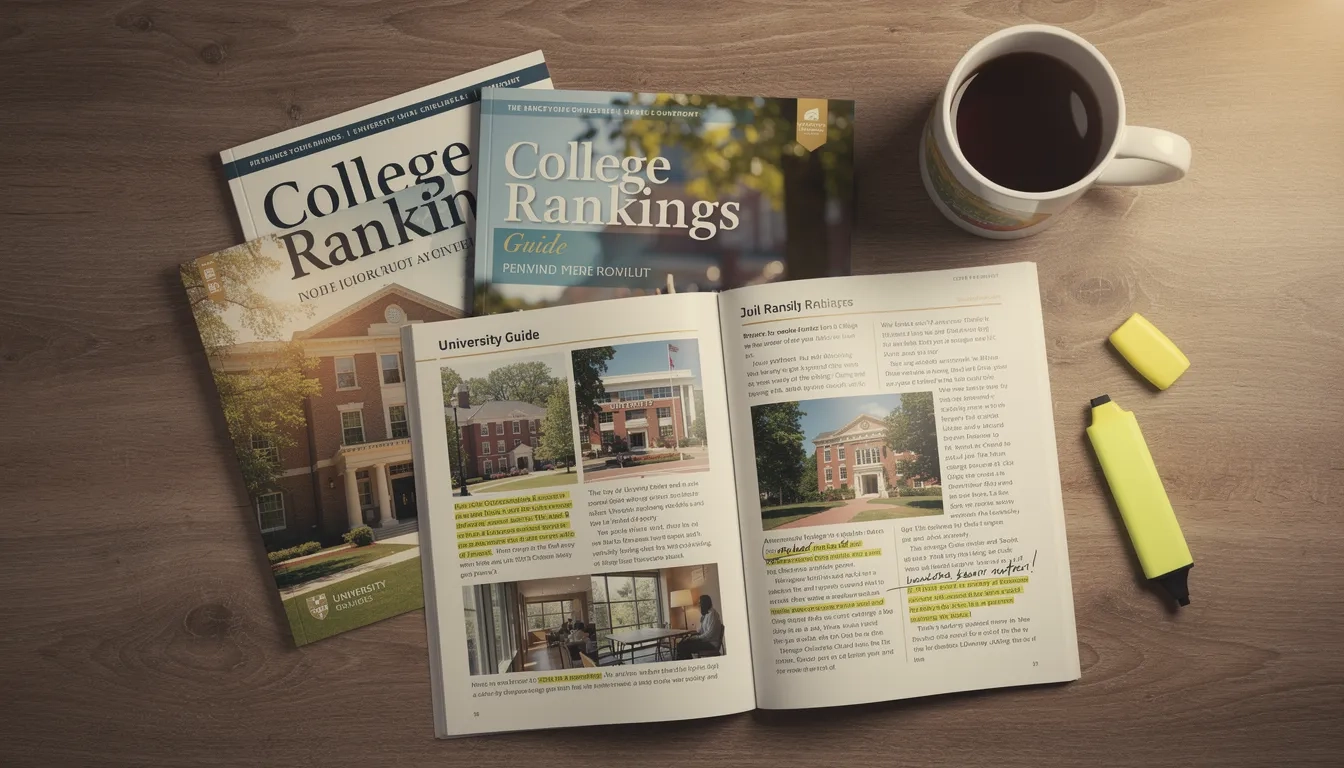
The Midwest gets undersold as a college destination. Most people scanning rankings gravitate toward the coasts — Harvard, Stanford, Columbia — and quietly write off the heartland as flyover country for higher education. That's a mistake. Six of the top 25 national universities in U.S. News's 2026 rankings are Midwestern schools, and the price-to-prestige ratio at Midwestern public flagships simply doesn't exist anywhere else in the country.
This is the guide I wish existed: elite private schools, flagship publics, hidden-gem liberal arts colleges, and a framework for building a list that actually fits your budget and goals.
What "Best" Actually Means Here
Rankings are starting points, not verdicts. U.S. News publishes separate lists for national universities, regional universities, and regional colleges — and those categories cover genuinely different types of schools. Ohio Northern University's #1 ranking among Midwest Regional Colleges in 2026 is real and earned, but it's competing against a different pool than Northwestern.
For this guide, I'm measuring schools across four things:
- National reputation: Where does the school rank among all U.S. universities, not just Midwest peers?
- Outcomes: Graduation rates, median alumni earnings, and placement into graduate programs
- Value: Net price after financial aid, not the sticker price that scares families away from great schools
- Fit: Research powerhouses versus intimate liberal arts colleges versus career-focused programs
The right school matches where you're going. That's the whole framework.
The Elite Private Universities
Five private schools in the Midwest belong in the national conversation. Two of them share a metro area.
The University of Chicago ranked #6 nationally in 2026, with an acceptance rate of just 4%. Every undergraduate — regardless of major — moves through the Core Curriculum, reading Plato, Adam Smith, and Galileo alongside their primary coursework. Students who arrive expecting a typical college social experience sometimes find the intensity disorienting. Students who came specifically for that intellectual environment tend to flourish. UChicago claims more affiliated Nobel laureates than any other university in the world, which says something real about the culture those classrooms produce.
Northwestern University sits in Evanston, Illinois, 12 miles north of downtown Chicago on Lake Michigan. It ranked #10 nationally in 2026 with a 7% acceptance rate. What distinguishes Northwestern is genuine breadth: it excels in engineering, journalism, theater, economics, and business all at once — without the feeling that it spread itself thin. Its financial aid policy matters equally: Northwestern meets 100% of demonstrated need without including loans. For families in the $80,000–$130,000 household income range (often squeezed by aid formulas at other schools), that distinction is real money.
University of Notre Dame carries an 11% acceptance rate and a culture unlike any other school on this list. Students don't just live in residence halls — they belong to them, with intramurals and social events organized by hall across all four years. The football tradition is real and pervasive. Notre Dame consistently places in the national top 20, with particular strength in law, business, and engineering.
Washington University in St. Louis runs a 12% acceptance rate and a 94% graduation rate. Annual costs sit at approximately $61,750, but WashU's financial aid is generous enough that the median net price falls well below sticker. It's widely regarded as the strongest pre-med pipeline in the Midwest, partly because of deep ties to top-ranked medical centers in St. Louis.
The right question isn't "which school ranks higher?" — it's "which environment will make me think harder?"
Top Public Universities: Where Value Meets Rigor
Midwestern public flagships are where the cost-benefit math tips sharply in the student's favor. Illinois residents at UIUC, Michigan residents at U of M, and Wisconsin residents at Madison are getting educations that rival private schools charging twice as much.
The University of Michigan in Ann Arbor ranked #25 nationally in 2026, with an 18% acceptance rate and a 93% graduation rate. Annual research expenditures exceed $1.5 billion — meaning undergrads can actually land research positions before graduation, in fields ranging from aerospace engineering to behavioral economics. The "Go Blue Guarantee" covers full tuition for in-state students from households earning under $65,000. Out-of-state total costs approach $59,775, which changes the calculus for non-residents considerably.
University of Illinois Urbana-Champaign runs the strongest computer science program in the Midwest outside of Northwestern. Its CS and ECE departments rank in the national top five. Employers treat an UIUC CS degree the same way they treat MIT's — the on-campus recruiting pipeline to Google, Amazon, and Citadel is well-established and active.
Purdue University in West Lafayette earns its reputation on aerospace and engineering. Its aerospace engineering program consistently ranks #1 or #2 nationally. With an acceptance rate around 62%, it's accessible to strong students who want to leave with credentials that open serious doors in industry.
University of Wisconsin-Madison rounds out the flagship tier with depth in research, agriculture, and business. The campus-city integration in Madison is genuine — students use the city, the city uses the university, and that relationship shows up in quality-of-life and retention numbers.
| School | Acceptance Rate | Approx. Total Cost (OOS) | Notable Strengths |
|---|---|---|---|
| University of Michigan | 18% | $59,775 | Engineering, Business, Medicine |
| Purdue University | ~62% | ~$42,000 | Aerospace, Engineering |
| UW–Madison | ~54% | ~$47,000 | Research, Agriculture, Business |
| UIUC | ~45% | ~$44,000 | CS, Engineering |
| Ohio State | ~53% | ~$45,000 | Business, Law, Medicine |
Ohio State deserves a mention for sheer breadth: 200+ undergraduate majors, a Fisher College of Business that ranks in the national top 30, and a research infrastructure that funds undergraduate involvement across nearly every discipline.
Liberal Arts Colleges: The Overlooked Tier
Here's where I'll take a clear position: Midwestern liberal arts colleges are systematically undervalued by students who fixate on name recognition. Carleton, Grinnell, and Kenyon produce graduate school acceptances and professional outcomes that compete with universities five times their size.
Carleton College in Northfield, Minnesota is the benchmark for small liberal arts schools in the region. Its 9:1 student-to-faculty ratio isn't marketing language — classes genuinely run 15–25 students, and professors know who you are by name. The acceptance rate sits around 17%, making it selective without being prohibitive.
Grinnell College (Grinnell, Iowa) practices need-blind admissions and meets 100% of demonstrated financial need. Its endowment relative to enrollment is among the largest of any liberal arts college in the country, which is exactly what funds that generosity. For high-achieving students from lower-income families, Grinnell can realistically cost less than a state school after aid.
Kenyon College in Gambier, Ohio has earned the nickname "the Writers' College" for reasons that hold up. The Kenyon Review (founded in 1939) is one of the most prestigious literary journals in American publishing. With an enrollment of roughly 1,700 students, its English and creative writing programs produce writers, journalists, and editors at a rate way out of proportion to the school's size.
Regional Schools and How to Build Your List
Not everyone should target national research universities. For students who want smaller campuses, specific career alignment, or lower net cost, regional schools often deliver better outcomes per dollar than their rankings suggest.
Ohio Northern University in Ada, Ohio claimed the #1 spot among Midwest Regional Colleges in the 2026 U.S. News rankings — and also took #1 for value and #1 for veterans' programs. Its pharmacy, engineering, and law school programs are the core draws. The campus is small and tight-knit; you won't be anonymous in a 400-person lecture hall.
Rockhurst University in Kansas City reached its highest-ever ranking at #6 among Midwest Regional Universities in 2026. As a Jesuit institution, it threads ethics and service learning into professional programs — which resonates with employers who care about outcomes beyond GPA.
Here's a practical framework for building your list:
- Run the net price calculator at every school before ruling it out — average annual net price for Midwest colleges sits around $29,078, well below sticker prices at most institutions
- Look at program-specific rankings, not just institutional rank — UIUC CS and Purdue Aerospace both outrank institutions with higher overall scores
- Check the 4-year graduation rate, not just the 6-year number — schools that graduate students in four years have stronger advising and support infrastructure
- Visit when students are on campus — campus culture is invisible during spring break or summer orientation; what you observe on a Tuesday in October is the actual school
Bottom Line
- Northwestern and UChicago are genuinely world-class private universities. Northwestern's no-loan aid policy makes it more financially accessible than the price tag implies — check your actual net price before assuming it's out of reach.
- U of M and UIUC are the strongest public-school values for in-state residents; out-of-state applicants need to run the numbers, since $59,775 changes the equation fast.
- Carleton and Grinnell are the most underrated schools in the region for academically driven students who want small classes, strong mentorship, and serious financial aid.
- Always use the net price calculator — the average net price of $29,078/year at Midwest schools is a fraction of what families initially assume.
- Students who start building their college list in January of junior year can research financial aid policies before paying application fees. That's not procrastination prevention — it's strategic.
Frequently Asked Questions
What is the #1 ranked college in the Midwest for 2026?
The University of Chicago ranks highest among Midwestern schools in national university rankings, sitting at #6 in U.S. News's 2026 Best National Universities list. Among Midwest Regional Colleges — a separate category for smaller, teaching-focused schools — Ohio Northern University holds the top spot. The answer depends entirely on which category and criteria you're measuring.
Is the Midwest a good region for college compared to the coasts?
Yes, and the value argument is strong. Flagship public schools like UIUC and Wisconsin–Madison deliver nationally competitive programs at lower out-of-state costs than equivalent East Coast public universities. Private schools like Northwestern and Notre Dame are peer institutions to Ivies, not consolation prizes. The persistent assumption that Midwest schools are second-tier costs prospective students real money and real opportunities.
What Midwest colleges offer the best financial aid?
Northwestern meets 100% of demonstrated need without loans — one of the most student-friendly policies in the country. Grinnell College matches this with need-blind admissions and full-need coverage, powered by one of the largest per-student endowments among American liberal arts colleges. For public schools, the University of Michigan's Go Blue Guarantee covers full tuition for Michigan residents from households earning under $65,000.
Are Midwest liberal arts colleges worth it over large research universities?
For students who want small classes, close faculty relationships, and strong graduate school outcomes, absolutely. Carleton sends students to top doctoral and professional programs in numbers that rival much larger schools. Grinnell's graduate school acceptance rate regularly exceeds 70% for students who apply. The tradeoff is less research infrastructure and fewer available majors — if you're heading into CS or pre-med, a research university likely serves you better.
When should I start applying to Midwest colleges?
Start your research list in January of junior year. Most Midwest schools use the Common App, with Early Decision and Early Action deadlines in November of senior year. Schools like Northwestern and UChicago report meaningfully higher ED acceptance rates than regular decision rounds — though ED binds you to attend, so your financial aid picture needs to be clear first. Running net price calculators in spring of junior year is the single highest-leverage step most students skip.
Sources
- The 20 Best Colleges in the Midwest | CollegeVine Blog
- Best Universities in the Midwest | BheuNi
- 2026 Best Regional Universities in the Midwest | U.S. News & World Report
- 2026 Best National Universities Rankings | U.S. News & World Report
- ONU is #1 College in the Midwest | Ohio Northern University
- Rockhurst University Named No. 6 Midwest Regional University | Rockhurst University