Best Colleges for Accounting 2026: Rankings That Actually Matter
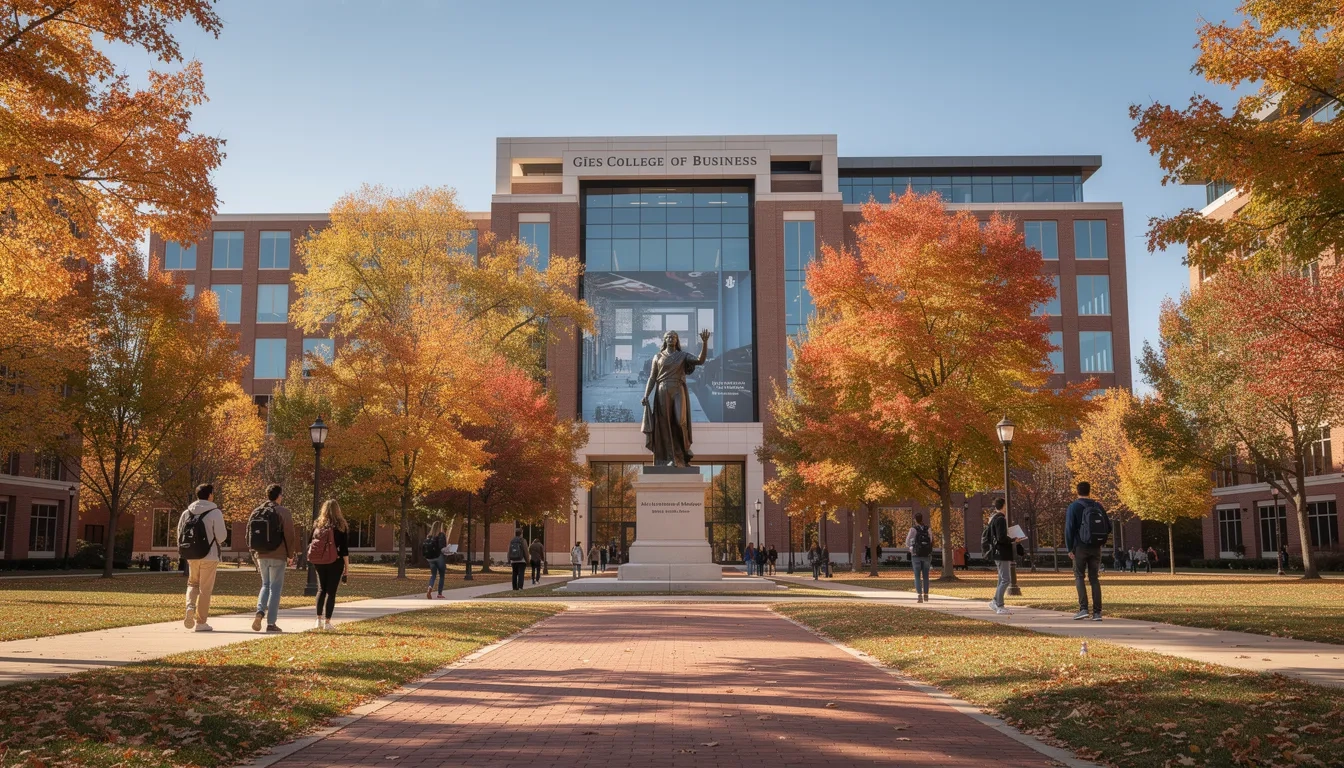
The University of Texas at Austin held the #1 spot in U.S. News & World Report's undergraduate accounting rankings for over a decade. Then the 2026 list came out, and the University of Illinois walked in and took the crown. That kind of shift doesn't happen because of a lucky survey year — it signals something real about which programs are keeping pace with what the profession now demands.
If you're trying to figure out which accounting program gives you the best shot at a well-paying career that holds up over time, this guide pulls from the 2026 rankings, placement data, CPA exam pass rates, and what Big 4 recruiting actually looks like on the ground.
The Shake-Up at the Top
The University of Illinois Urbana-Champaign's Gies College of Business now ranks #1 for undergraduate accounting in U.S. News & World Report's 2026 edition, bumping UT Austin's McCombs School to second. U.S. News calculates these rankings through peer surveys — deans and senior faculty from accredited business programs nominate up to 15 programs per specialty. It's a reputation model, not a raw data model.
That distinction matters. Peer reputation is a lagging indicator, which means if Gies is now leading the surveys, Illinois has been doing something right for years before the votes caught up. The numbers back this up: Gies accounting graduates average a starting salary of $78,477, and 98% find employment or enter graduate school within six months of graduation.
UT Austin's McCombs is far from finished. It sends a consistently strong pipeline into the Big 4 and maintains deep relationships with Deloitte, PwC, EY, and KPMG. The school's proximity to Austin's growing finance sector adds recruiting channels that a Midwest campus can't replicate. Second place on this list is not a consolation prize.
The 2026 Undergraduate Rankings: Schools Worth Knowing
U.S. News identifies 12 programs in its top tier for 2026. Here's where they land:
| Rank | School | Program |
|---|---|---|
| 1 | University of Illinois Urbana-Champaign | Gies College of Business |
| 2 | University of Texas at Austin | McCombs School of Business |
| 3 | Brigham Young University | Marriott School of Business |
| 4 | Indiana University | Kelley School of Business |
| 5 | University of Pennsylvania | Wharton School |
| 6 | University of Michigan | Ross School of Business |
| 7 | University of Southern California | Leventhal School of Accounting |
| 8 (tie) | Boston College | Carroll School of Management |
| 8 (tie) | University of Florida | Fisher School of Accounting |
| 10 | University of Notre Dame | Mendoza College of Business |
| 11 | New York University | Stern School of Business |
| 12 | Ohio State University | Fisher College of Business |
A few programs deserve more attention than their ranking position alone suggests.
BYU's Marriott School consistently produces some of the highest CPA exam pass rates in the country. The Intensive Accounting Junior Core is genuinely grueling — students describe it as their hardest semester — but it prepares them for the exam in a way that lighter curricula don't. BYU's 2023 job placement rate was 96%, with nearly all Master of Accountancy graduates securing offers before walking across the stage.
Indiana's Kelley School reports that 100% of graduates receive at least one job offer within 90 days of graduation. Kelley's structured internship pipelines feed directly into full-time offers at a high conversion rate. That outcome doesn't happen without deliberate firm relationships built over years.
USC's Leventhal School tends to be underrated in national comparisons. Its location in Los Angeles opens doors into entertainment industry accounting (a genuinely specialized field), international finance through Pacific Rim connections, and a dense alumni network at every major firm in California.
Graduate Programs: A Different Calculation
The graduate accounting landscape runs on different logic. TFE Times ranks USC at #1 for Master of Accounting programs in 2026, followed by Washington University in St. Louis and Vanderbilt University. This methodology differs from U.S. News and reflects different priorities: smaller cohorts, more intensive career placement infrastructure, and faculty research strength.
A few things to know before choosing a master's program:
- Placement rates at elite MAcc programs run 95–100%. UNC Kenan-Flagler's Master of Accounting program reports 98% graduate placement. Wake Forest's program placed 98% of its master's graduates in recent cohorts. These aren't outliers — they reflect what happens when programs admit carefully and invest in career services.
- The 150-credit CPA requirement is the primary reason most students pursue a fifth year, whether through a MAcc or a combined degree. Many schools now offer integrated 4+1 programs that let undergrads complete both degrees without paying for an entirely separate program.
- Research vs. professional focus matters. University of Chicago Booth's Chookaszian Accounting Research Center attracts students headed for academia or policy work. USC Leventhal and Kelley are more professionally oriented. Know which track you're actually on before applying.
What Separates Good Programs From Great Ones
AACSB accreditation is the floor, not the ceiling. Every program on the U.S. News list has it, but so do hundreds of other schools. When comparing options, look past accreditation to four things that actually differentiate programs:
- On-campus Big 4 recruiting — Does the firm send partners to campus for recruiting events, or just accept applications online? On-campus recruiting means competing against 300 classmates instead of 30,000 applicants.
- CPA exam first-time pass rates — Programs rarely publish this number, but schools like Cornell, BYU, Wake Forest, and the University of Missouri are known for outperforming the national average. The national pass rate hovers below 50% for the hardest sections.
- Internship-to-offer conversion rates — Programs with structured pipelines often see conversion rates above 80%. Ask specifically.
- Alumni network density — A program with 500 alumni at a single major firm has more pull than a higher-ranked program with 50 scattered across the country.
The single best question you can ask an accounting program's career office: "What percentage of last year's graduates who wanted Big 4 positions actually received them?" Their willingness to answer — and the number itself — tells you more than any ranking.
The CPA Exam Reality No One Talks About
Here's something most college comparison articles skip: the school you attend shapes your CPA exam performance long after graduation.
The CPA exam restructured under the CPA Evolution initiative, and 2026 pass rates reflect the new format. According to UWorld's Q1 2026 data, the TCP (Tax Compliance and Planning) section leads with a 77% pass rate. ISC (Information Systems and Controls) follows at 66%. REG sits at 63%. Then comes the cliff: AUD at 48%, FAR at 42%, and BAR at 42%. Most candidates fail their first attempt at those last two.
The curriculum of your undergrad program determines how prepared you are. Programs that front-load intermediate accounting and financial reporting give students a real head start on FAR and BAR. Programs where you can graduate with just two tax courses will cost you later in review courses and retakes.
A commercial CPA review course runs $1,500 to $2,500. That's not the real cost. The real cost is the 18 to 24 months many candidates spend studying while working full-time — delaying promotions, salary increases, and the credential that gates access to senior roles at most firms.
Choosing the Right Program for You
Not every student should chase the #1 school. Here's a practical way to think about fit:
If Big 4 is your primary goal: Target programs with proven on-campus recruiting. Illinois, Texas, BYU, Indiana Kelley, and Michigan Ross all have it. Geography matters less than the recruiting relationship.
If cost is a real constraint: State flagship programs outside the top 12 — University of Florida (which tied for 8th at public university pricing), Ohio State, University of Georgia — offer strong regional recruiting and in-state tuition that a private school can't match.
If you want a smaller school with strong placement: Notre Dame's Mendoza College and Wake Forest show up near the top of placement rate tables consistently despite smaller class sizes. The trade-off is less geographic diversity in recruiting.
If you're targeting finance-adjacent roles: NYU Stern's position in Manhattan creates a fundamentally different recruiting environment. Goldman Sachs, JPMorgan, and other financial services firms recruit Stern accounting graduates for financial analysis roles that most other schools can't access.
According to the Bureau of Labor Statistics, accounting and auditor positions are projected to grow 5% from 2024 to 2034, with approximately 124,200 job openings per year. The median annual wage hit $81,680 in May 2024. The profession isn't shrinking. But a documented shortage of CPA-licensed professionals — driven by mass retirements and a drop in exam candidates — means the gap between credentialed and non-credentialed accountants is widening. That makes the CPA-prep quality of your undergrad program more financially significant than it's ever been.
Bottom Line
Choosing an accounting program is a financial decision. Treat it like one.
- Illinois (Gies) is the new #1, but UT Austin, BYU, and Indiana Kelley all have placement rates above 95% and strong Big 4 pipelines. Any of them is a legitimate choice depending on your geography and goals.
- CPA-prep quality is the hidden variable. Ask about curriculum depth in financial reporting and tax specifically. FAR and BAR pass at 42% nationally — good programs address those sections directly in the curriculum, not after graduation.
- Placement rates and on-campus recruiting tell you more than peer-survey rankings alone. Indiana Kelley's 100% job offer rate within 90 days isn't an accident.
- For graduate programs, an integrated 4+1 at your own undergrad school is usually cheaper than a standalone MAcc. Pursue a separate MAcc when you want to change trajectory or access better recruiting.
The firms are hiring. There's a real talent shortage. Pick a program that puts recruiters in front of you before you graduate and gives you a legitimate shot at passing the CPA exam on the first try.
Frequently Asked Questions
Is the University of Illinois really the best school for accounting now?
For 2026, it ranks #1 according to U.S. News & World Report's peer survey of deans and senior faculty at accredited business programs. Combined with a 98% placement rate and a $78,477 average starting salary, the case is strong. Whether it's the best fit for you depends on cost, target geography, and which firms recruit on campus there.
What's the difference between a MAcc and doing a fifth year at my undergrad school?
A Master of Accountancy (MAcc) is a formal degree program that also satisfies the 150-credit hour requirement most states impose for CPA licensure. Some schools offer this as a separate admissions process open to outside applicants; others offer an integrated 4+1 for their own undergrads. If your only goal is hitting 150 credits, the integrated path at your home school is almost always cheaper. A standalone MAcc from a higher-ranked institution makes sense when you're switching fields or want access to a different recruiting network.
Do I need a top-ranked school to land a Big 4 job?
No, but the path is harder without on-campus recruiting. Big 4 firms maintain year-round recruiting relationships with partner schools — faculty contacts, sponsored events, early interview access. Students from non-partner schools typically apply through generalist channels and often need regional firm experience first to build credentials. It's doable, but it requires significantly more independent networking.
Is accounting still a good career with AI taking over so many tasks?
Yes. The Bureau of Labor Statistics projects 5% growth through 2034, and the profession is dealing with an active talent shortage as experienced CPAs retire. The roles most affected by automation are transactional — basic bookkeeping, data entry, invoice processing. The analytical and advisory work requiring judgment, client communication, and a CPA license is proving durable. Build skills in tax advisory or data analysis alongside your credential, and the job security picture looks solid.
Which CPA exam section should I worry about most going into 2026?
FAR (Financial Accounting and Reporting) and BAR (Business Analysis and Reporting) both pass at 42% — the lowest rates in the current exam structure. These sections are directly tied to how well your undergrad curriculum covered intermediate and advanced accounting. If your school treats financial reporting as a single semester survey, budget extra time and money for a commercial review course before sitting for those two sections.
Does school location actually affect job prospects?
More than most people expect. Schools in major financial centers give students access to recruiting events, senior alumni, and part-time work during the year that Midwest programs simply can't match for certain markets. That said, regional programs in smaller cities often place graduates locally with excellent outcomes. Location matters most when you have a specific city in mind for your career — if you want to work in New York, Stern's alumni density there is hard to replicate from a school two time zones away.
Sources
- Top 12 Undergraduate Accounting Programs for 2026 - CPA Practice Advisor
- The 50 Best Accounting Schools in the USA - Big4AccountingFirms.org
- Best Accounting Schools in the U.S. in 2026 - Bold.org
- Accountants and Auditors - Occupational Outlook Handbook - U.S. Bureau of Labor Statistics
- CPA Exam Pass Rates Updated with Q1 2026 Results - UWorld CPA Review