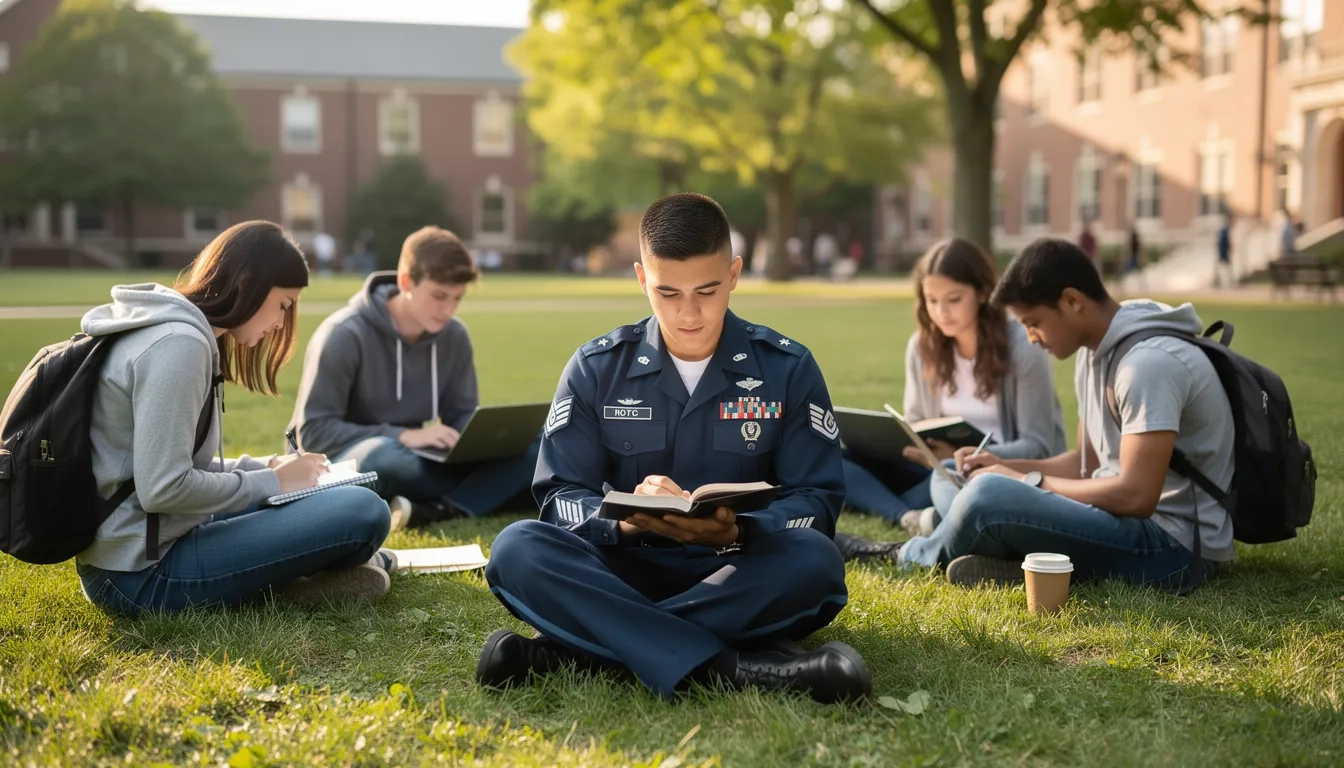
Best Colleges for Emergency Medical Services in 2026
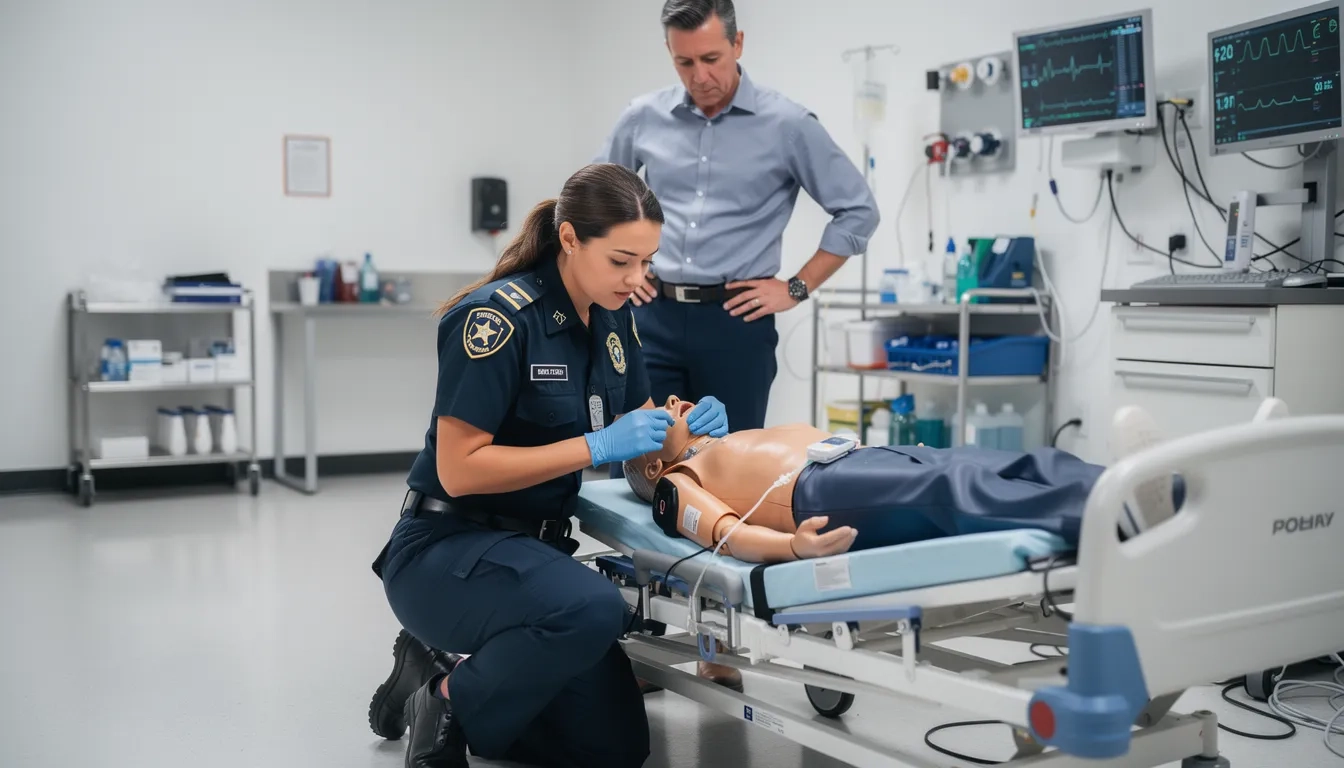
For years, the writing was on the wall: EMS was treated as a steppingstone to nursing or medical school, not a destination career. That framing is finally changing — and the schools leading the change are worth knowing about.
The Bureau of Labor Statistics put the median annual salary for paramedics at $58,410 in 2024, with 5% job growth projected through 2034. More significantly, EMS is building formal degree pipelines, leadership tracks, and graduate programs that simply didn't exist 15 years ago. Which means the question "which school should I attend?" has become a lot more interesting to answer.
Why EMS Education Is Changing
For most of its history, EMS training was purely technical. Certificate programs, supervised clinical rotations, a National Registry exam. That model still works fine for entry-level certification. The field has just outgrown it.
Community paramedicine is the clearest example. Programs where trained paramedics make scheduled home visits to high-risk patients — managing chronic conditions, conducting post-discharge follow-ups, and reducing preventable 911 calls — are expanding across Texas, Colorado, Washington, and a dozen other states. These roles require population health knowledge, care coordination, and communication skills that a 1,200-hour paramedic certificate wasn't built to deliver.
EMS director and management positions are shifting, too. Agencies that once promoted based on clinical seniority alone are now posting job descriptions that explicitly ask for a bachelor's degree. That's new. And it changes what you should look for in a school.
Accreditation: The One Filter That Matters
CoAEMSP accreditation is more important than any ranking. The Committee on Accreditation of Educational Programs for the EMS Professions is the only body recognized by CAAHEP — the Commission on Accreditation of Allied Health Education Programs — to accredit paramedic programs in the United States.
Here's why it's not optional: the National Registry of Emergency Medical Technicians ties certification eligibility directly to graduation from a CAAHEP-accredited program. Complete a non-accredited program and you may not legally sit for the NREMT exam. That means you can't get licensed to practice in most states, regardless of how many hours you put in.
Check coaemsp.org before giving any school your money. Look specifically for "continuing accreditation" status. Programs on "initial accreditation" are newer and still under active review — higher risk.
Programs with CoAEMSP continuing accreditation have proven their curriculum, clinical hours, faculty qualifications, and outcome tracking meet national standards across multiple review cycles. That's the bar worth clearing.
The Best EMS Programs in 2026
Here's a side-by-side look at the strongest programs available this year, spanning degree levels and formats:
| School | Degree | Format | Best For |
|---|---|---|---|
| Western Carolina University | BS in Emergency Medical Care | Online + residential | Working paramedics advancing careers |
| UMBC | BS in Emergency & Disaster Health Systems | On-campus | High school grads entering EMS fresh |
| George Washington University | MSHS in EMS Leadership | 100% online | EMS managers targeting director roles |
| Methodist University | BS in Advanced Paramedicine | 100% online | Working paramedics needing flexibility |
| Eastern Oregon University | BS in EMS Administration | 100% online | Remote students, schedule-driven professionals |
| Oregon Tech + OHSU | AAS in Emergency Medical Technology | On-campus (Portland) | Strongest entry-level clinical program |
| City College of San Francisco | Associate, EMT/Paramedic | On-campus | Affordable, top-ranked entry credential |
| UT Health San Antonio | Bachelor's in EMS | On-campus | Texas students, high graduate volume |
Western Carolina University
WCU's BS in Emergency Medical Care is one of the most established four-year EMS degrees in the country. The program is CAAHEP-accredited on CoAEMSP's recommendation and offers two concentrations: Health Services Management (for those heading into EMS administration) and Clinical Sciences (for those targeting medical school, PA programs, or EMS education roles).
Most students enter with 60–70 transferable credit hours and complete the degree in roughly two years of part-time study. New cohorts start every August, with an application deadline of April 1st.
One clear limitation worth knowing: admission requires current paramedic certification. WCU is a degree for advancing, not for entering the field.
University of Maryland, Baltimore County (UMBC)
UMBC's BS in Emergency and Disaster Health Systems is built for students entering straight from high school — which makes it unusual. Students spend four years building science foundations (biology, chemistry, anatomy, physiology) alongside dedicated paramedic clinical training.
The Paramedic Concentration requires documentation of at least 100 patient contacts by junior year. That requirement separates genuine clinical training from credential programs that skip the hard parts.
Three tracks are available: Paramedic, Emergency Health Leadership, and Emergency and Disaster Health Management. If you want to run an EMS system someday rather than just staff it, the leadership and management tracks are the point. UMBC also participates in the Academic Common Market, which allows out-of-state students from eligible southern states to pay in-state tuition rates.
George Washington University
GWU's MSHS in EMS Leadership is the only graduate-level program on this list, which puts it in a different category entirely. It's designed for experienced paramedics and EMS managers aiming for director, policy, or academic positions. All coursework runs online and asynchronously — a practical necessity for an audience running 48-hour shifts.
What makes it genuinely distinct is the physician-led course component. GWU's School of Medicine and Health Sciences faculty teach directly into the program, exposing students to how emergency medicine works on the hospital side. That cross-sector perspective is rare in EMS education and valuable for anyone trying to bridge the pre-hospital and hospital worlds.
Methodist University
For the working paramedic who can't pause their career, Methodist's online BS in Advanced Paramedicine solves the access problem directly. Cohorts start every eight weeks. No entrance exam. No application fee. No minimum GPA requirement.
Tuition runs $435 per credit hour, and with 36 transfer credits applied from an existing paramedic credential, total estimated tuition lands around $38,280 for the full degree. The curriculum covers psychotraumatology, advanced electrocardiography, imaging diagnostics, and community paramedicine — all areas with growing hiring demand. Graduates report going into flight paramedic, critical care paramedic, and EMS director roles.
Oregon Tech + Oregon Health & Science University
Oregon Tech's AAS in Emergency Medical Technology is the strongest entry-level program on this list, in my view. The reason is simple: it has run a joint program with Oregon Health & Science University since 1977, giving students clinical rotations at OHSU and regional hospitals plus a 12-week externship with local and national EMS agencies. No community college can replicate that clinical infrastructure.
Oregon Tech's 2023 outcomes back it up: 94.4% NREMT first-attempt pass rate, 94.7% program retention, and 100% job placement. Those aren't marketing numbers — they're program-review metrics the school reports to CoAEMSP. Embedded certifications in ACLS, PALS, and PHTLS are included in the curriculum.
Community College Programs: The Right Starting Point for Most People
Here's a position worth stating clearly: for most people beginning an EMS career, a community college program is the right first move — not a fallback.
College Factual's 2025 rankings show community colleges dominating the top spots for EMT/paramedic programs nationally. City College of San Francisco ranks near the top. Valencia College in Orlando graduated 232 EMS students in a recent year, among the highest volumes in the country. SUNY Westchester Community College grew its graduating class 37% in a single year. Among 304 U.S. colleges now offering these programs, community colleges consistently outperform for-profit alternatives on outcomes.
The structural advantages at this stage of a career are real:
- Total tuition often runs $6,000–$12,000 for a certificate or associate degree
- Completion time is 1–2 years
- Clinical affiliations with local agencies (which frequently lead directly to job offers) are built into the curriculum
- Schedules are often designed around people who already work shifts
The common path for high-performing EMS professionals looks like this: community college paramedic program, three to five years of field experience, then an online degree-completion program like WCU or Methodist. That sequence is both financially sound and practically effective. Nobody needs to spend four years getting a bachelor's degree before they've decided whether they even like running calls.
How to Evaluate Any Program Before You Apply
Even among CAAHEP-accredited programs, quality varies. Here's what to actually investigate:
- NREMT first-attempt pass rate. Ask admissions directly. Strong programs exceed 85%; Oregon Tech hit 94.4% in 2023. Rates below 70% signal a curriculum or student preparation problem.
- Clinical hour count. The minimum for paramedic programs is roughly 480 clinical hours. Better programs push well past 1,000.
- Field internship quality. A busy urban ALS system gives you dramatically different experience than a suburban interfacility transfer service. Ask specifically where students do their field hours and what call volumes look like.
- Tuition-to-salary ratio. At a median paramedic salary of $58,410, a for-profit program charging $42,000 in tuition creates a debt burden that field wages struggle to service. A community college program at $8,000–$12,000 changes that math entirely.
- Graduate employment outcomes. Ask for names of actual employers who hire their graduates — not just a placement percentage.
Bottom Line
- Just entering EMS? Start at a CAAHEP-accredited community college or, if you're in the Pacific Northwest, Oregon Tech's OHSU-partnered program. Get certified, pass NREMT, and build field hours.
- Working paramedic wanting a bachelor's? Western Carolina University and Methodist University are the strongest online degree-completion paths. UMBC is the best on-campus four-year option for students entering fresh.
- Targeting EMS leadership or a director role? George Washington University's MSHS in EMS Leadership is built specifically for that move.
- Wherever you apply: verify continuing accreditation status at coaemsp.org before committing. A program that leaves you ineligible for NREMT certification isn't a program — it's an expense.
Frequently Asked Questions
Do you need a college degree to become a paramedic?
No. Paramedic certification requires completing a CAAHEP-accredited program and passing the NREMT exam, which can come from a certificate or associate degree program rather than a bachelor's degree. A four-year degree becomes relevant when pursuing supervisor, manager, educator, or community paramedicine roles — positions where hiring managers are increasingly expecting it.
What is the difference between EMT and paramedic training, educationally?
EMT programs typically run 120–150 hours and cover basic life support: airway management, bleeding control, patient assessment. Paramedic programs are 1,000–1,500 hours and add advanced airway management, medication administration, 12-lead ECG interpretation, and critical care protocols. CoAEMSP accreditation requirements apply specifically at the paramedic level, which is where the credentialing stakes are highest.
Are for-profit EMS schools worth it?
Rarely. For-profit schools routinely charge $30,000–$50,000 for a paramedic certificate. A community college program producing the same NREMT-eligible credential often costs under $12,000. Because the credential outcome is identical — CAAHEP accreditation is the standard, not the school's brand name — the ROI almost never favors the for-profit option.
Can paramedic training be completed entirely online?
No. Clinical training, simulation labs, and field internship hours require in-person attendance. There is no legitimate path to initial paramedic certification that is fully online. What you can do entirely online is complete a bachelor's or master's degree after you're already certified — WCU, Methodist, and Eastern Oregon University are all built specifically for that post-certification path.
How fast is the EMS job market actually growing?
The Bureau of Labor Statistics projects 5% employment growth for EMTs and paramedics from 2024 to 2034, which is roughly average across all occupations. The fastest-growing segments are community paramedicine, disaster response coordination, and clinical education — all roles that increasingly favor candidates with formal degrees over those with a certificate alone.
What does the difference between "initial" and "continuing" CoAEMSP accreditation actually mean?
Initial accreditation means a program has met baseline standards to begin operating, but hasn't yet proven sustained graduate outcomes across multiple review cycles. Continuing accreditation means a program has tracked NREMT pass rates, retention, and job placement data over time and kept meeting standards. When choosing between two otherwise similar programs, continuing accreditation is a meaningfully stronger signal of quality.
Sources
- BLS Occupational Outlook Handbook: EMTs and Paramedics
- Western Carolina University Emergency Medical Care Program
- UMBC Emergency and Disaster Health Systems — Undergraduate Programs
- George Washington University EMS Programs
- CoAEMSP — Committee on Accreditation for the EMS Professions
- College Factual 2025 Best EMT Paramedic Schools
- Methodist University Online BS in Advanced Paramedicine
- Oregon Tech Paramedic Program
- Educations.com: Paramedicine Degree Programs in USA