Best Colleges for Commuter Students: What to Look For and Where to Apply
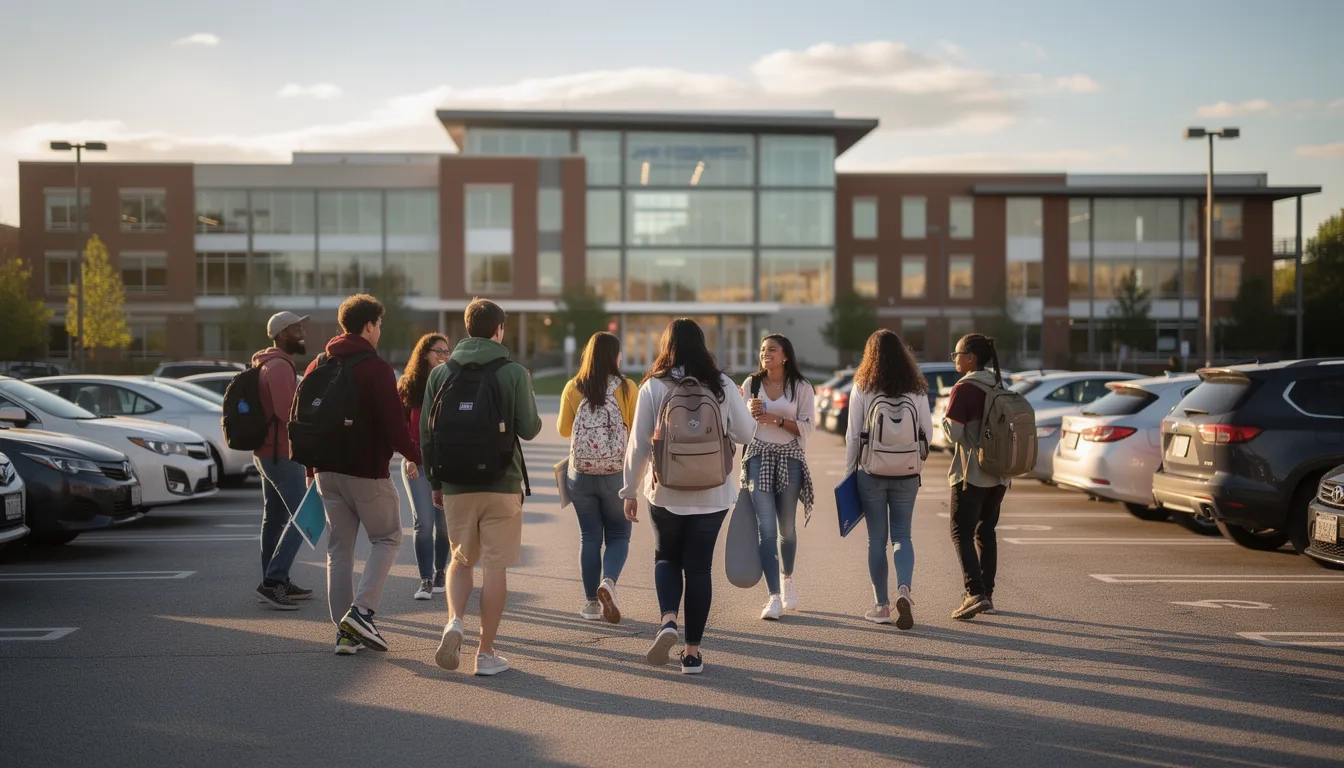
Here's a statistic that reframes the whole conversation: roughly 86% of all U.S. college students commute rather than live on campus. The dormitory experience plastered across every university brochure is, statistically speaking, the exception. Most students pack a bag, fight traffic or squeeze onto a bus, and figure out college somewhere between back-to-back classes and the drive home. If that's your plan, the question isn't whether commuting works. The question is which colleges have actually designed their systems around you.
The Uncomfortable Truth About Commuter Students
Research from the National Postsecondary Student Aid Study is pretty unambiguous: only 15.6% of undergraduates live on campus, yet the vast majority of college programming — club meetings, advising hours, faculty office hours, orientation events — still assumes students can pop by at 4pm or linger after an 8pm lecture.
Commuter students carry a structural disadvantage at schools that don't account for them. Pascarella and Terenzini's landmark research on college student development found that informal interactions with faculty and peers outside the classroom correlate directly with academic outcomes and long-term career success. Residential students accumulate those interactions naturally. Commuters have to manufacture them intentionally, often with less time to do so.
The retention gap is real. Studies consistently find that commuter students drop out at higher rates than residential peers. But — and this is the part most guides skip — that gap narrows sharply at schools with genuine commuter infrastructure. The school you pick matters enormously.
What Actually Makes a College Good for Commuters
A school can have 90% of students commuting and still be a poor fit. High commuter rates just mean many students drive in. What matters is whether the institution built anything useful for them when they arrive.
Infrastructure that travels with your schedule:
- A dedicated commuter center with lockers, refrigerators, and computers (not just "the library")
- Campus dining that doesn't close between 11am and 6pm
- Parking that doesn't cost more than a meal plan, or a transit subsidy program
- Study spaces accessible without a residential access card
Programming that doesn't assume you have nowhere to be:
- Commuter-specific orientation tracks, not just the same all-day session designed for move-in weekend
- Advising and tutoring appointments available in the evenings or online
- Club meeting times spread across the day, not clustered at 7pm
- A commuter student organization with actual funding and a physical room
The social piece people underestimate. Parking logistics and study spaces are solvable problems. Social belonging is harder. Schools that have cracked this — like the University of Maryland, Baltimore County, which runs a dedicated "First-Year Commuter and Transfer Retreat" before classes begin — actively create the peer connections that residential students form naturally over breakfast in the dining hall.
Top Colleges for Commuter Students
These schools consistently rank well across three dimensions: high commuter populations (meaning the systems are built for volume), meaningful support programs, and competitive cost-to-degree ratios.
| College | Approx. Off-Campus Population | Key Commuter Program | Estimated 4-Year Cost (In-State) |
|---|---|---|---|
| Baruch College (CUNY) | ~100% | Fully commuter-designed campus | ~$27,720 |
| Cal State Dominguez Hills | Vast majority | Among lowest in-state tuition nationally | ~$28,000–$30,000 |
| Georgia State University | Majority off-campus | Panther Retention Grants, urban location | ~$60,000 |
| University of Texas at Dallas | High commuter rate | "Road Warriors" commuter community | ~$60,000–$70,000 |
| University of Minnesota, Twin Cities | Significant commuter pop. | Commuter Connection center in student union | ~$70,000–$85,000 |
| UC Berkeley | 74% off-campus | Strong transit access, commuter services | ~$80,000–$101,000 |
| UCLA | High off-campus rate | Subsidized transit passes, vanpools, carpools | ~$85,000 |
A few of these deserve more than a table row.
Baruch College is the purest commuter institution on this list. Sitting in Midtown Manhattan with almost no residential housing, every system at Baruch was built for students who arrive, attend class, and leave. The Zicklin School of Business consistently ranks among the top business schools in the Northeast, which proves that commuter-dominant institutions can compete academically at a high level.
Georgia State University has become a national case study for closing equity gaps. GSU's "Panther Retention Grants" — micro-grants of a few hundred dollars triggered when students face financial emergencies — have been studied and replicated by institutions across the country. A large share of the students those grants serve are commuters balancing jobs and family alongside coursework.
UT Dallas runs a program literally called "Road Warriors," a structured commuter community with events, peer networks, and dedicated resources. The name might sound like a marketing gimmick. The results aren't: students who participate report significantly higher connection to campus than those who don't.
The Money Math, Honestly Calculated
Here's the number that makes commuting feel obvious: according to College Board figures cited by Money magazine, living off-campus saves approximately $9,800 per year at public colleges and $11,200 per year at private ones compared to on-campus housing. Over four years, that's real money — potentially $39,200 to $44,800 in avoided housing costs.
But commuting isn't free. Run your own numbers before assuming you're saving everything:
- Gas or transit: $150–$400/month depending on distance and city
- Parking (if applicable): $50–$300/month at many urban universities
- On-campus meals a few times per week: $200–$300/month
- Car maintenance averaged annually: $100–$200/month
That pencils out to roughly $500–$1,200 per month in commuting costs, or $6,000–$14,400 per year. Still cheaper than most dormitories — but not costless. Schools that subsidize transit passes or provide free/reduced parking change this math meaningfully. UCLA, for instance, offers students discounted Metro bus passes, vanpool matching, and carpool coordination through its transportation services office. That's real money back in your pocket every month.
Programs That Separate Good Schools from Great Ones
Three specific things consistently predict whether a commuter experience will be positive or miserable.
A commuter lounge with real amenities. The University of Minnesota's Commuter Connection, housed inside the student union, gives students a refrigerator to store their lunch, a printer for their assignments, a place to charge their phone, and — most importantly — a reason to linger on campus. Not having a "home base" is one of the most common reasons commuters disengage from campus life entirely. This sounds like a small thing until you've spent three hours killing time in your car because you had nowhere else to go.
Peer mentorship that understands the schedule. The University of New Haven employs "commuter assistants" — students who serve as mentors specifically for other commuters rather than general peer advisors. This model spreads because it works. A commuter student is far more likely to reach out to someone who understands why they can't make a Tuesday 5pm workshop than to a generic campus resource that assumes otherwise.
Orientation that doesn't ignore logistics. Ohio State University offers online Q&A sessions exclusively for commuter students — removing the irony of requiring people to drive to campus to learn about commuting. The University of Miami's "Great Start" program walks new students through what a typical commuter day actually looks like before the semester begins, covering parking, storage, dining options, and how to build in study time between classes.
"Students who live in dorms are more likely to graduate — yet urban campuses offer accessible, affordable alternatives without sacrificing educational quality." — Money magazine, on the commuter tradeoff
The data-backed honest answer: commuter students have lower average retention rates. But that gap closes meaningfully at schools that have built these programs. Infrastructure matters.
Red Flags to Watch For on Campus Visits
Not every school that calls itself commuter-friendly has done the work. Here's what to look for when you visit — or when reading between the lines of an admissions website:
- No commuter center or lounge. If the answer to "where do commuters go between classes?" is "anywhere, I guess," that's a tell.
- All events and club meetings scheduled after 5pm. Many commuters have jobs or family obligations in the evening. Evening-only programming excludes by design.
- Parking permits priced like a second tuition. Some urban schools charge $1,800–$2,400 annually for campus parking, which quietly erodes the cost advantage of living off-campus.
- Advising available only 9-to-5, in-person only. If you're working 20 hours a week, you need appointments that don't compete with your shift — and a phone or video option when you can't make the drive.
- No mention of commuter students on the student life page. If a school doesn't talk about commuters, it probably hasn't thought hard about them.
My honest take: if you tour a campus and can't find the commuter lounge within 10 minutes of asking, move on. Schools that have prioritized commuter students make those resources visible and easy to find. Full stop.
How to Evaluate Any School for Commuter Fit
Use this process when you're comparing options and running out of ways to distinguish them:
- Ask the direct question: "What percentage of students commute, and what specifically does this school do for them?" Vague answers reveal institutional indifference more clearly than any ranking.
- Map your actual commute. Not the address — your actual address to campus, at 7:45am on a Tuesday. Google Maps will be honest with you even if the admissions brochure isn't.
- Check club and tutoring schedules. If the organizations that interest you meet only on weekday evenings, factor that in honestly.
- Ask about hybrid advising and mental health access. These services increasingly exist online. Schools that offer them understand commuter realities; schools that require in-person visits for everything don't.
- Talk to a current commuter student. Not the campus tour guide — an actual student who commutes. Ask how they spend time between classes and whether they feel like they belong.
- Look up the school's retention rate for part-time students specifically, not just the overall rate. That number is the most honest signal of whether commuter and working students finish what they start.
Students who begin college list building in the spring of 11th grade can evaluate financial aid policies, transportation logistics, and commuter program quality before paying a single application fee. That's time well spent.
Bottom Line
Commuting isn't a consolation prize. For a lot of students, it's the financially responsible, logistically sensible, and genuinely satisfying way to earn a degree. The key is picking a school that recognizes this.
- Prioritize documented programs over vague promises. "Road Warriors" at UT Dallas, "Commuter Connection" at Minnesota, UMBC's First-Year Retreat — named programs signal real institutional commitment.
- Run the full cost calculation for your specific situation. The $9,800/year housing savings is real. So are your gas, parking, and transit costs. Know the actual number before you commit.
- Use retention data for commuters specifically, not the school's overall graduation rate. It's a better predictor of your odds.
- The best commuter college isn't the one with the most students driving in. It's the one where you can walk through the door, find your people, and build the kind of low-key, repeated interactions that make a degree worth more than the paper it's printed on.
Frequently Asked Questions
Does commuting to college hurt your academic performance?
Not automatically. Research shows commuter students have lower average retention rates, but the gap closes considerably at schools with strong commuter programs. Academic performance tracks more closely with engagement — and engagement is something schools with commuter lounges, peer mentors, and flexible advising actively support. Choosing the right school matters more than the commuting decision itself.
Myth vs. Reality: Can commuter students build meaningful social networks?
Myth: Commuters graduate without real friendships or professional connections. Reality: It requires more intentional effort than living in a dorm, but students who use commuter lounges, join commuter-specific organizations, and show up to daytime campus events consistently report social experiences comparable to residential peers. The infrastructure has to be there — but when it is, commuters build real networks.
Do commuter students qualify for the same financial aid as residential students?
Yes. The FAFSA calculates a cost of attendance budget for commuter students that includes an estimate for transportation expenses, which can affect your aid package. Some schools also offer commuter-specific scholarships or emergency micro-grants (like Georgia State's Panther Retention Grants) that residential students don't access. It's worth asking the financial aid office specifically about commuter-targeted aid.
What should I ask during a college tour as a prospective commuter student?
Ask to be shown the commuter center (not just told it exists). Ask when advising appointments are available and whether virtual options exist. Ask where commuter students typically study between classes. Ask whether the school tracks graduation rates specifically for commuter or part-time students. The specificity and confidence of the answers will tell you more than any brochure.
Are highly selective universities ever good choices for commuter students?
Absolutely. UC Berkeley and UCLA both make money.com's list of top commuter colleges despite their selectivity and strong reputations. UCLA's commuter services office provides subsidized Metro passes, vanpool coordination, carpool matching, and dedicated support staff. Selectivity and commuter-friendliness aren't in conflict — though you'll need to do the homework on any specific school's programs.
How do I handle the social isolation that commuter students often report?
The most effective strategy is treating social connection like a scheduling problem. Block time on campus the same way you block time for classes. Find one organization or study group that meets during your on-campus hours. Use the commuter lounge as a base rather than leaving campus between classes. Schools with commuter assistants or peer mentorship programs make this easier — ask about those programs during your admissions visit.
Sources
- 10 Commuter Colleges In Cities That Offer a Great Education | Money
- Building Commuter Connections During College Orientation | Inside Higher Ed
- Commuter Students — Challenges and Background | StateUniversity.com
- 2026 Colleges & Universities with the Most Campus Commuters | U.S. News
- Helping Commuter Students Succeed | CUNY School of Urban Management