Best Colleges for Astronomy and Astrophysics Programs 2026
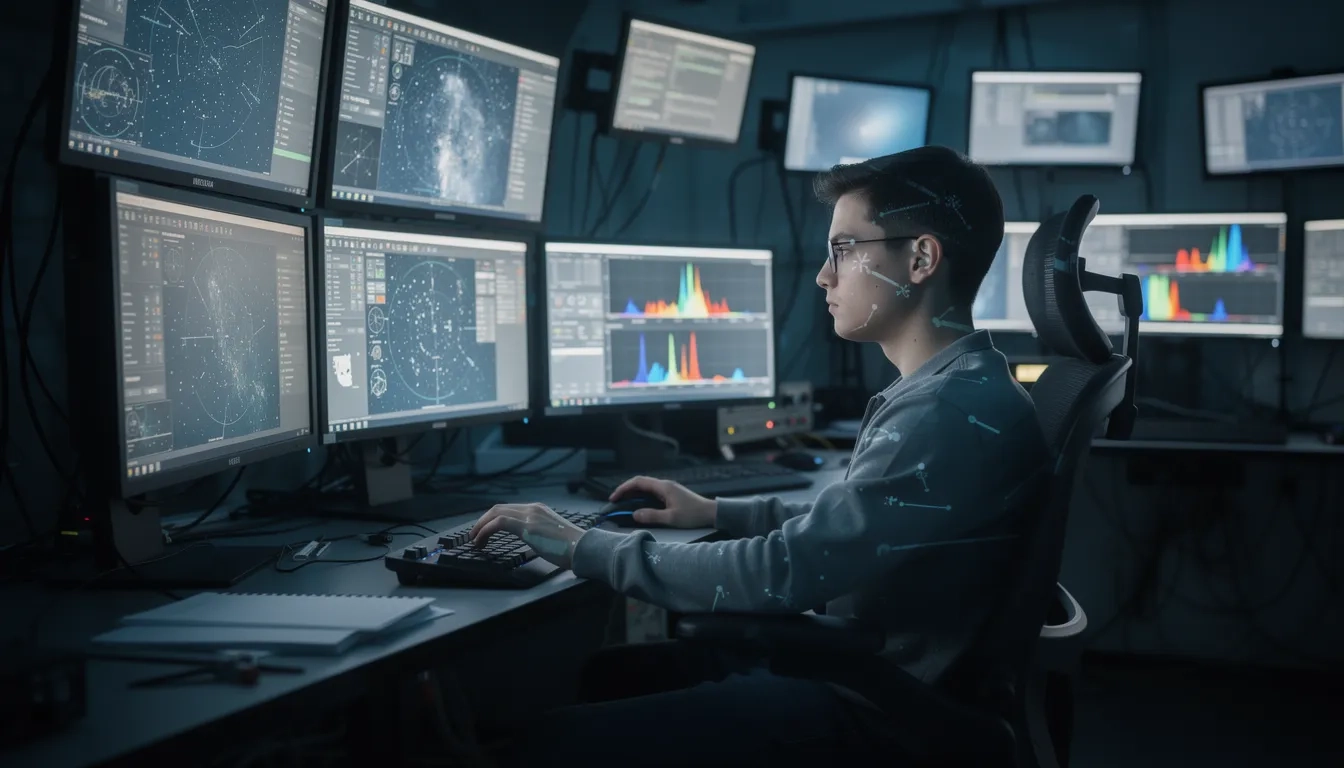
The James Webb Space Telescope changed something. Not just in what we know about the early universe, but in how many people want to spend their careers figuring it out. Applications to astronomy programs jumped at schools across the country after JWST's first full-color images dropped in 2022, and the enthusiasm hasn't faded.
Here's what most ranking lists won't tell you: the difference between a great astronomy program and a forgettable one isn't the school's brand name. It's whether undergrads can actually do research — not assist with grading or attend faculty talks, but handle real data, sit at telescope consoles, and eventually put their name on a paper. Some programs deliver that in year one. Others make you wait until grad school.
What Actually Makes an Astronomy Program Worth Attending
Research access for undergrads is the single most important variable. Astronomy is an empirical science, and learning it without touching real data is a bit like learning surgery from YouTube. You need to run code on actual spectra, wrestle with noisy observational data, and see how the scientific process actually works.
Beyond research, three other factors separate strong programs from weak ones:
- Observational facilities: Does the department own or have direct scheduling access to research-grade telescopes? Consortium partnerships work, but programs where undergrads can actually apply for observing time are better.
- Faculty-to-student ratio in the department: A 3:1 ratio means professors know your name and your projects. A 23:1 ratio means you're competing with dozens of others for mentorship.
- Alumni career placement: Where do graduates actually land? PhD programs, NASA, aerospace, data science? A department's real placement record tells you more than any formula can.
One factor people consistently overlook: computing infrastructure. Modern astronomy is roughly 70% computational. If the department lacks serious HPC resources, GPU clusters, or national laboratory ties, students miss entire subfields. This eliminates more schools than you'd think.
Tier 1: Caltech, MIT, and Harvard
These three consistently top every credible ranking of US physics and astronomy programs. That consensus is correct.
Caltech's undergraduate astronomy program is, by almost any measure, the most research-dense in the field. The 3:1 student-to-faculty ratio is real — not a marketing figure. Virtually every undergraduate takes on multiple research projects before graduating. The observational facilities are extraordinary: the two 10-meter W.M. Keck telescopes on Mauna Kea, Palomar Observatory about 190 kilometers from campus, and the Owens Valley Radio Observatory running a 288-element array that can image the entire sky every second. Average net price sits around $14,513 per year, and families earning under $75,000 often pay nothing. The catch: a 4% acceptance rate and a curriculum that rewards students who already know exactly what they want and are ready to go deep immediately.
MIT ranks first in the QS World University Rankings by Subject 2026 for physics and astronomy. The program skews toward theoretical and computational astrophysics at the undergraduate level, which suits students drawn to modeling and simulation rather than telescope operations. Research opportunities through the MIT Kavli Institute and the Haystack Observatory (a radio astronomy facility in Westford, Massachusetts) are accessible and well-funded. MIT is the stronger call if you see yourself at the intersection of astrophysics and machine learning or data science.
Harvard is backed by the Harvard-Smithsonian Center for Astrophysics, a joint research institution with the Smithsonian that employs over 300 scientists working on everything from exoplanet atmospheres to black hole jets. The SAO Astronomy Summer Intern Program is among the most competitive REU positions in the country. Harvard astronomy graduates earn around $80,500 on average, and the network opens doors in academia and industry alike.
Tier 2: Princeton, Columbia, UChicago, and UC Berkeley
None of these are fallback programs. Each has a distinct identity worth understanding.
Princeton's Department of Astrophysical Sciences is deliberately small, which means direct faculty relationships are the norm rather than the exception. Faculty work on gravitational waves, dark energy surveys, and planet-formation theory. Students have access to national facilities through NOAO and direct collaborations with NASA's Goddard Space Flight Center. Graduate earnings average around $77,655.
Columbia has carved out a specific strength in dark matter and black hole research, with a 6:1 student-to-faculty ratio in the physics department. The school's proximity to the American Museum of Natural History — and the Hayden Planetarium's active research staff — creates collaboration opportunities that don't exist anywhere else in the country. Being in New York also means clear pathways into finance, tech, and media for graduates who want options beyond academia.
The University of Chicago runs a genuinely rigorous undergraduate environment: over 80% of students engage in research during their degree. Ties to Fermilab and Argonne National Laboratory give UChicago students access to computational cosmology and particle astrophysics infrastructure that most programs simply can't match. The 5:1 student-to-faculty ratio keeps the environment surprisingly personal for a research university of its scale.
UC Berkeley produces the highest volume of astrophysics graduates in this group: 47 bachelor's degrees in 2024, plus significant doctoral and master's output. The department has a direct research affiliation with Lawrence Berkeley National Laboratory and active faculty working on DESI (the Dark Energy Spectroscopic Instrument), which is currently building the largest 3D map of the universe ever assembled.
Top Programs at a Glance
| School | Student-Faculty Ratio | Key Research Access | Avg. Net Cost | Distinctive Feature |
|---|---|---|---|---|
| Caltech | 3:1 | Keck, Palomar, OVRO | ~$14,513/yr | Most research-dense undergrad program |
| Harvard | ~7:1 | Harvard-Smithsonian CfA, Chandra | High (need-based aid) | 300-scientist research center backing |
| MIT | ~9:1 | Kavli Institute, Haystack Observatory | High (need-based aid) | Best for computational astrophysics |
| Princeton | ~8:1 | NOAO, Goddard collaborations | High (need-based aid) | Small cohort, direct faculty access |
| Columbia | 6:1 | AMNH/Hayden Planetarium | High (need-based aid) | NYC network, dark matter research |
| UChicago | 5:1 | Fermilab, Argonne National Lab | High (need-based aid) | Cosmology, particle astrophysics pipeline |
| UC Berkeley | 23:1 | LBNL, DESI survey | Moderate (in-state) | Scale, national lab ties, survey astronomy |
Programs That Don't Get Enough Credit
Several schools consistently fly under the radar on these lists, and students who choose them often end up better positioned for research careers than peers at more famous institutions.
The University of Arizona in Tucson sits at the center of the world's highest concentration of major telescopes. The school helped found the Large Binocular Telescope on Mount Graham and has deep ties to Kitt Peak National Observatory. The department produces graduates who go directly into instrument design, telescope engineering, and observational research — paths that require hands-on experience you can't build from archived datasets alone.
UC Santa Cruz awarded 36 astrophysics bachelor's degrees in 2024. Its Lick Observatory connection gives undergrads access to genuine research-grade equipment, and faculty in areas like planet formation and cosmological simulations signal a research environment that punches well above the school's overall ranking.
University of Wisconsin-Madison runs an REU program with access to the WIYN 3.5-meter telescope, the Southern African Large Telescope at 11 meters, and the Northern Extended Millimeter Array. For a flagship state university, that's a facility portfolio that puts some private schools to shame.
The REU Factor: Research Regardless of Where You Enroll
Here's a point most applicants miss entirely. Even if you attend a school without a household-name astronomy department, you can spend your summers doing research at the Harvard-Smithsonian Center for Astrophysics, the SETI Institute, or the National Radio Astronomy Observatory through the NSF's Research Experiences for Undergraduates program.
The school you attend sets the floor. REU programs, internships, and summer research determine your ceiling.
A student from Wisconsin who completes two strong REU summers — each producing real results and strong letters — will have a graduate school application that competes directly with students who stayed on campus at a lower-output program all four years. That's not a consolation point. It's genuinely how graduate admissions works.
A practical framework for choosing:
- If observational astronomy is your goal: Prioritize schools with direct telescope access — Caltech, Arizona, UC Santa Cruz, Wisconsin.
- If theoretical or computational work is your focus: MIT, UChicago, and Princeton offer the math environment and national lab connections you need.
- If cost is a real constraint: Berkeley, Wisconsin, and Arizona offer research-quality programs at a fraction of private university tuition.
- If you're still deciding between physics and astronomy: Schools with flexible joint degree structures — Columbia, Harvard, Princeton — let you keep options open longer.
Common Mistakes When Choosing a Program
Optimizing for overall prestige instead of program fit is the most expensive mistake aspiring astronomers make. Attending a school with a strong overall brand but a thin astronomy department means fewer research slots, fewer faculty mentors, and fewer facility connections — the exact things that matter for grad school placement.
Ignoring what happens after graduation is the second mistake. Roughly 70% of astronomy PhD graduates end up outside academia, working in data science, aerospace, quantitative finance, or software development. Programs near tech and finance centers (Berkeley, Columbia) have clearer pipelines into those careers.
Third: assuming larger departments are better. A department with 12 active, heavily-funded faculty is often more valuable than one with 30 where half are emeritus or teaching-focused. Check NIH and NSF grant portfolios and recent publication rates, not headcount.
Bottom Line
- Caltech is the clearest choice for students fully committed to astronomy — the research access and facility connections at the undergraduate level are simply unmatched.
- For elite research in a larger university setting, UChicago, Princeton, and Columbia each offer distinct advantages depending on whether your interest is computational, theoretical, or observational.
- University of Arizona, UC Santa Cruz, and UW-Madison deserve serious consideration — real telescope time and lower competition for faculty mentorship are worth a great deal.
- Use NSF REU programs strategically to build your research record regardless of where you enroll. They level the playing field more than most students realize.
- Pick the program that fits your goals and working style, not the logo that looks best on a sweatshirt.
Frequently Asked Questions
Is an astronomy degree the same as an astrophysics degree?
At most US universities, the two overlap heavily in content — both cover stellar physics, cosmology, observational techniques, and data analysis. Astrophysics programs typically require more advanced math prerequisites and lean theoretical, while astronomy degrees often include more observational and instrumentation coursework. Many schools offer both and let students choose based on emphasis rather than forcing an early specialization.
Do I need to attend a top-ranked school to get into a competitive PhD program?
Not necessarily. Research experience, letters of recommendation, and physics subject test scores (where still required) carry more weight than institutional rank. A student from a mid-tier school with two published REU papers and strong mentorship letters routinely outcompetes graduates from elite schools who never touched a research project. Graduate committees know which programs produce research-ready students. Start doing research as early as possible, wherever you end up.
What careers do astronomy graduates actually pursue?
Most astronomy graduates do not become professional astronomers — the academic job market is extremely narrow, with far fewer faculty positions opening each year than PhD graduates produced. The degree builds concrete, marketable skills: scientific programming (Python, Julia, C++), Bayesian statistical modeling, and working with large, messy datasets. Graduates regularly land in data science, aerospace engineering, quantitative finance, and software development. Programs near tech hubs tend to show the strongest non-academic placement rates.
Is Caltech worth considering if I'm not fully decided on astronomy?
Probably not. Caltech's curriculum is intense and tightly focused, and the environment rewards students who are already committed and self-directed. If you're still exploring whether physics or astronomy or engineering is the right path, a school with broader curricular flexibility — Harvard, Columbia, or Princeton — is likely a better fit. Caltech is extraordinary for the right student and overwhelming for the wrong one.
How do I verify a school's actual telescope access claims?
Ask specific questions during your campus visit or email inquiry: Does the department hold a reserved allocation of nights on a research telescope, or does access mean using publicly archived datasets? Is there a departmental instrument lab? Can first-year undergrads apply for observing runs? "Access to telescopes" can mean anything from real time on a 4-meter instrument to a classroom demo with a 6-inch refractor. The distinction matters enormously.
When should I start researching astronomy programs?
Students who begin building their college list in spring of 11th grade can compare financial aid policies, contact faculty about research interests, and attend virtual open houses before paying application fees. Some schools offer aid structures that work very differently from the standard need-based model — understanding those differences before applying makes the eventual decision significantly easier and can save thousands of dollars in application costs alone.
Sources
- 25 Best Astronomy Schools In The US 2026 - SciJournal
- 2026 Best Colleges for Astronomy & Astrophysics - College Transitions
- QS World University Rankings for Physics and Astronomy 2026
- Best Astrophysics Degree Colleges in the U.S. 2026 - Universities.com
- SAO Astronomy Summer Intern Program (REU) - Harvard-Smithsonian CfA
- Undergraduate Program - Caltech Astronomy
- Observational Facilities - Caltech Division of Physics, Mathematics and Astronomy